Fort Jefferson Guide: What to See and How Long You Need
How long do you really need at Fort Jefferson, and which hidden corners are worth it most?
At Fort Jefferson, you can climb a sun-warmed brick parapet, hear terns wheel over the moat, and look out at a flat blue Gulf that seems to go on forever. You’ll want a plan, because this place is bigger than most first-time visitors expect. A quick history stop takes about two hours. A day trip with snorkeling needs more. Start in the courtyard, and you’ll soon see why the unfinished corners tell the best story.
Key Takeaways
- Fort Jefferson on Garden Key is a massive 19th-century brick fortress, best known for its arches, casemates, gun positions, and sweeping Gulf views.
- Start in the central courtyard, explore casemates and powder magazines, then climb to the top parapet for panoramas and surviving Rodman guns.
- Allow 1.5 to 2 hours for a history-focused fort visit with photos, self-guided walking, and ranger talks.
- Most day-trippers spend about 4 to 4.5 hours, enough for the fort tour plus a quick swim or snorkeling stop.
- A full-day seaplane visit or overnight camping gives the best experience for sunsets, quieter walls, wildlife watching, and slower exploration.
What Is Fort Jefferson?
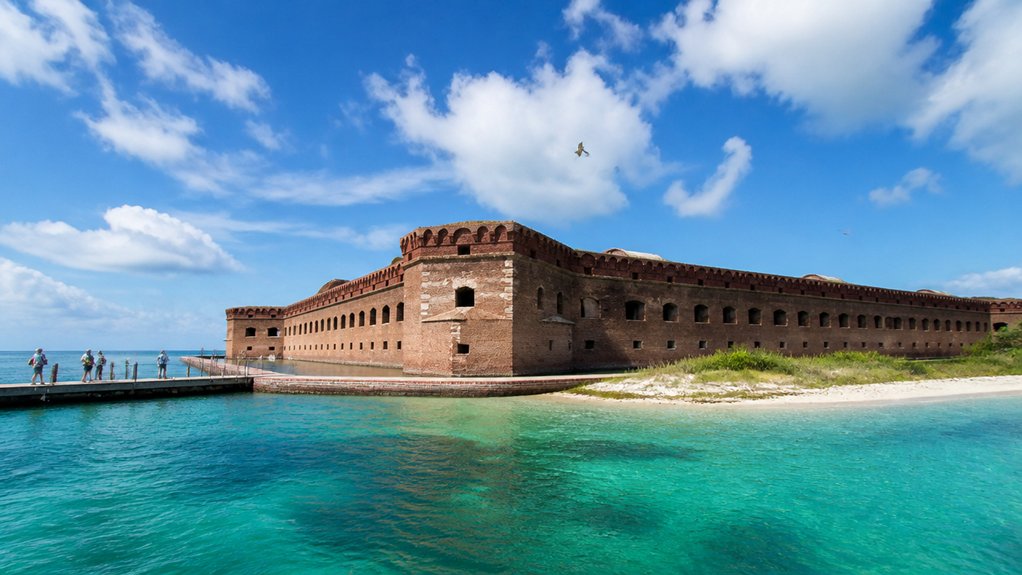
Fort Jefferson feels like a brick mirage rising out of open sea. You find this huge 19th-century fortress on Garden Key in Dry Tortugas National Park, about 70 miles west of Key West. Builders worked from 1846 to 1875, stacking 16 million bricks into the largest all-masonry fort in the Western Hemisphere. As you walk its wide walls, you notice rows of arches, heavy gun rooms, and decorative brick patterns that still look crisp in the salt air. Fort Jefferson was built to guard a shipping channel linking the Gulf, Caribbean, and Atlantic. It could carry hundreds of guns, yet new rifled artillery made the design old-fashioned fast. The fort also served as a military post and prison, while shifting ground kept engineers busy. Today, visitors often pair a fort tour with moat wall snorkeling in the clear waters around Garden Key.
Why Visit Fort Jefferson?
What makes this place worth the long boat or seaplane ride is how many experiences it packs onto one small island. You visit Fort Jefferson to walk through the largest all-masonry fort in the Western Hemisphere and feel its scale in warm brick corridors. From the roof, you get views across Dry Tortugas and a sunset that can stop your thoughts cold. Inside, the casemates, arches, and powder magazines reveal how the fort once supported nearly 2,000 people and up to 420 guns. You can picture the thunder of 25 ton Rodmans while frigate birds circle overhead like picky supervisors. Then you step outside, slip into clear water, and snorkel reefs just beyond the walls. History and wild nature meet here on Garden Key. As part of Dry Tortugas National Park, Fort Jefferson also gives you access to one of the most remote and remarkable island settings in the United States.
How Do You Get to Fort Jefferson?
How do you get to this brick giant in the middle of blue water? You can only reach Fort Jefferson by boat or seaplane from Key West. Most people book the Yankee Freedom Ferry, which leaves around 8:00 a.m. and rolls across open water for about 2.5 hours. The Yankee Freedom Ferry is the main boat service getting travelers from Key West to Dry Tortugas. Your fare usually covers park entry, breakfast, lunch, and snorkeling gear, so logistics feel pleasantly civilized.
If you’d rather swap diesel rumble for bird’s-eye views, take a seaplane with Key West Seaplane Adventures and land at Garden Key. Seats are limited on both options, so reserve early and check cancellations if they’re sold out. Arrive early for ferry check-in, expect parking fees, and don’t count on cell service once you leave shore and head into silence.
How Long Should You Spend at Fort Jefferson?
Once you’ve figured out your ride across the water, the next question is simple: how many hours do you want with this sun-baked brick giant? For Fort Jefferson, your sweet spot depends on pace. A day trip usually gives you 4 to 4.5 hours, enough for the ranger talk, a self-guided tour, and a quick swim. If you’re chasing history and photos only, 1.5 to 2 hours works. A seaplane full-day visit stretches to 6 to 6.5 hours, so you can slow down and still hear the surf slap the moat walls. Overnight camping gives you a full, quieter 24 hours. Since Dry Tortugas is accessible only by boat or seaplane, your transport choice directly shapes how much fort time you actually get.
Nearby hotels to compare
Compare other stays around Old Town Key West so you can weigh location, room style, and overall trip fit.

Hyatt Vacation Club at Beach House, Key West
Stay in a classic Key West–style, tropical getaway set up as residential-style retreats with manicured gardens and beachside comfort. A connecting on-property dock makes it easy to rent a kayak and head out for Gulf of Mexico water adventures. Plan a vacation that feels more like having your own place by the water.
Check rates| Style | Time | Best for |
|---|---|---|
| History only | 1.5 to 2 hrs | Photos, fort walk |
| Ferry or seaplane | 4 to 6.5 hrs | Mixed exploring, snorkeling |
What Should You See First at Fort Jefferson?
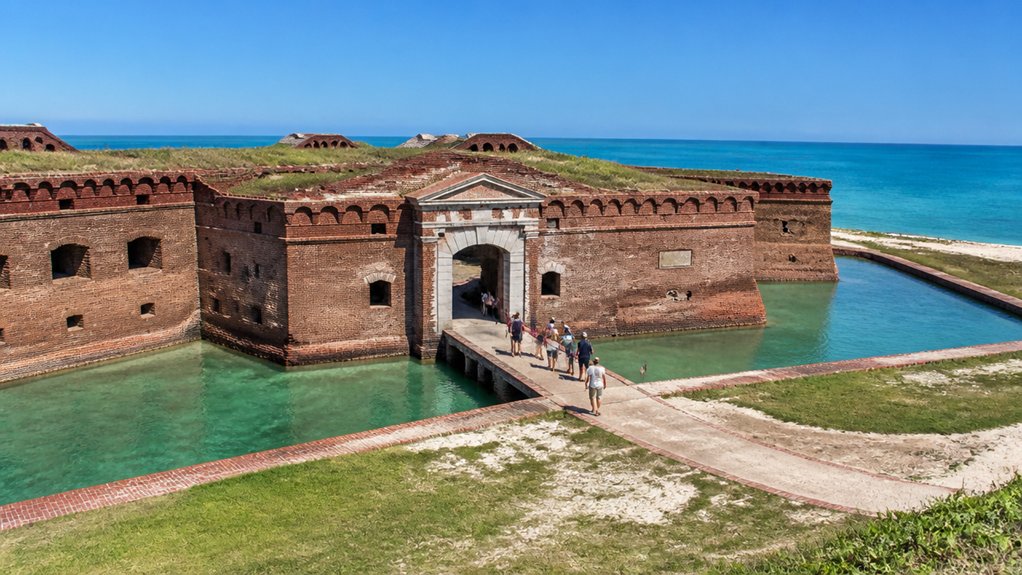
Where do you start with a fort this big? Start in the central courtyard so you can get your bearings fast. At Fort Jefferson, it’s the hub for the museum, the main routes, and your next stops.
Then duck into the casemates to see thick brick arches and cannon openings cut toward the sea. The repeating arches are a signature here, and they make the scale click. Climb a narrow stair to the top-level walk for moat views, bright water, and Loggerhead Key’s lighthouse in the distance. Since Dry Tortugas is a remote island destination, most visitors arrive at nearby Garden Key by ferry or seaplane before exploring the fort. After that, peek at a powder magazine and nearby traverses to understand the fort’s safety design. Finish with the hot shot furnace and surviving Rodman-style guns. They still look impressively overprepared for neighborhood disputes with gulls nearby.
Inside Fort Jefferson: Courtyard, Casemates, and Stairs
You step into Fort Jefferson’s broad brick courtyard and immediately get a feel for its huge scale, with arched casemates all around you and glimpses of the parapet above. As you wander the old gunrooms, you’ll spot interpretive displays, thick brick arches, and hidden doorways that lead to tight circular stairs, which can feel a little like a treasure hunt. Watch your footing as you climb, because some stairs are narrow, some upper walks don’t have rails, and a few sections may be closed while the fort gets patched up. If you’re also exploring the region beyond the fort, Key West is known for shipwreck dive sites that add another layer to the area’s maritime history.
Courtyard Highlights
Brick, light, and open sky set the tone in Fort Jefferson’s central courtyard, a broad plaza ringed by brick buildings and walkways that once supported nearly 2,000 people at the fort’s 1860s peak.
As you cross the courtyard, you can picture how nearly 2,000 people lived within Fort Jefferson’s walls, with daily routines unfolding around you. Look for traces of the 37 powder magazines and the traverses that shaped the open space and helped protect men and guns. The brickwork grabs your eye. Decorative patterns, weathered surfaces, and long rows of arches hint at the casemates beyond without pulling focus from the plaza itself. It feels both orderly and sun washed, like a military square dropped into turquoise water. Pause here. The scale lands. On a Dry Tortugas day trip, this courtyard often becomes the moment when the fort’s size and isolation fully register.
Casemates And Stairways
Step out of the bright courtyard and the fort changes fast. You enter casemates that once held big guns, storage, and sleeping space for a population that neared 2,000. The air feels cooler here, and the long passages echo under rows of brick arches, nearly 2,000 across the fort. Like nearby Fort Zachary Taylor, this kind of military architecture was built for defense but today gives visitors a very different way to experience Key West history.
Those curves didn’t appear by magic. Carpenters built heavy wooden forms, then masons laid brick and mortar over them to shape each span. As you explore, look for narrow circular staircases rising toward the top-level walks and gun platforms. Some stairs hide in corners, and some feel steeper than they look, so watch your footing. Parts of the upper routes can close for repairs, and kids need supervision. Even adults may mutter on the way up.
Where Are the Best Fort Jefferson Views?
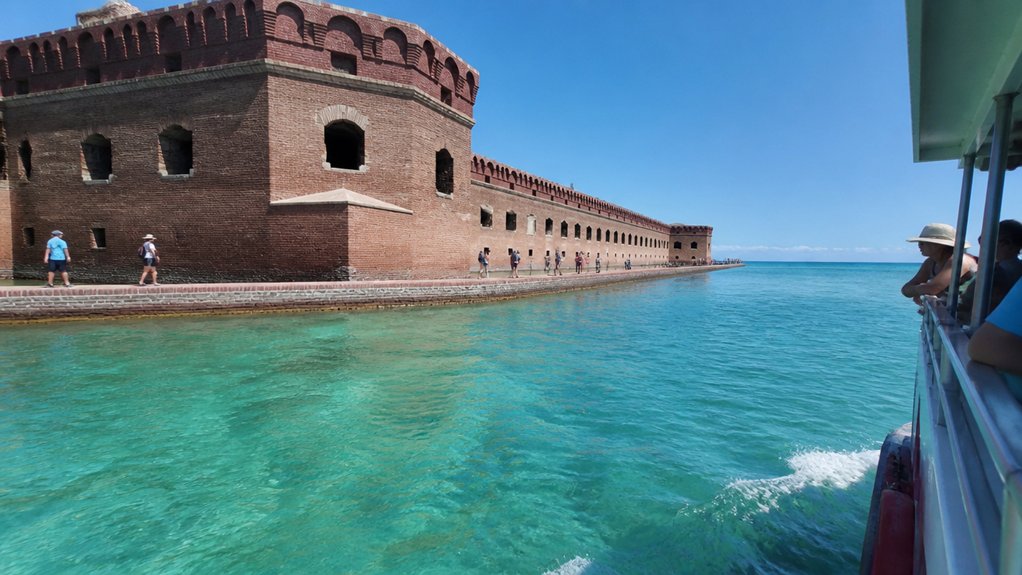
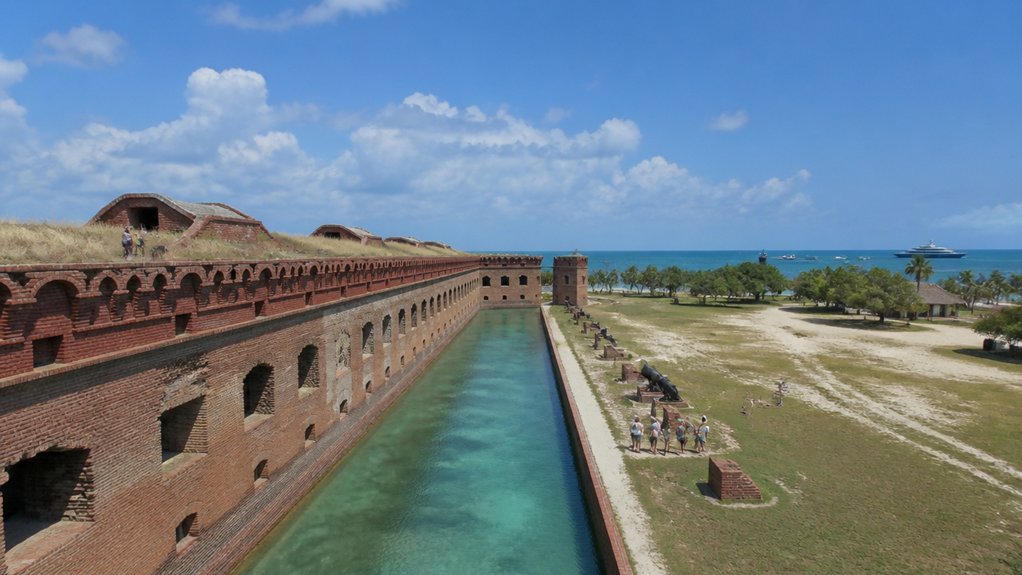
If you want the full wow factor, head for the top-level walkways along Fort Jefferson’s parapet, where the moat glows teal below and the reef stretches into the Gulf.
From this top level, you can trace the moat wall, scan the barrier reef, and catch Loggerhead Key lighthouse glowing at sunset. On the third tier, pause at the embrasures and casemate openings for long Gulf views framed by brick arches. Back in the courtyard, look up for a different angle. Golden hour warms the red and Northern bricks and makes the inner arcades shine. If you want quieter air and fewer elbows, walk the western wall if you arrive late or stay overnight. Campers who use the Dry Tortugas campground can return for especially peaceful sunset and sunrise views around the fort. When the moat-side path is open it gives photogenic reflections.
Can You Snorkel at Fort Jefferson?
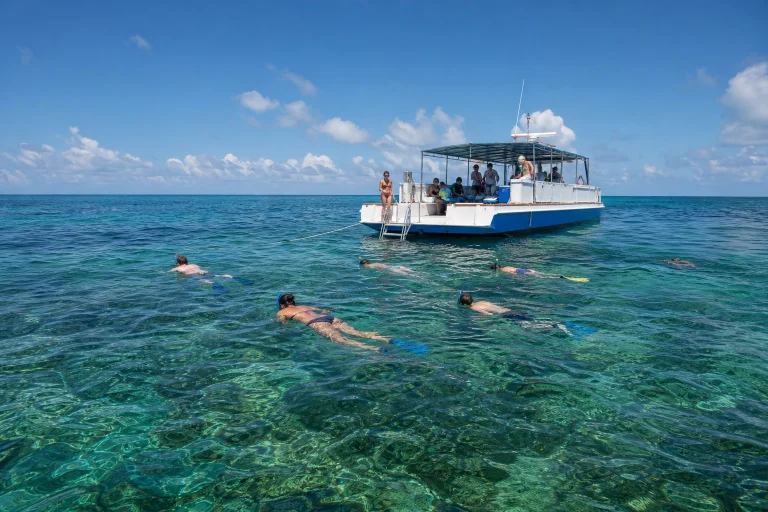
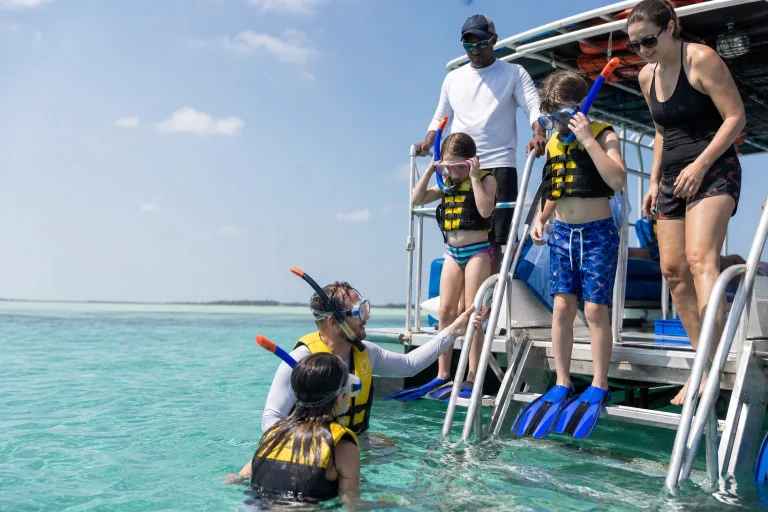
Fort Jefferson isn’t just a place to look at from the walls. You can go snorkeling here, too, with coral and tropical fish reachable by wading from the small beach along the moat. If you arrive on Yankee Freedom ferry day trips, you’ll get gear included. Visitors comparing ferry vs seaplane options should know the ferry makes snorkeling gear part of the day trip. You might even reach the Windjammer shipwreck, though sea conditions decide that daily.
| Spot | What you’ll see | Good to know |
|---|---|---|
| Moat beach | Fish, coral | Easy wade-in |
| Marked reef sites | Better snorkeling | Stay in designated snorkeling areas |
Snorkel with a buddy, not alone. Rough weather can shut down access fast. Stay inside marked zones, protect fragile coral, and follow park rules so the underwater world stays bright and alive.
Should You Add Loggerhead Key?
Why add Loggerhead Key to your Dry Tortugas plans? If you want a quieter island than Garden Key, Loggerhead Key gives you space, pale sand, and the old Loggerhead Light rising above the scrub. You won’t reach it on the standard ferry or seaplane day trip, so a private charter or multi-day visit is the only practical way. That extra effort buys solitude.
It also buys stronger snorkeling. You can explore clearer water, reefs, and the Windjammer shipwreck area when sea conditions cooperate. As one of the best Key West day trips, Loggerhead Key is a rewarding add-on for travelers planning easy escapes beyond the usual Garden Key stop. If four hours at Fort Jefferson feels short, a full-day or overnight charter makes sense. Just plan like a castaway with a checklist. There are no facilities on Loggerhead Key, so bring water, shade, food, and every supply you’ll need there.
Why Fort Jefferson Used 16 Million Bricks
Brick by brick, Fort Jefferson grew into a giant red puzzle in the middle of the Gulf. You can thank 16 million bricks for the fort’s huge walls, powder magazines, and broad traverses that shielded men and guns. Most bricks came from the Pensacola area and arrived by schooner after a four-day trip, which sounds simple until you picture storms, salt, and a lonely island dock. Today, the surrounding waters are part of the Florida Keys National Marine Sanctuary, which protects 4,539 square miles from south of Miami westward to the Dry Tortugas, though Dry Tortugas National Park itself is excluded from the sanctuary area. When supplies got harder to source after Florida’s secession, builders pulled in brick, stone, iron, and lumber from across the country. As you walk, look up for darker Northern bricks along the top walls. The weight was so extreme that shifting sands caused settling, and the second tier stayed unfinished. Fort Jefferson is impressive, stubborn, and slightly overpacked.
How the Casemates Were Built
As you walk the fort, you can picture carpenters raising heavy wooden frames first, like giant ribs that held each gunroom in shape while the masonry went up. Then masons stacked brick and mortar over those forms to build nearly 2,000 arches, giving the casemates their hard curves and cool, shadowy interiors. You’ll also notice the narrow embrasures where cannons once aimed out to sea, turning each brick-lined room into a tough firing chamber with just enough space for men, powder, and a lot of noise. If you arrive by boat, using mooring buoys helps protect nearby coral and seagrass from anchor damage.
Wooden Framing Methods
Step inside a casemate and picture a crew of carpenters raising stout wooden arches inside the room like giant ribs. These temporary frames, called timber centering, gave each casemate its curve before a ceiling could stand on its own. You can imagine the thump of mallets, the scrape of saws, and the smell of fresh-cut lumber in the damp air. The builders repeated this method again and again, setting up support for roughly 2,000 brick arches across Fort Jefferson. That matters because the finished vaults had to carry upper gun tiers, heavy cannon, and tons of masonry above you. Once the mortar cured, workers pulled the wooden framing away. What stayed behind was a self-supporting shell, carefully shaped to handle weight on restless sands. Today, visitors exploring the wider Keys can also use the Marine Sanctuary Explorer to better understand the surrounding waters of Florida Keys National Marine Sanctuary.
Brick Arch Construction
Look up at one of these vaulted rooms and you can see how the whole system came together. Carpenters first built a heavy wooden arch frame, then masons stacked brick and mortar over it until each curve locked tight. Those casemates weren’t simple rooms. They were load-bearing shells, repeated nearly 2,000 times across Fort Jefferson.
You can spot how ambitious that was in the materials alone. The fort used about 16 million bricks, both local and imported, and some red Northern brick still shows near the top courses. Building on shifting sand made every arch a gamble. As the ground settled, engineers kept the second tier incomplete so the casemates below wouldn’t carry even more weight. It’s impressive engineering, with stubbornness baked in. Like the Truman Little White House, it stands today as one of the most significant historic sites in Key West.
Nearby hotels to compare
Compare other stays around Old Town Key West so you can weigh location, room style, and overall trip fit.
Hyatt Vacation Club at Beach House, Key West
Stay in a classic Key West–style, tropical getaway set up as residential-style retreats with manicured gardens and beachside comfort. A connecting on-property dock makes it easy to rent a kayak and head out for Gulf of Mexico water adventures. Plan a vacation that feels more like having your own place by the water.
Check ratesEmbrasures And Gunrooms
Those brick arches mattered because each one became a gunroom, a vaulted casemate where crews wrestled heavy cannons into place and aimed through a slim embrasure cut in the outer wall.
As you walk the tiers, you can picture carpenters shaping stout wooden forms first, then masons stacking brick and mortar over them to make the curved ceilings of the casemates. Each room held guns, sometimes giant 15-inch Rodman cannons, and the embrasures let them traverse toward the sea while keeping crews less exposed. Nearby magazines, vents, and traverses helped keep powder dry, air moving, and accidents at bay. Roughly 2,000 arches created this repeating rhythm of shadow, salt, and strategy. It feels practical and dramatic at once, like the fort was built by engineers with stage sense. If you arrive by boat, following Florida boating regulations helps ensure a safe and legal visit to the surrounding waters.
Where to See Fort Jefferson’s Biggest Guns
Head up to Fort Jefferson’s top-level walks and outer parapets if you want to find its biggest surviving guns. Several massive pieces still sit where crews left them because they were simply too huge to haul away. You’ll spot originals on the walls and in exposed emplacements, with sea breezes, bright brick, and open water adding to the scene.
Keep an eye out for the 15-inch Rodman, a giant smoothbore that once hurled 432-pound shots nearly three miles. At Fort Jefferson, these monsters served on seaward parapets and in casemates. You can walk into accessible casemates, peek through the embrasures, and get a close look at the thick brick gunrooms. Some large guns disappeared around 1900, but the biggest survivors still make quite an impression, and photographs look tiny beside them.
Daily Life at Fort Jefferson
As you walk the brick corridors, you can picture a busy island town where nearly 2,000 soldiers, laborers, and prisoners once packed Garden Key. You can almost hear boots on drill, tools on stone, and orders bouncing off the casemates as men marched in the heat, hauled supplies, and kept the fort running. Yet the routine came with a hard edge, because disease, hard labor, and crowded barracks made daily life here feel far less like a seaside post and more like a sunbaked grind. Even so, the surrounding Keys still suggest the region’s long bond with the sea, from historic boat rides in Key Largo to harbor scenes in Key West.
Barracks And Routines
Often, the first thing you notice about daily life at Fort Jefferson is how crowded Garden Key once felt, with nearly 2,000 people packed onto this small island in the 1860s. You can picture soldiers’ barracks, tent rows, and brick passages shaping daily routines from sunrise on. Officers, cooks, and guards kept the island moving with strict timing. Like a visitor’s guide, this daily layout helps you imagine how people moved through the fort from one task to the next.
| Place | What you’d see | Why it mattered |
|---|---|---|
| Barracks | Bunks, gear, tight quarters | Housed ten companies |
| Casemates | Cannons, crews, echoing drills | Kept defenses ready |
| Walkways | Trees, storehouses, cooks | Linked the whole fort |
You’d hear marching in the sun, guards changing posts, and carpenters or masons at work. Yellow fever sometimes swept through, reminding you this busy post could feel, as one observer said, like “a dark, mean place.”
Hardship And Labor
Crowded routines were only part of the story. On Garden Key, you picture nearly 2,000 people packed inside the fort, with soldiers, laborers, and prisoners keeping construction and guard duty going day after day. In the heat, soldiers drilled and marched, while crews hauled supplies and stacked bricks that arrived by schooner after long trips from Pensacola or Maine.
You can almost hear boots on parade ground and gun crews straining in casemates, where some artillery pieces needed seven men. Life stayed rough. Yellow fever spread. Death visited often. Shifting sand, storms, and sinking walls forced constant repairs, and made this remote post feel grim, even with bright water glittering just outside the walls. You’d admire the ambition, then wince at the daily grind. Modern visitors planning a longer Florida Keys trip should still keep evacuation orders in mind during hurricane season.
How Powder Magazines Prevented Explosions
Because a fort packed with gunpowder could turn disastrous in a flash, Fort Jefferson spread its explosive stores across 37 separate magazines instead of piling them into one risky cache. As you walk the brick corridors, you can picture how those powder magazines broke up danger and kept one blast from touching the next. Five stood apart as detached buildings, giving the main walls extra breathing room. Smart magazine construction helped too. Thick masonry, tiny vents, and few doorways kept sparks out while air moved enough to dry the powder. You’ll also notice the traverses, those bulky mounds along exposed walls. They shielded crews and guns, and some hid smaller magazines inside. At Fort Jefferson, separation was the real safety trick. Storms mattered less. If you head out on the water afterward, remember the nearby Florida Keys sanctuary enforces no-entry zones and other marine protections in certain areas.
Why Fort Jefferson Was Never Finished
As you walk Fort Jefferson’s huge brick walls, you can see why the project stalled: Garden Key’s shifting sands made the fort sink and settle, so builders stopped before adding the full upper tier. You’re also looking at a design that war quickly outran, because by about 1862 rifled artillery could punch through masonry and make the original plan feel old fast. Add storms, supply headaches, and bricks hauled from as far as Maine, and you get a fortress that feels both grand and unfinished, like an ambitious blueprint the sea kept arguing with.
Sinking Foundations
Although Fort Jefferson looks solid enough to shrug off a century of storms, its biggest problem sat under your feet. Built on Garden Key’s soft shifting sands, the fort started to sink before crews could finish the full design. You can picture the headaches: sinking sections, storm damage, and masonry that never got a stable platform. With about 16 million bricks, plus stone, iron, cement, and lumber, the weight kept pressing downward. Builders stopped the upper tier and spread out magazines and traverses to avoid extra stress. By 1862, visible settling helped confirm the choice. So when you walk Fort Jefferson today, you’re seeing a giant masterpiece that met the island’s limits and politely gave up on reaching higher than its sandy footing allowed there.
More nearby hotels to compare
Compare other stays around Old Town Key West so you can weigh location, room style, and overall trip fit.
Hyatt Vacation Club at Beach House, Key West
Stay in a classic Key West–style, tropical getaway set up as residential-style retreats with manicured gardens and beachside comfort. A connecting on-property dock makes it easy to rent a kayak and head out for Gulf of Mexico water adventures. Plan a vacation that feels more like having your own place by the water.
Check ratesObsolete Defenses
Even while Fort Jefferson was still rising from Garden Key, military technology was already racing past it. You can feel that irony in the sunbaked walls. Fort Jefferson used 16 million bricks, yet rifled artillery made masonry obsolete before workers finished the job. Even the giant 15-inch Rodman guns couldn’t solve that problem.
| Feature | What you notice |
|---|---|
| Walls | Massive brick, yet vulnerable |
| Guns | Huge Rodmans, 25 tons each |
| Design shift | 37 magazines and traverses |
| Result | Prison and supply post |
You see why the second tier stayed incomplete. Builders feared more sinking weight, and better naval guns threatened the fort anyway. So planners adapted instead of finishing everything. Fort Jefferson never fired in combat. It simply became something stranger, and more memorable, than its designers planned.
Frequently Asked Questions
Are Restrooms Available at Fort Jefferson?
Yes, you’ll find restrooms at Fort Jefferson, though availability varies. You should expect portable toilets or flush facilities, limited by historic preservation needs. Follow restroom signage, and don’t assume gender neutral facilities or stocked supplies.
Can You Bring Your Own Food and Drinks?
Yes—you can bring your own food and drinks, so don’t worry about going hungry. Check cooler restrictions and the alcohol policy, use designated picnic spots, and handle trash disposal carefully since island supplies are limited.
Is Fort Jefferson Wheelchair Accessible?
Yes, you can access parts of Fort Jefferson, including ground-level areas with wheelchair ramps and limited boardwalk access, but you can’t reach many upper levels. Arrange accessible tours, confirm assistance, and ask about service animals.
Do You Need to Bring Reef-Safe Sunscreen?
Yes—you’ll want reef safe lotions, because apparently the ocean doesn’t love your usual sunscreen. Choose chemical alternatives, follow application timing by applying 15–20 minutes early, and respect environmental regulations while protecting your skin and coral.
Is There Cell Service or Wi-Fi at Fort Jefferson?
No—you won’t get cell service or Wi‑Fi at Fort Jefferson. Bring offline maps, print confirmations, and plan ahead. You can’t rely on signal boosters; use a satellite phone only if operators and airlink regulations allow.
Conclusion
Fort Jefferson feels remote, but you can cover a lot if you plan well. You’ll walk through a fort made with about 16 million bricks, then hear wind brush the walls and waves tap the moat below. Start with the courtyard and casemates. Climb the parapet for the big Gulf view. If you’ve got extra time, grab your snorkel and slip into the clear water. History sticks here, and so does the salt on your skin.