Key West Snorkeling Tours for Families
Compare local reef trips and Dry Tortugas excursions, then learn how to choose a family-friendly Key West snorkeling tour based on timing, gear, safety, accessibility, and weather.
Key West snorkeling tours for families fall into two broad categories. Local reef excursions commonly last about three hours and keep the day centered on boating and snorkeling. Dry Tortugas is about 70 miles west of Key West, can be reached only by boat or seaplane, and works as a destination day trip with snorkeling included. Choosing between them is the first and most important planning decision.
- Choose a local reef excursion for a shorter, snorkeling-focused outing.
- Treat Dry Tortugas as a full-day park experience rather than a quick boat tour.
- Confirm child age rules, swimming requirements, flotation gear, shade, and water-entry design.
- Leave room in the schedule for weather-related changes or cancellations.
- Review the exact dock, check-in time, inclusions, and cancellation policy before departure.
- Ask specific accessibility questions before booking if anyone has mobility needs.
The strongest family choice is not necessarily the longest trip or the boat with the busiest list of extras. Look for an outing that matches your children’s water confidence, attention span, and tolerance for boat travel. A clear safety briefing, suitable flotation, an easy route back aboard, and a manageable schedule often matter more than squeezing another activity into the day.
Choose a local reef trip or a Dry Tortugas day trip
A local reef trip is usually the simpler introduction. Local operators commonly advertise outings of roughly three hours, which leaves space for meals, rest, and another Key West activity. Families spend less of the day committed to transportation, and the experience remains focused on the boat ride, instruction, and time in the water.
| Tour format | Typical commitment | Best suited to | Main planning issue |
|---|---|---|---|
| Local reef excursion | Roughly three hours on commonly advertised outings | Families seeking a focused snorkeling activity | Vessel amenities, age rules, and changing weather |
| Dry Tortugas excursion | A destination day trip about 70 miles west of Key West | Families who want a national park visit with snorkeling | Longer transportation commitment and limited island access |
Dry Tortugas adds a remote national park and Garden Key to the experience, but snorkeling is only one part of the day. Ferry and seaplane passengers are delivered to Garden Key. Those services do not carry day visitors among the park’s other islands, and their schedules generally do not leave time for a separate visit to Loggerhead Key.
Match the boat and equipment to your family
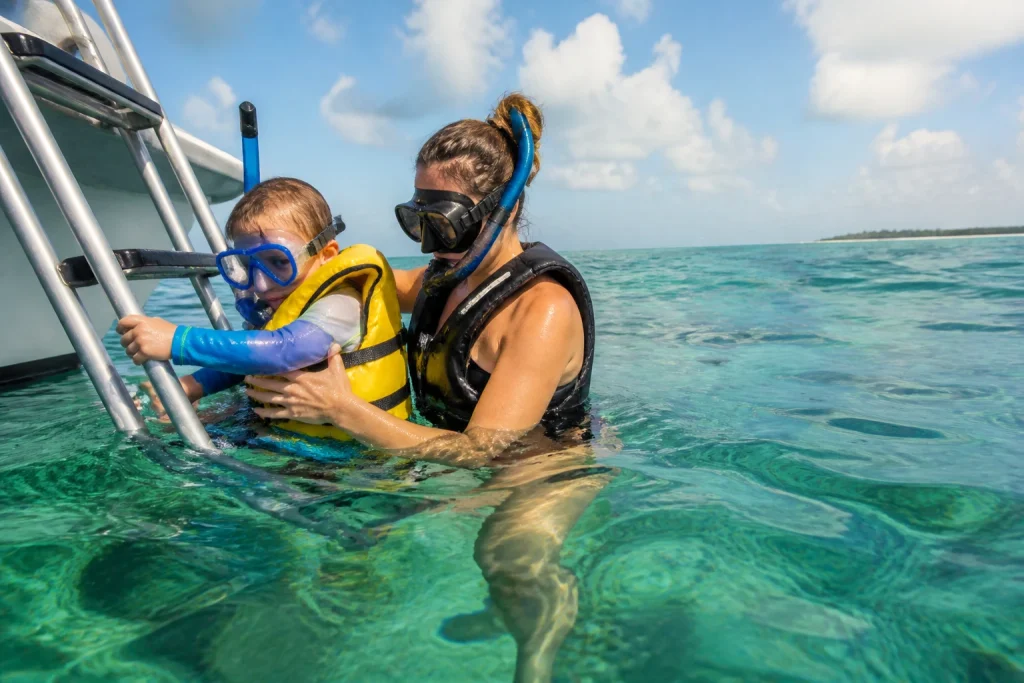
For children and first-time snorkelers, prioritize listings that explicitly include masks, snorkels, fins, instruction, and flotation or buoyancy equipment. Shade and a ladder or stairway can also make the outing more manageable. These features appear on local listings, but they are not standard across every vessel. Read the description for the specific departure you plan to book.
Ask how swimmers enter and leave the water
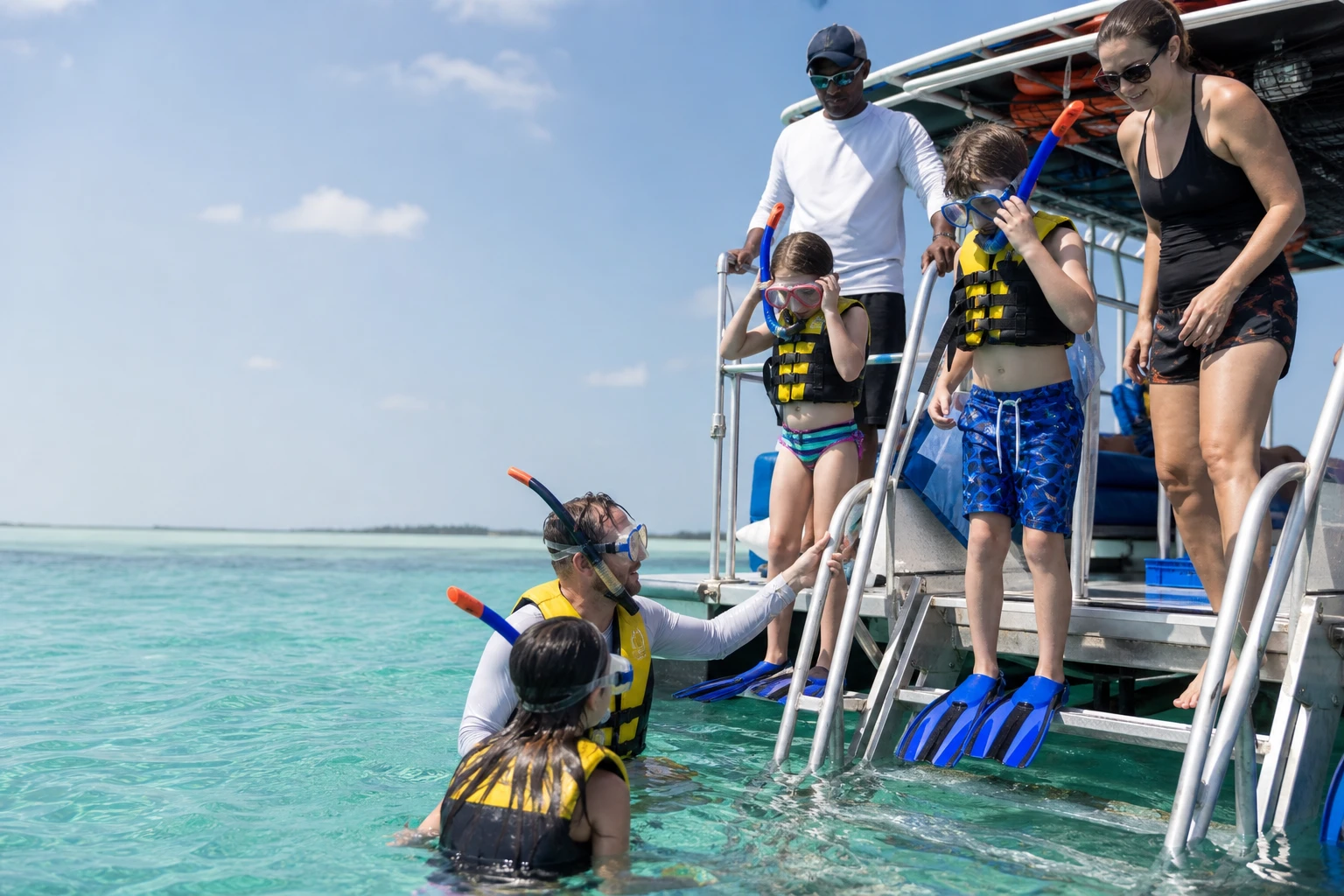
Water entry can shape the entire experience for a nervous child. Ask whether guests use a ladder, steps, or another system, and find out how much climbing is required. A child who feels comfortable on a beach can react differently when entering open water from a moving vessel. The operator should also explain how crew members supervise entry and help guests return aboard within its safety policy.
Check the rules for children before paying
- What is the minimum age for the selected departure?
- Must children demonstrate a particular level of swimming ability?
- Which flotation devices are available in child sizes?
- Can a child or adult remain aboard instead of entering the water?
- Is shade available during the trip?
- Does the vessel have a restroom suitable for your family’s needs?
Use the answers to judge the entire family’s comfort, not just the strongest swimmer’s ability. If one adult expects to remain aboard with a younger child, confirm that the booking permits non-snorkeling passengers and that staying on the vessel is practical during the water stop.
Choose departure time around energy and weather
Morning and afternoon outings can both work for families. Pick the time when your children are usually rested, fed, and ready to follow instructions. Avoid placing a demanding water activity immediately after a late arrival in Key West or before a tightly timed evening commitment. A small scheduling cushion makes check-in and weather changes less stressful.
A three-hour morning departure can run from 9 a.m. to noon, with arrival requested at least 30 minutes before sailing. That is one operator-specific example, not a citywide schedule. Departure times and docks change, so use the time and meeting point shown on the confirmation for your exact tour.
Summer water temperatures in the Florida Keys are described as reaching the mid-80s Fahrenheit, which can feel comfortable for swimming. Warm water does not guarantee smooth boating or clear underwater views. Wind, weather, and sea conditions can influence the reef location or the trip itself, so keep some flexibility in the family itinerary.
Before buying, review what happens when conditions deteriorate. Look for clear cancellation, rebooking, and weather policies. Shortly before leaving your hotel, check the operator’s latest message rather than relying on the weather you can see from shore.
Still comparing Sightseeing?
Ask for tour ideas, hotel suggestions, or a simple trip plan that combines both.
Trip Helper
Know what to expect on a local reef excursion
A well-organized trip should make the sequence easy to understand: check-in, boarding, safety instruction, gear fitting, travel to the selected site, a water session, and the return to Key West. The exact reef and time in the water can change with conditions, so compare the complete trip duration without assuming all of it will be spent snorkeling.
Arrive early enough for bathroom visits, sunscreen, gear questions, and a calm walk to the correct dock. The Historic Seaport is used by local departures, but families should follow the meeting instructions for their specific operator. Similar-looking boats and busy docks can make an assumed meeting place a poor strategy.
During the briefing, help children listen for the hand signals, buddy procedure, entry instructions, and method for returning to the boat. Let the crew fit unfamiliar equipment rather than making rushed adjustments at the edge of the vessel. A mask that seals comfortably and fins that stay in place remove two common distractions from a first snorkeling session.
Parents should have a plan for a child who decides not to enter the water or wants to stop early. Confirm in advance whether someone can remain aboard and what supervision is required. A shorter swim followed by time in the shade can still make the outing successful.
Treat Dry Tortugas as a park day with snorkeling
Dry Tortugas suits families excited by the broader destination, not only the underwater portion. The park lies about 70 miles west of Key West and is accessible only by boat or seaplane. The journey and fixed transportation schedule create a much larger time commitment than a local three-hour reef outing.
Ferry and seaplane day visitors arrive at Garden Key. These services do not transport passengers to the park’s other islands, and the limited schedule generally rules out a Loggerhead Key side trip. Plan around what can be done at Garden Key rather than treating the park as an island-hopping snorkel tour.
Transportation method changes the rhythm of the day. The Dry Tortugas Ferry vs Seaplane: Which Is Better comparison can help families weigh travel style and time before committing. Whichever option you select, snorkeling should share the itinerary with the realities of reaching and exploring this remote park.
The National Park Service lists a Dry Tortugas entrance fee of $15 per person for seven consecutive days, separate from transportation. Visitors under 16 are exempt. A qualifying National Park pass can be applied at check-in so the entrance portion is deducted from ferry or seaplane transportation costs. Check the current fee and carrier total before booking.
Make reef safety part of the family plan
Snorkel with a buddy and keep children within the boundaries explained by the crew or park staff. No one should touch coral, fish, shells, shipwrecks, or artifacts. At Dry Tortugas, swimmers also need to watch for hazards that include fire coral, jellyfish, sea urchins, and lionfish.
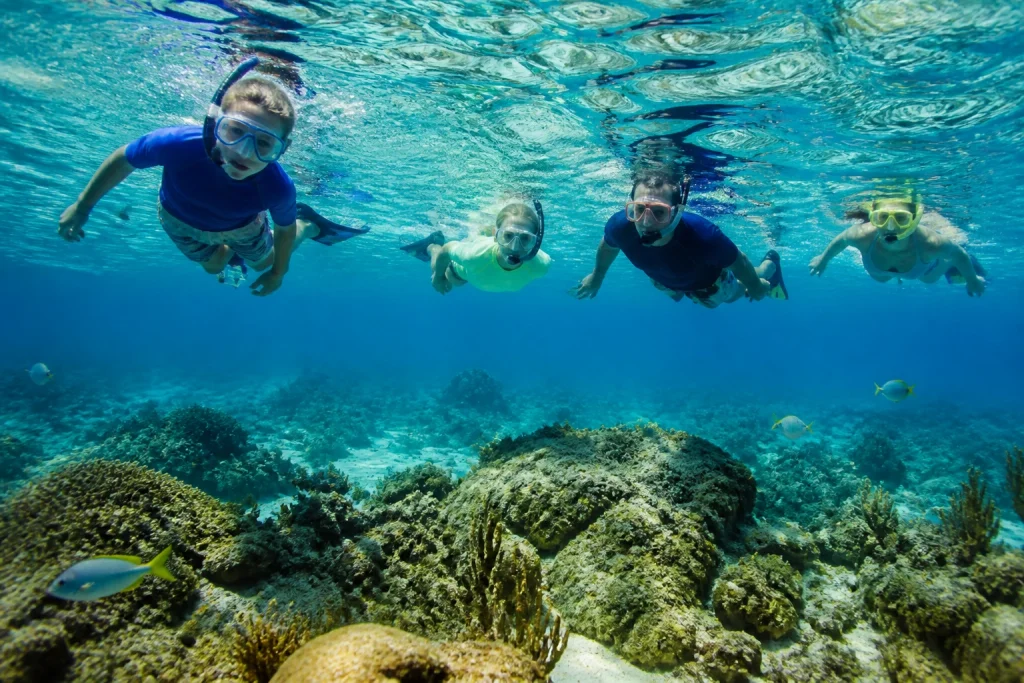
At Garden Key, shore snorkeling is limited to the designated swim area, while the moat and harbor are off-limits. Snorkeling outside designated areas requires a red-and-white diver-down warning device. These rules add equipment and navigation considerations that most families can avoid by staying within the designated area.
Conditions and park notices can change. Check current National Park Service alerts before a Dry Tortugas trip and read the booked operator’s weather update before any departure. Do not rely on old closure notices copied into travel discussions, since temporary restrictions can outlive their original dates online.
Prepare children for the idea that they can end the swim whenever they feel tired, cold, anxious, or uncomfortable. They should signal their buddy or the crew rather than pushing through distress. Parents can also reduce pressure by treating wildlife sightings as a bonus instead of a promise that must be fulfilled.
Confirm accessibility with the exact vessel
Accessibility varies by boat, dock, and activity. Contact the specific operator before booking to discuss the dock-to-vessel transfer, ramps or lifts, number of steps, wheelchair stowage, accessible restroom availability, and the water-entry system. Ask what assistance crew members can provide under the company’s safety procedures.
Also ask whether a traveler can remain aboard during the snorkeling stop. Staying on the boat can be as important as entering the water for a multigenerational family. Vessel access does not automatically mean that in-water snorkeling is accessible, so discuss those parts of the experience separately.
For planning elsewhere on the island, the Key West Accessibility Guide for wheelchairs and mobility needs covers the broader destination. Tour-specific arrangements still need to be discussed with the operator because vessels and crew assistance policies differ.
Pack light but prepare for sun, spray, and wet gear
Bring a compact bag that can be managed without blocking walkways. Useful items include swimwear, a towel, a sun-protective layer, a secure hat for time at the dock, drinking water if permitted, dry clothing, and any personal medication your family needs. Protect phones and other moisture-sensitive items from spray and dripping equipment.
- Booking confirmation and identification requested by the operator
- Swimwear and a towel
- Sun-protective clothing
- Dry clothes for children who dislike staying in damp fabric
- A water-resistant pouch for small essentials
- Personal mask or prescription equipment, if needed and permitted
If the tour advertises included snorkel gear, verify what that means for children. Ask about available sizes and whether flotation is included. Families bringing personal equipment should check that the operator allows it and that every item fits before departure day.
The Key West Packing List: What to Bring for Any Season is useful for the rest of the vacation. For the boat itself, resist overpacking. A small, organized bag is easier to keep dry and easier to move when the family is boarding together.
Compare tours using the details that affect families
- Decide between a roughly three-hour local trip and a Dry Tortugas destination day.
- Check minimum ages, swimming requirements, and supervision rules.
- Confirm included gear, child-size flotation, instruction, shade, and water entry.
- Compare the complete duration, meeting point, and required arrival time.
- Review weather cancellation, refund, and rebooking terms.
- Confirm accessibility, restroom needs, and the option to remain aboard.
Compare the final booking total rather than relying on a broad advertised price or an old rate found elsewhere. Local tour prices can vary with the provider, departure, and ticket type. For Dry Tortugas, remember that the park entrance fee and transportation are separate parts of the cost, even when collected during the same booking process.

Read the inclusions line by line. Gear, instruction, flotation, shade, and entry systems are useful family features, but no single amenity should be assumed across all Key West tours. Save the final confirmation where it can be opened without a complicated search on the morning of departure.
Avoid booking a nonrefundable activity based only on a child’s enthusiasm for photographs of the reef. Discuss the boat ride, open-water entry, mask sensation, and buddy rules first. The goal is to choose an experience the child understands, not to manufacture courage at the dock.
Build a family-friendly day around the tour
Give a local reef outing some breathing room on both sides. Allow time to reach the dock, check in, use the restroom, and organize equipment. Afterward, a meal and a low-pressure activity are often easier than another fixed reservation. The Key West With Kids: Best Things to Do guide can help fill the remaining hours without turning the day into a race.
A Dry Tortugas excursion should anchor the day rather than share it with major plans elsewhere. The distance from Key West, transportation schedule, and Garden Key visit make it a destination experience. Keep the evening flexible, especially when traveling with younger children who have spent hours in sun, wind, and salt water.
If weather disrupts the outing, have a simple backup plan that does not depend on another boat. Flexibility is especially valuable when snorkeling is a highlight of the trip. Families with several days in Key West can improve their chances by avoiding a tour on the final available morning or afternoon.
Make the final choice based on comfort and commitment
A local reef excursion is the practical choice for most families seeking a manageable introduction to Key West snorkeling. The roughly three-hour format is easier to fit into a vacation, and listings can include instruction, gear, flotation, shade, and easier water entry. Confirm those features for the exact vessel rather than assuming they come with every booking.
Choose Dry Tortugas when the entire family wants a remote national park day and accepts that snorkeling will share the schedule with transportation and Garden Key. Its chief limitation is the larger time commitment and restricted access to other park islands for ferry and seaplane day visitors.
Once the format is settled, compare age rules, water entry, flotation, shade, accessibility, and weather policies. Book the tour that gives every family member a realistic way to participate, including anyone who may prefer to enjoy the boat ride without entering the water.
Frequently asked questions
Are Key West snorkeling tours suitable for young children?
Some Key West snorkeling tours are suitable for young children, but minimum ages and participation rules vary by operator and vessel. Look for included instruction, child-size flotation, shade, and an easy water-entry system. Confirm whether a child can remain aboard if entering open water feels overwhelming.
How long is a family snorkeling tour in Key West?
Local reef excursions are commonly advertised at roughly three hours. Dry Tortugas is a destination day trip about 70 miles west of Key West, so it requires a much larger commitment and should not be treated as a quick snorkeling tour.
Is morning or afternoon better for family snorkeling?
The better time is when your children are rested and ready to listen to instructions. Weather and sea conditions can affect either departure, so keep the schedule flexible and check the operator’s latest message before leaving for the dock.
Is snorkeling equipment included on Key West tours?
Equipment is included on some local tour listings, but it should not be assumed for every departure. Confirm whether the booking includes a mask, snorkel, fins, instruction, and flotation in sizes suitable for each family member.
How much do Key West snorkeling tours cost?
Local tour prices vary by provider, departure, and ticket type, so compare the live booking total and inclusions. For Dry Tortugas, the National Park Service lists a $15 entrance fee per person for seven consecutive days, with visitors under 16 exempt. Transportation is a separate cost, and current rates should be checked before booking.
What happens if weather affects the snorkeling tour?
The operator can change the reef location, cancel, or offer another arrangement according to its policy. Review cancellation and rebooking terms before paying, then check the operator’s weather message shortly before departure.
Can a family member stay on the boat instead of snorkeling?
That depends on the operator, vessel, and ticket policy. Confirm before booking whether a guest can remain aboard, what supervision is required for children, and whether the shaded seating and restroom arrangements meet that person’s needs.
What safety rules apply when snorkeling at Dry Tortugas?
Snorkel with a buddy, stay in designated areas, and do not touch coral, wildlife, shells, wrecks, or artifacts. At Garden Key, the moat and harbor are off-limits, and snorkeling outside designated areas requires a red-and-white diver-down warning device.
Hotel bases to compare after this tour
Once you have the tour shortlist, compare a few stays that can make the trip logistics easier.

The Reach Key West, Curio Collection by Hilton
A beachfront Hilton Curio Collection resort in Old Town Key West with a private beach, pool, spa access, and easy access to Duval Street and Southernmost Point.
Check rates
Hyatt Vacation Club at Beach House, Key West
Stay in a classic Key West–style, tropical getaway set up as residential-style retreats with manicured gardens and beachside comfort. A connecting on-property dock makes it easy to rent a kayak and head out for Gulf of Mexico water adventures. Plan a vacation that feels more like having your own place by the water.
Check rates