Key West Reef Snorkel Cruise: What to Expect
A Key West reef snorkel cruise combines a boat ride with time in the water, usually in about three hours. Learn how to compare itineraries, find the right dock, prepare for changing conditions, and snorkel responsibly.
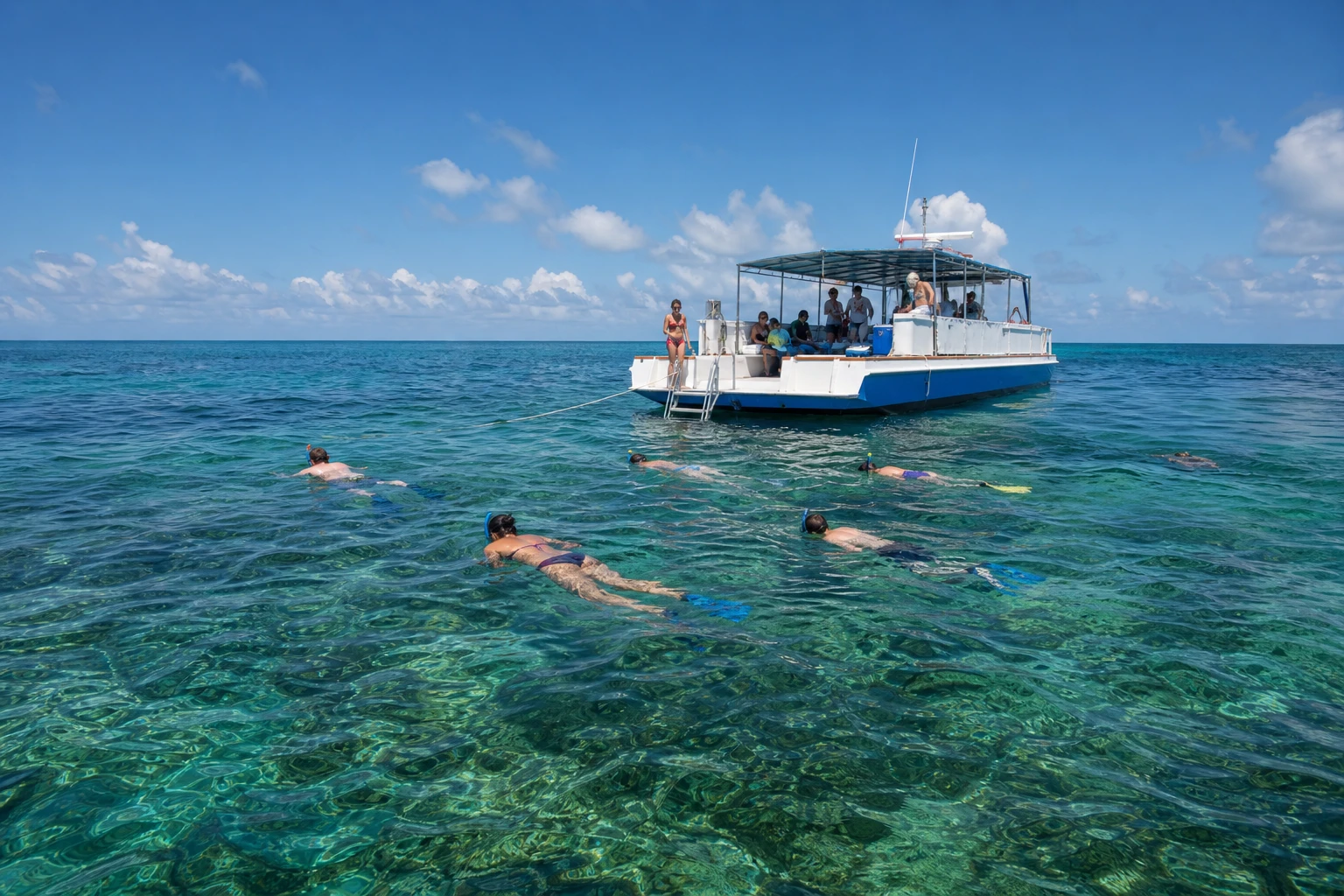
A Key West reef snorkel cruise combines boat travel with a chance to enter the island’s offshore marine world. Many products are sold as roughly three-hour outings, making them manageable within a wider Key West itinerary. The exact reef site, visibility, sea conditions, and time spent in the water depend on the operator and conditions that day.
- Allow about three hours for many standard cruises, plus the required check-in period.
- Use the dock on your confirmation because Key West snorkel trips leave from several waterfront locations.
- Compare equipment, instruction, food, drinks, flotation support, gratuity, and cancellation terms before paying.
- Expect the crew to choose a snorkeling site according to current conditions rather than a guaranteed reef.
- Never touch, stand on, chase, feed, collect, or handle coral and other reef life.
The experience suits travelers who enjoy being on a boat and are comfortable around open water. Beginners can still have a good outing, but vessel layout, instruction, water entry, and flotation support vary. Choosing the right product matters more than choosing the most exciting tour name.
What happens on a Key West reef snorkel cruise
Your outing begins at the check-in location printed on the booking confirmation. Arrive by the stated time rather than using the advertised departure time as your arrival target. Staff may need to confirm reservations, explain the vessel’s procedures, distribute included equipment, and complete any required preparation before boarding.
Boarding and getting settled
Boat design differs considerably between products. One advertised catamaran has easy snorkel entry, above-deck restrooms, and a large sun deck, but those features are not standard across the Key West fleet. Before departure, locate the restroom, shaded or sheltered space, flotation gear, and the water-entry area you will use later.
The ride to the snorkeling site
The boat ride carries guests away from the dock toward a site selected for that trip. The destination can change with weather and marine conditions, so a cruise description should be treated as an itinerary style rather than a promise of one precise reef. Enjoy the salt air and open horizon, but keep loose belongings secure once the vessel is moving.
Gear preparation and instruction
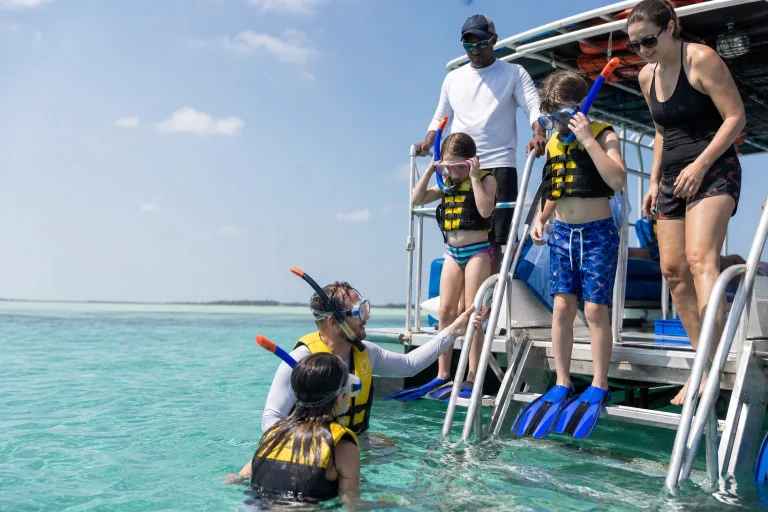
Some packages advertise snorkel equipment and instruction, while others differ in what is bundled. Listen closely to the crew’s explanation of mask fit, breathing, flotation, entry, exit, and signals. Even experienced swimmers should learn the procedures for that particular vessel. A familiar technique on shore can feel different when practiced beside a moving boat.
Time in the water and the return trip
A three-hour cruise does not mean three full hours of snorkeling. Check-in, boarding, the outbound ride, preparation, water entry, exit, and the return trip all use part of the schedule. Published information does not consistently assign a fixed amount of in-water time, so compare itineraries if maximizing snorkeling is your priority.
After snorkeling, secure your equipment as directed and change into a dry layer if you brought one. Food and drink service depends on the package. One operator advertises breakfast on a morning trip and drinks after an afternoon trip, while other listings describe different beverage inclusions. Do not assume refreshments are part of every ticket.
How long the cruise takes and which itinerary to choose
Many reef-snorkeling products are marketed as three-hour trips. This length works well for travelers who want a substantial water activity without committing the entire day. Add time for reaching the marina, parking or walking to the dock, checking in, and returning to your hotel or next stop.
| Itinerary format | Best suited to | Main tradeoff |
|---|---|---|
| Standard reef cruise | Travelers seeking a straightforward outing within part of a day | Usually a simpler schedule, but the destination remains conditions-dependent |
| Two-reef or double-dip trip | Snorkelers who prioritize visiting more than one stop | More emphasis on the water itinerary, with exact sites still subject to conditions |
| Reef and sunset combination | Travelers who value the evening atmosphere as much as snorkeling | Part of the experience is devoted to the sunset portion rather than snorkeling alone |
Choose the itinerary according to what you most want from the outing. A standard cruise offers the least complicated introduction. A double-dip product places more emphasis on multiple stops. A reef-and-sunset combination favors atmosphere and an evening schedule. Marketing names differ, so compare the actual itinerary rather than relying on the product title.
Morning and afternoon listings are available, but no departure period guarantees calm water, clear visibility, or better wildlife viewing. Select the time that fits your energy level and wider plans. Leave enough flexibility afterward in case check-in, docking, or local transportation takes longer than expected.
How to choose a responsible snorkel operator
Start by comparing itinerary, duration, departure dock, vessel layout, group procedures, and included equipment. A polished product name reveals little about the actual experience. The most useful listing is one that clearly explains where to check in, what is provided, how guests enter the water, and what happens if conditions change.

NOAA’s Blue Star program offers another useful comparison point. It voluntarily recognizes operators that educate customers about the local ecosystem and responsible snorkeling practices, and active participants include Key West businesses. Blue Star recognition does not guarantee comfort, accessibility, wildlife, visibility, or reef condition, so evaluate those factors separately.
- Does the ticket include a mask, snorkel, fins, flotation vest, and instruction?
- How many reef stops are planned, and can the itinerary change with conditions?
- Are food and drinks included, or available only on selected departures?
- What are the cancellation and weather policies for the exact ticket?
- How do guests board the boat and enter or exit the water?
- Can a companion remain aboard without snorkeling?
Read the selected product description through checkout rather than assuming every departure has the same features. Key West’s broader tours overview can also help you compare a reef cruise with other boat-based activities before assigning time in your itinerary.
Still comparing Food Tours?
Ask for tour ideas, hotel suggestions, or a simple trip plan that combines both.
Trip Helper
Finding your departure dock and planning parking
There is no single departure point for every Key West reef snorkel cruise. The city lists the Historic Seaport at Key West Bight at 201 William Street, while current snorkel products also identify Opal Key Marina and locations on Front Street. Navigate to the address in your confirmation, not simply to “Key West harbor.”
Check the dock name, street address, check-in time, and operator contact details before leaving your lodging. A marina area can contain several businesses and boarding points. Saving the confirmation where it remains available without a strong data connection can prevent a last-minute search along the waterfront.
Drivers using a Key West Bight departure can consider the city’s Caroline Street Key West Bight lot. The city currently lists 120 spaces, a rate of $6 per hour, and a $48 daily maximum. Rates can change, and a listed capacity does not guarantee an open space. Recheck city information and allow extra time to park.
The Key West parking guide offers broader help for drivers planning a waterfront departure. If your lodging is near the dock, walking or using another local transportation option can avoid parking uncertainty. The guide to getting around Key West without a car is useful when arranging the cruise within a car-free stay.
Do not schedule arrival so tightly that one missed turn or full lot threatens the trip. Build in time to walk between the parking area and check-in desk. This is especially important when the departure point is unfamiliar or your group needs a slower pace between the street and vessel.
What a Key West reef snorkel cruise costs
There is no dependable single price for a Key West reef snorkel cruise. Published examples reviewed for three-hour products span roughly $40 to $99.50 for adult tickets, but these are differently branded outings with different itineraries, departure points, and inclusions. That range is useful only as context, not as a quote for your travel date.
Price the exact date, departure, and ticket at checkout. Taxes, promotions, gratuity, availability, and optional extras are not presented consistently across listings. A lower headline price can represent a different product rather than the same experience at a better rate.
Compare total value by checking equipment, instruction, flotation support, food, drinks, itinerary, and cancellation terms. Ask about wetsuit availability if that matters to you. These details vary enough that two cruises with similar durations can produce different final costs and very different levels of convenience.
Reservation timing is a personal tradeoff. Booking ahead secures a place on the selected product, while conditions can still affect the eventual destination or operation. Read the cancellation and weather terms before paying so you understand how the operator handles changes.
Weather, visibility, and reef destinations can change
No reef cruise can promise a specific sea state, level of visibility, wildlife sighting, or snorkeling location in advance. The operator’s day-of safety decision and relevant marine advisories control the outing. A destination named in marketing material can be replaced when weather or marine conditions make another choice more appropriate.
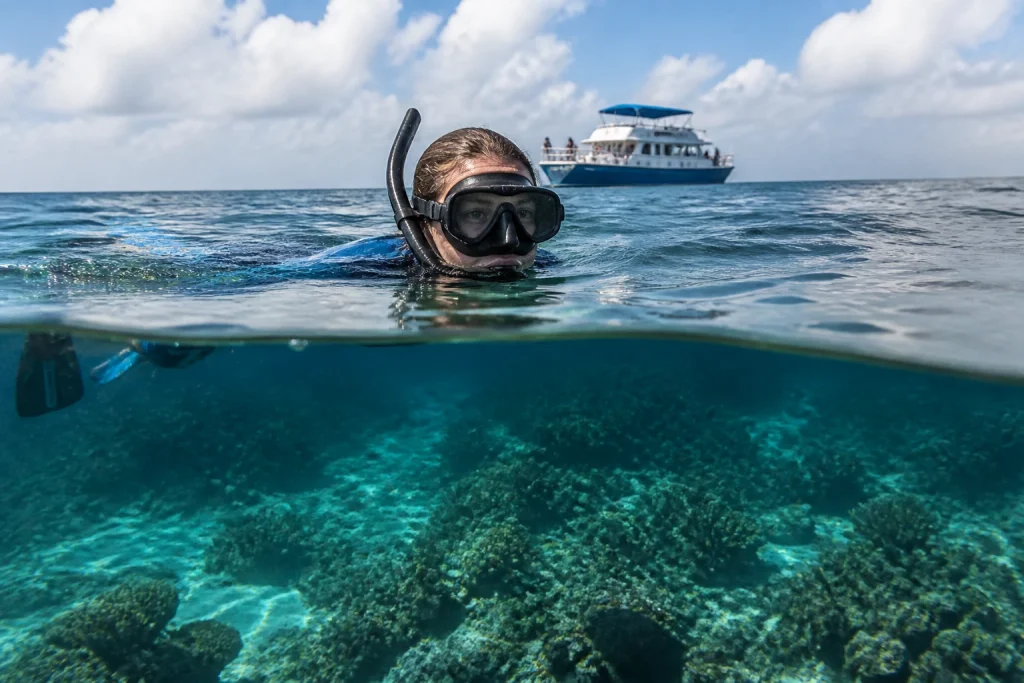
Check messages from the operator before heading to the dock, especially when the forecast is unsettled. Follow instructions about delays, cancellation, or a changed itinerary. Avoid building the rest of the day around a guaranteed return minute, even when the advertised trip length is three hours.
If you are prone to motion discomfort, plan before boarding rather than waiting until the vessel is underway. Seek advice from a qualified healthcare professional or pharmacist about suitable options. Eat and hydrate according to your own needs, while checking what food and drinks the operator permits or provides.
Changing conditions do not automatically make the trip disappointing. They simply make flexibility part of the experience. Judge a cruise by the overall boat outing, crew procedures, and chance to snorkel at a suitable site rather than by one promised photograph or named reef.
Snorkeling skills, safety, and reef etiquette
Travelers should follow the crew’s instructions even if they have snorkeled elsewhere. Entry methods, ladders, current procedures, and flotation equipment differ by vessel. Tell the crew about your comfort level before entering the water, and do not treat the first moments beside the boat as the time to hide uncertainty.
NOAA recommends that novice snorkelers use a snorkel vest. If equipment needs adjustment, return to the boat instead of standing on coral. A vest supports buoyancy, but it does not replace instruction, appropriate swimming ability, or attention to the crew’s boundaries.
- Keep hands, fins, and equipment away from coral.
- Never stand, sit, or rest on the reef.
- Do not handle, feed, follow, or chase marine life.
- Return to the boat when gear needs a significant adjustment.
- Leave shells, coral, rocks, artifacts, and other natural objects where they are.
- Stay within the area and procedures set by the crew.
Even minor contact by hands, fins, or equipment can damage coral. Good body position matters as much as good intentions, particularly when a swimmer is concentrating on a mask or camera. Slow down, keep track of your fins, and create space rather than crowding another snorkeler above the reef.
Sanctuary Preservation Areas allow snorkeling and boating, but fishing and collecting are prohibited. Natural and historical resources in sanctuary waters should remain in place. The best souvenir is a memory or photograph, not an object removed from the water.
What to bring on the boat
Pack lightly, but prepare for sun, spray, wet clothing, and time away from the dock. The Key West packing list for any season provides broader help for the rest of the trip. For the cruise itself, focus on items that improve comfort without creating loose clutter aboard the vessel.
- Your booking confirmation and any identification requested by the operator
- A swimsuit, towel, and dry layer for the return ride
- Secure sun protection, including a hat and sunglasses that will not blow away
- Water, if permitted or not included with the selected package
- Personal motion-comfort supplies planned in advance
- A small waterproof pouch for essentials and as few valuables as possible
Confirm whether the operator supplies the mask, snorkel, fins, flotation vest, and instruction. Ask about wetsuits rather than assuming one is available. Travelers who rely on particular prescription or personally fitted gear should discuss compatibility with the operator before departure.
Wear clothing that is easy to manage in a compact marine setting. A dry shirt can make the ride back more comfortable after time in the water. Keep electronics protected and follow crew instructions about where bags can be stored without blocking walkways or equipment.
Accessibility and options for non-snorkelers
Accessibility must be checked with the chosen operator. An advertised easy water entry or above-deck restroom does not confirm step-free dock access, an accessible toilet, transfer assistance, a lift, or easy movement throughout every vessel. Marina infrastructure and boat design both affect the experience.
- How do guests travel between the dock and the vessel?
- Are steps, narrow passages, or gaps involved in boarding?
- Can mobility equipment be brought aboard and stored safely?
- Is the restroom reachable and usable for the traveler’s needs?
- What ladder, stairs, platform, or assistance is used for water entry and exit?
- Can a companion remain aboard without participating in the snorkeling session?
Non-swimmers should not assume that remaining aboard is allowed on every product. Confirm the policy, available flotation support, and expectations before booking. A traveler who plans to stay on the boat should also ask where seating is located and whether deck movement is required during snorkeling operations.
The Key West accessibility guide for wheelchairs and mobility can help with wider destination planning, but cruise-specific questions still belong with the operator. Give clear details about mobility, transfers, balance, or companion support so the response addresses the actual journey between dock, deck, and water.
Is a Key West reef snorkel cruise worth it?
A reef snorkel cruise is a strong choice for travelers who want to pair time on the water with an active marine experience. The common three-hour format fits comfortably into part of a day, while standard, double-dip, and sunset combinations offer distinct priorities. The main limitation is uncertainty: the site, conditions, visibility, and wildlife cannot be guaranteed.
Choose a standard trip for simplicity, a multi-stop product for greater emphasis on snorkeling, or a sunset combination for atmosphere. Then compare the practical details that shape comfort: departure dock, equipment, instruction, vessel layout, accessibility, refreshments, and cancellation terms.
Once booked, save the confirmation, verify the dock, pack lightly, and watch for day-of updates. Enter the water only when comfortable, follow the crew, and leave every part of the reef untouched. That preparation turns a variable ocean outing into a thoughtful and manageable Key West plan.
Frequently asked questions
How long is a Key West reef snorkel cruise?
Many Key West reef snorkel cruises are marketed as three-hour outings. Allow additional time for reaching the marina and completing check-in, and remember that boat travel and preparation are included within the advertised cruise duration.
Where do Key West reef snorkeling cruises depart?
Departure points vary by operator and product. Current listings identify locations including Historic Seaport, Opal Key Marina, and Front Street, so use the dock address and check-in instructions in your confirmation.
How much does a Key West reef snorkel cruise cost?
Prices depend on the operator, date, itinerary, and inclusions. Published adult examples for named three-hour products range roughly from $40 to $99.50, but compare the final checkout price rather than treating this as a standard rate.
Is snorkel equipment included?
Equipment is included with some products, but inclusions vary. Check for a mask, snorkel, fins, flotation vest, instruction, wetsuit availability, food, drinks, gratuity, and cancellation terms before booking.
Can beginners join a reef snorkel cruise?
Beginners can consider a cruise that provides clear instruction and suitable flotation support. NOAA recommends a snorkel vest for novice snorkelers, and travelers should tell the crew about their comfort level before entering the water.
Can a non-swimmer stay on the boat?
Some products allow non-participants to remain aboard, but the policy and boat layout vary. Confirm seating, boarding, restroom access, flotation support, and whether a companion can stay aboard before booking.
Will the cruise visit a specific reef?
A specific reef is not guaranteed because the operator can change the snorkeling location according to weather and marine conditions. Visibility, sea state, wildlife sightings, and coral conditions also vary.
Can snorkelers touch coral or collect shells?
No. Snorkelers should not touch, stand on, or rest on coral, and they should not chase, feed, or handle marine life. Natural and historical resources in sanctuary waters should remain in place.
Is parking available near the Historic Seaport?
The city lists the Caroline Street Key West Bight lot with 120 spaces, a $6 hourly rate, and a $48 daily maximum. Rates can change and spaces are not guaranteed, so recheck city information and allow extra time.
Hotel bases to compare after this tour
Once you have the tour shortlist, compare a few stays that can make the trip logistics easier.

Hyatt Vacation Club at Beach House, Key West
Stay in a classic Key West–style, tropical getaway set up as residential-style retreats with manicured gardens and beachside comfort. A connecting on-property dock makes it easy to rent a kayak and head out for Gulf of Mexico water adventures. Plan a vacation that feels more like having your own place by the water.
Check rates
The Reach Key West, Curio Collection by Hilton
A beachfront Hilton Curio Collection resort in Old Town Key West with a private beach, pool, spa access, and easy access to Duval Street and Southernmost Point.
Check rates