Dry Tortugas Snorkeling Guide: Best Spots Near Fort Jefferson
Plan a rewarding Dry Tortugas snorkeling day with the right shore-access spot near Fort Jefferson, practical transport advice, safety rules, costs, and an honest look at Loggerhead Key.
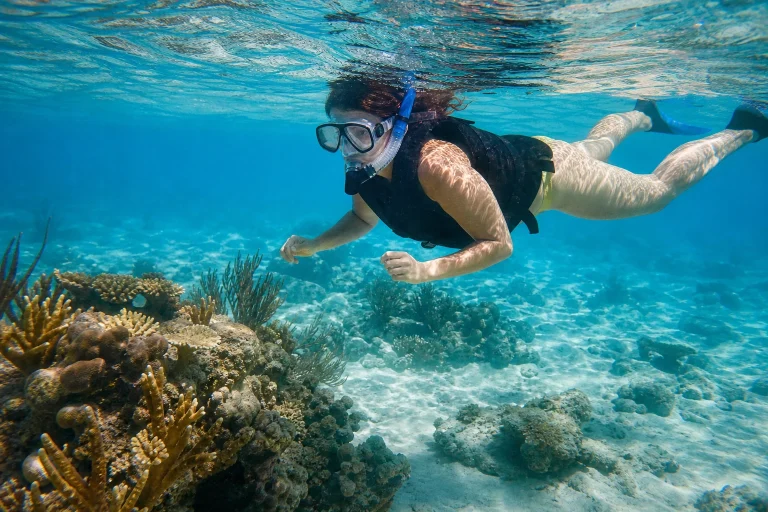
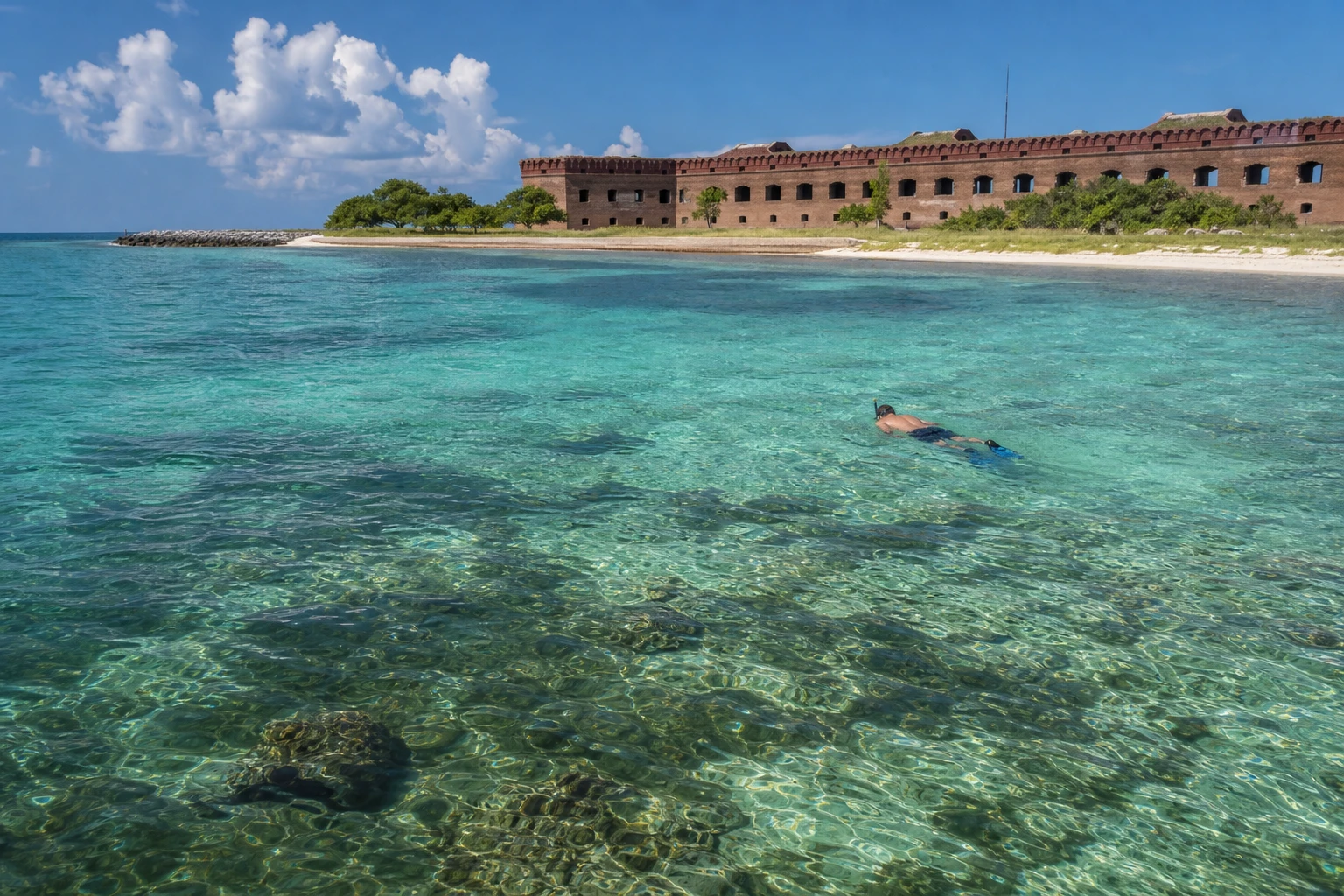
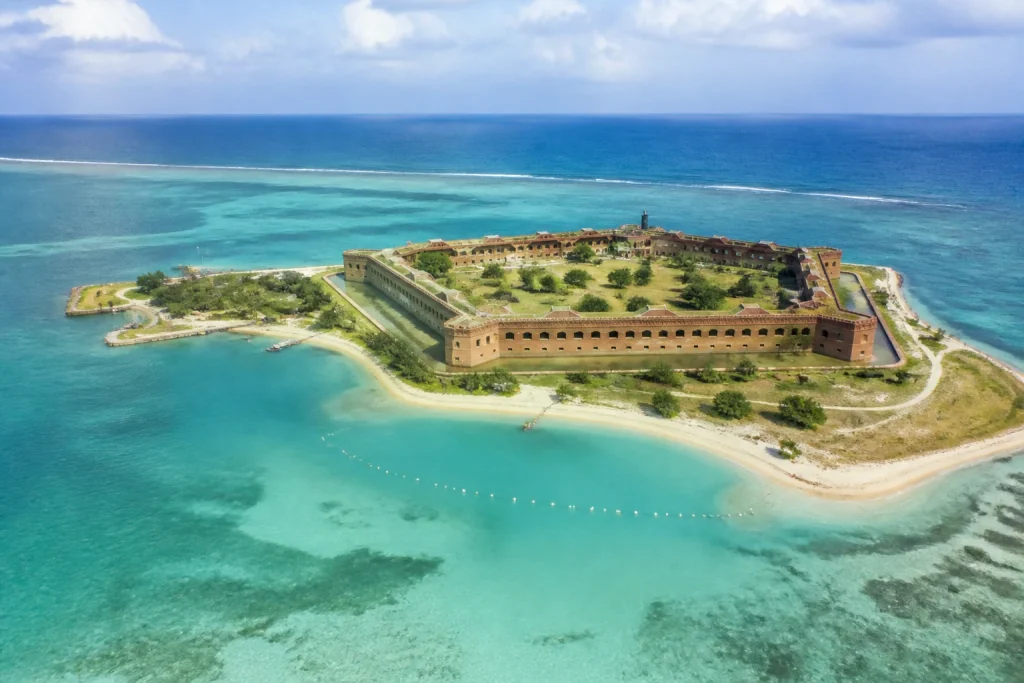
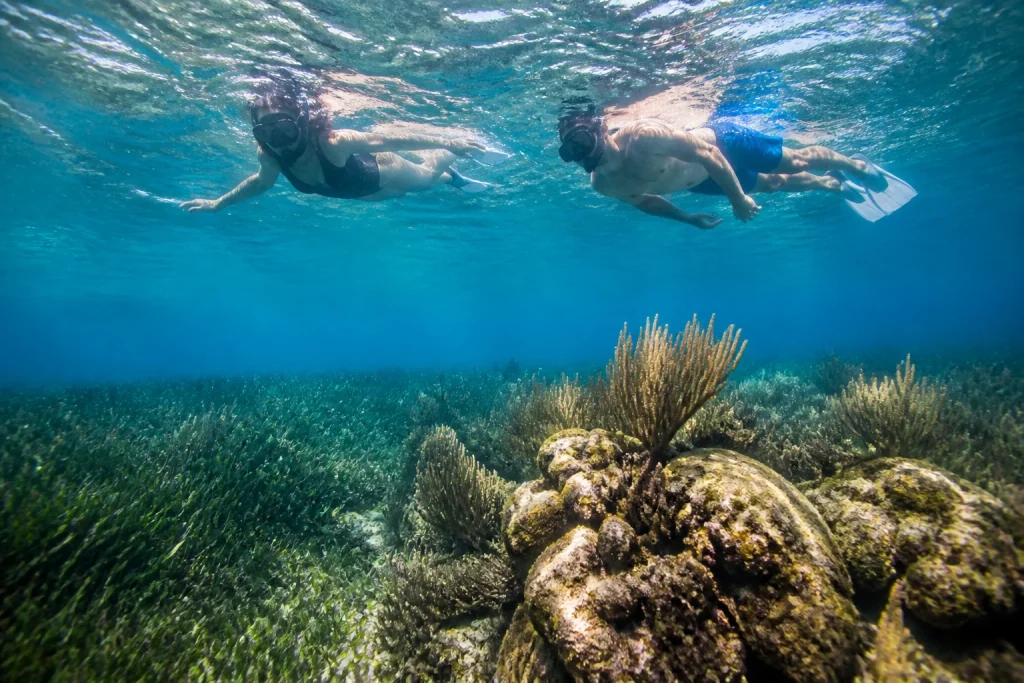
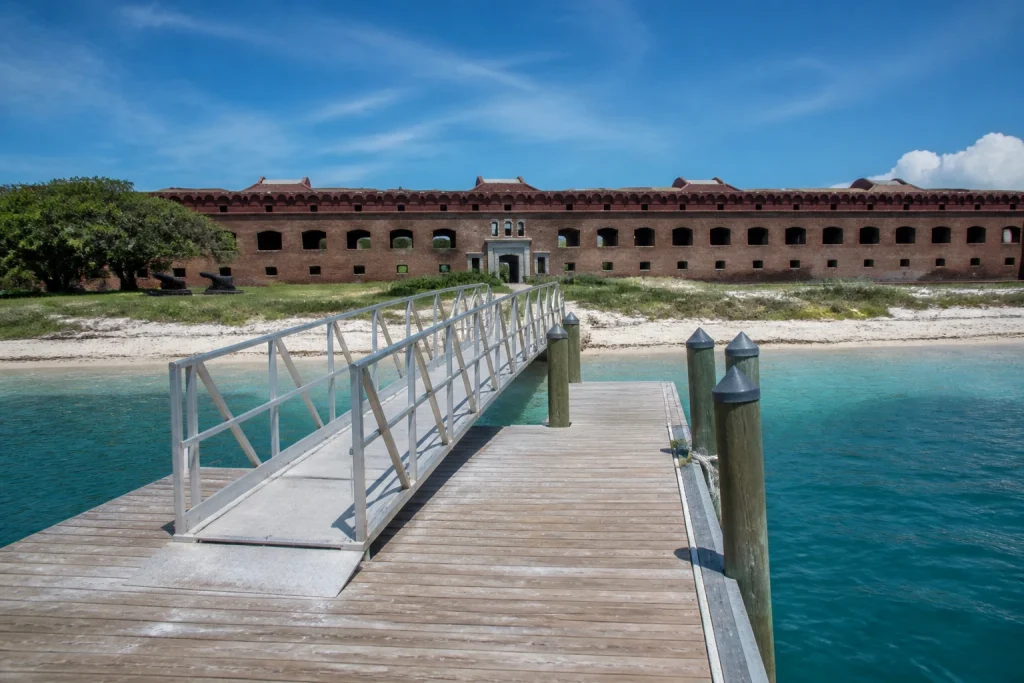
Dry Tortugas snorkeling is a remote-water experience built around Garden Key, the island where Fort Jefferson stands. The park lies roughly 70 miles west of Key West, with no road or car access, so getting there shapes every part of the day. For most visitors arriving by ferry or seaplane, the smart plan is simple: snorkel from Garden Key’s designated area, then leave enough time to explore the fort and island on land.
The best snorkeling spot near Fort Jefferson: Garden Key’s designated swim area
- Use Garden Key’s marked swim and snorkel area for the most straightforward shore-access option near Fort Jefferson.
- Look for narrow white cylindrical buoys marking the designated area, and enter the water from shore only there.
- Do not snorkel in Fort Jefferson’s moat. Swimming, diving, and snorkeling there are prohibited.
- Treat coaling-dock pilings as a specialized, boat-based possibility that needs current access and safety confirmation, not a standard day-trip stop.
- Plan around open-water transport and changing sea conditions, then bring all essentials because the park has no services.
Know the water-entry rules before putting on your mask
Garden Key’s designated swim and snorkel area is the clear choice for a Fort Jefferson-focused day trip. Narrow white cylindrical buoys mark the zone. The current rule is especially important for independent-minded snorkelers: entering or exiting the water from Garden Key shore outside this designated area is prohibited. Start here, stay aware of the markers, and save more ambitious routes for a properly planned boat outing.
The moat encircling Fort Jefferson is not a snorkeling shortcut or a sheltered alternative when the sea feels lively. Swimming, diving, and snorkeling in the moat are prohibited. Entering or exiting the water from the moat wall is also prohibited except in an emergency. Keep this historic structure in the land portion of your visit and use the designated Garden Key water-access area for snorkeling.
The south coaling-dock pilings have been noted as an underwater feature, but they should not anchor a routine ferry or seaplane day-trip plan. They sit outside the simple designated shore-access approach. If a private boat or charter itinerary proposes snorkeling there or elsewhere outside the designated area, confirm current access and safe entry with park staff or the operator first. An approved red-and-white diver-down flag is required outside designated areas.
Getting from Key West to Garden Key
There is no driving to Dry Tortugas National Park. Most visitors travel from Key West by concession ferry or seaplane, and both bring day visitors to Garden Key. Private boats are the other option. The journey crosses open water and is substantial rather than a quick harbor outing, so choose transportation before fitting other Key West activities around it. How to Get to Dry Tortugas From Key West is useful for the wider transport-planning picture.
| Transport approach | Where it brings typical day visitors | Snorkeling implication |
|---|---|---|
| Concession ferry | Garden Key | Plan to use the designated Garden Key swim and snorkel area near Fort Jefferson. |
| Seaplane | Garden Key | Plan to use the designated Garden Key swim and snorkel area near Fort Jefferson. |
| Private boat or suitable charter | Depends on the vessel itinerary | This is the practical category for reaching locations beyond Garden Key, including Loggerhead Key. |
Ferry and seaplane trips serve the same island destination but create different travel days, especially when weather and time on Garden Key matter to you. The Dry Tortugas Ferry vs Seaplane: Which Is Better comparison can help narrow that choice. Before committing, review the operator’s current fare, baggage rules, cancellation terms, food arrangements, and snorkeling-equipment details. Those inclusions are not the same thing as the park entrance fee.
Make the most of a limited Garden Key day
A Dry Tortugas day needs breathing room. Open-water travel, weather, sea state, the fort, and snorkeling all compete for attention. Conditions can be rough, and the park emphasizes checking weather before travel. Check current park conditions, the offshore forecast, and your operator’s status close to departure, since weather, mechanical issues, and public-safety events can alter access.
On Garden Key, give the water portion a clear purpose rather than trying to chase every possible site. Snorkel the designated area, take a land break, and leave time to experience Fort Jefferson without rushing. The Fort Jefferson Guide: What to See and How Long You Need can help you balance the fort with time in the water, especially if snorkeling is only one part of the day’s plan.
Still comparing Dry Tortugas Snorkeling : Best Spots Fort Jefferson?
Ask for tour ideas, hotel suggestions, or a simple trip plan that combines both.
Trip Helper
Loggerhead Key is a separate snorkeling plan, not a Fort Jefferson add-on
Loggerhead Key also has a designated swim and snorkel area, but it is not a casual extension of a ferry or seaplane visit. Those transportation options do not take visitors to other parts of the park, and day visitors generally do not have time to reach Loggerhead Key. Consider it only with your own boat or a suitable charter and a plan that accounts for the extra distance and self-sufficiency involved.
What to pack for Dry Tortugas snorkeling
Dry Tortugas has no visitor services, so bring what you need for the full outing and pack out all waste. This matters more here than on a typical Key West beach stop. Make your equipment plan before leaving the island: do not assume a mask, snorkel, fins, food, or water will be provided unless those details are included in your operator confirmation.
- Drinking water, food, and personal essentials for your full travel day.
- Your snorkeling equipment, unless your transport booking specifically confirms what is supplied.
- A valid America the Beautiful pass, if you have one, to show at check-in.
- A secure bag for personal items and a way to carry out your waste.
- Sun protection and clothing suited to a long day exposed to wind, sun, and changing weather.
For the Key West portion of the trip, Key West Packing List: What to Bring for Any Season can help organize the broader travel bag. The Dry Tortugas-specific addition is self-sufficiency. Once you are offshore, forgotten basics are not easily replaced, and the park expects visitors to leave with everything they brought in.
Snorkel safely and leave the reef untouched
There are no lifeguards at Dry Tortugas. Use a buddy system, remain aware of your position and energy, and avoid treating the fort’s protected setting as a controlled swimming pool. Fire coral, jellyfish, sea urchins, and lionfish are among the hazards visitors should watch for. If conditions do not suit your comfort level, use the time to explore Garden Key on land instead.
- Enter and exit from the Garden Key shore only within the designated swim area.
- Stay with a buddy and keep a conservative turnaround point so you have energy for the return.
- Float above coral and seagrass. Do not touch, stand on, or disturb either one.
- Leave coral, shells, wreck material, and every other artifact where they are.
- Use an approved diver-down flag when snorkeling outside a designated area as part of an authorized boat-based plan.
Reef protection is part of the experience, not a side note. Avoid collecting anything from the water or shore, including coral, shells, wreck material, and artifacts. The most satisfying snorkeling session is a low-impact one: observe carefully, keep your feet off the bottom, and leave the place looking unchanged for the next visitor.
Park fees, transport costs, and overnight options
| Cost item | Published detail |
|---|---|
| Park entrance for visitors age 16 and older | $15 per person, valid for seven consecutive days. |
| Park entrance for visitors under 16 | No entrance fee. |
| Ferry visitors | Park entrance is included with the ferry ticket. |
| Seaplane visitors | The park entrance fee is collected separately. |
| Garden Key camping | $15 per night for an individual site and $30 per night for the large group site, separate from transportation. |
A valid America the Beautiful pass can be shown at check-in so the applicable entrance fee is not charged or is deducted. Treat the transport ticket as a separate planning cost, since fares, schedules, baggage allowances, cancellation terms, and included equipment need to be checked with the operator for the date and trip you select.
Camping gives snorkelers more time, with more responsibility
Camping on Garden Key is the main way to stretch the experience beyond a compressed day trip. More time makes it easier to separate snorkeling from a visit to Fort Jefferson rather than choosing between them. It also calls for real preparation: services are limited, waste must be packed out, and the park does not rent boats, kayaks, or canoes.
The Dry Tortugas Camping Guide is the natural next stop for travelers considering this route. Camping suits visitors who are ready to carry their own gear and manage their own supplies. It is less practical for anyone hoping to add spontaneous equipment rentals or a quick hop between islands after arriving.
Accessibility: what the land facilities support
For land access, the ferry can provide a dock lift with advance notice, and the Fort Jefferson dock has a ramp for wheelchair or power-chair disembarkation. Within the fort, wheelchair access is limited to the first tier, grass surface, brick walkway, and exterior trail. The second and third tiers are not wheelchair accessible. Confirm in-water assistance and adaptive snorkeling arrangements directly with the transportation provider before making snorkeling the centerpiece of the trip.
A simple Dry Tortugas snorkeling strategy
- Build the day around Garden Key’s designated swim and snorkel area near Fort Jefferson.
- Choose ferry, seaplane, or a private-vessel plan based on how much time and flexibility you need.
- Check park conditions, the offshore forecast, and transport status shortly before departure.
- Bring all personal essentials and verify any equipment or food inclusions with the operator.
- Snorkel with a buddy, respect the designated boundaries, and make reef protection part of every decision.
For most Key West visitors, Dry Tortugas snorkeling is worthwhile when the goal is a focused Garden Key swim paired with time at Fort Jefferson. Its main limitation is the remote logistics: transport, weather, and rules set the pace. Choose the designated area, prepare for a self-sufficient day, and leave Loggerhead Key or pilings-focused snorkeling for a properly equipped boat plan.
Frequently asked questions
Where is the best place to snorkel near Fort Jefferson?
Garden Key’s designated swim and snorkel area is the best straightforward shore-access option near Fort Jefferson. It is marked by narrow white cylindrical buoys, and Garden Key shore entry outside that designated area is prohibited.
Can you snorkel in the moat around Fort Jefferson?
No, snorkeling in Fort Jefferson’s moat is prohibited. Swimming and diving are also prohibited there, and the moat wall cannot be used for water entry or exit except in an emergency.
Can ferry or seaplane visitors snorkel at Loggerhead Key?
No, ferry and seaplane visitors should plan to snorkel at Garden Key instead. These transportation options do not take visitors to other parts of the park, and day visitors generally do not have time to visit Loggerhead Key.
How do you get to Dry Tortugas for snorkeling?
Most visitors travel from Key West by concession ferry or seaplane, both of which arrive at Garden Key. Private boats are the alternative for visitors planning an independent or broader park itinerary.
How much is the Dry Tortugas park entrance fee?
The published entrance fee is $15 per person for visitors age 16 and older and is valid for seven consecutive days. Visitors under 16 are exempt, ferry tickets include entrance, and seaplane visitors pay the entrance fee separately.
Is snorkeling equipment included with Dry Tortugas transportation?
Do not assume snorkeling equipment is included. Review the operator’s current booking details for equipment arrangements, food, baggage limits, cancellation terms, and the total fare before choosing a trip.
Are there lifeguards at Dry Tortugas National Park?
No, there are no lifeguards at Dry Tortugas. Snorkel with a buddy, watch for hazards such as fire coral and sea urchins, and do not touch or stand on coral or seagrass.
Hotel bases to compare after this tour
Once you have the tour shortlist, compare a few stays that can make the trip logistics easier.
The Reach Key West, Curio Collection by Hilton
A beachfront Hilton Curio Collection resort in Old Town Key West with a private beach, pool, spa access, and easy access to Duval Street and Southernmost Point.
Check rates
Hyatt Vacation Club at Beach House, Key West
Stay in a classic Key West–style, tropical getaway set up as residential-style retreats with manicured gardens and beachside comfort. A connecting on-property dock makes it easy to rent a kayak and head out for Gulf of Mexico water adventures. Plan a vacation that feels more like having your own place by the water.
Check ratesExperiences to explore
 Explore experience ↗
Dry Tortugas National Park Boat Charter from Key West
◷ 8 hr
Explore the stunning Dry Tortugas National Park with a private boat charter tailored just for you. Departing from Key West, enjoy a ful
From $1,699.00 USD
View dates Explore experience ↗
Private Dry Tortugas National Park Boat Charter from Key West
◷ 8 hr
Experience the Dry Tortugas on a private full-day charter from Key West, designed for travelers who want more freedom than a crowded fe
See dates for Current pricing
View dates Explore experience ↗
Dry Tortugas National Park Self-Guided Audio Tour
◷ 7 hr–8 hr
Explore an island paradise 70 miles west of Key West. Visit Fort Jefferson, a massive 19th-century coastal fort, and walk its brick wal
See dates for Current pricing
View dates