Dry Tortugas Camping Guide
Learn the secrets to Dry Tortugas camping, from ferry bookings to water hauling, before one crucial mistake turns paradise into a problem.
If you want to camp at Dry Tortugas, you need a plan before your feet hit the sand. You’ll book the Yankee Freedom ferry and your Garden Key site months ahead, haul in every drop of water, and wake before dawn in Key West. In return, you get starry skies, salt in the air, and Fort Jefferson glowing red at sunset. The tricky part isn’t whether it’s worth it. It’s how to do it right.
Key Takeaways
- Reserve both Garden Key campsite and Yankee Freedom ferry exactly six months ahead; only 10 camper ferry spots are available daily.
- Camping is primitive: no water, showers, electricity, Wi‑Fi, or trash service; bring all supplies and pack everything out.
- Bring at least two gallons of water per person per day, plus an extra day, and store food in hard-sided containers.
- Regular campsites cost $15 nightly, are tent-only, fit up to six people, and fees are paid onsite by cash or check.
- Arrive at the Key West dock by 6:00 AM, check in with rangers on arrival, and expect a maximum three-night stay.
How Dry Tortugas Camping Works
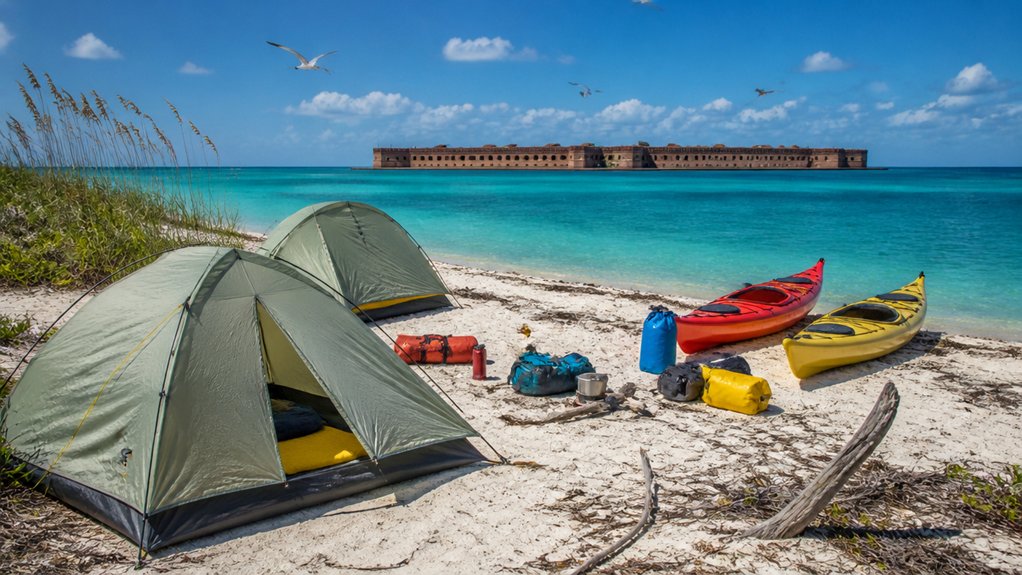
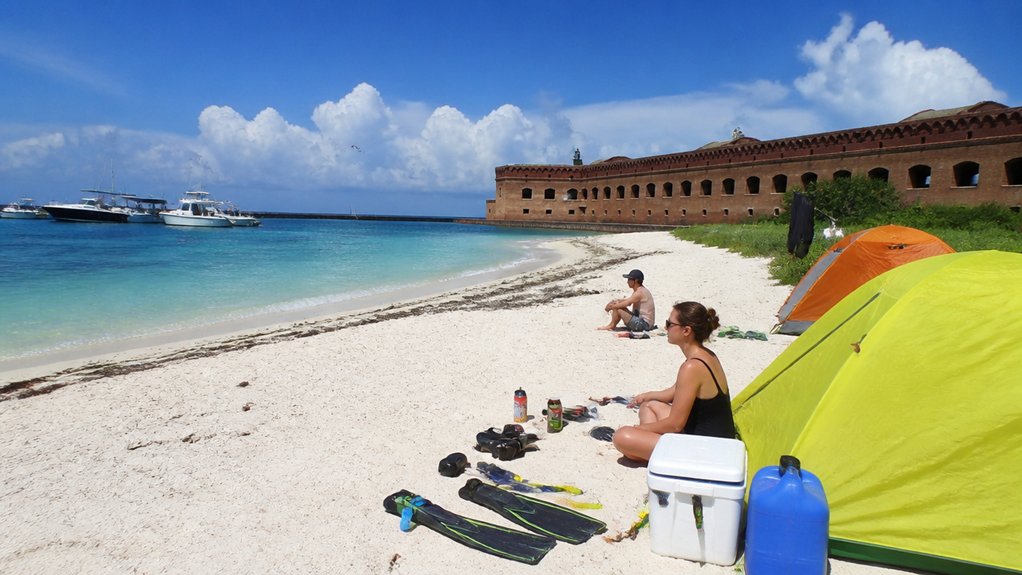
Picture your campsite ringed by blue water and old brick walls, because Dry Tortugas camping is as simple and remote as it sounds. On Garden Key beside Fort Jefferson, you’ll find primitive camping with tent-only sites for up to three two-person tents, or six people.
If you’re traveling with 10 to 20 friends, use the Group Campsite Reservation Application. Otherwise, you pay campsite fees in the park by cash or check. Expect picnic tables, raised charcoal grills, and composting toilets, though they close midday. You won’t get showers, wifi, or cell service, so bring every supply, including water per person per day, and pack everything out. Since the park is accessible only by boat or seaplane, plan your transportation well in advance. If you camp via the Yankee Freedom ferry, keep your gear organized and sand-free. That’s Dry Tortugas Camping, stripped to essentials and oddly luxurious.
How to Get to Garden Key
Once you’ve sorted out the bare-bones camping setup, the next question is how you actually reach Garden Key, because getting there is half the adventure. Most campers take the Yankee Freedom ferry from Key West Seaport, a 2.5-hour ride that starts before sunrise and feels like a salt-sprayed prelude. The Yankee Freedom ferry is the primary way most visitors get to Dry Tortugas from Key West. You’ll load your gear early, use dockside carts, and roll toward the campground after landing. A seaplane can touch down at Garden Key, but it won’t haul campers or bulky kits. If you arrive by private boats, you must anchor within 1 nautical mile and check in with a ranger. Bringing your own boat also opens kayak transport options, though paddling between keys takes real ocean skill and a healthy respect for wind, chop, distance.
When to Book the Ferry and Campsite
Mark your calendar early, because Dry Tortugas camping works on a very specific clock. For Dry Tortugas booking, campsite reservations and the Yankee Freedom ferry open six months in advance on the first weekday of each month, from 8 AM to 5 PM EST. If that day is a holiday, the release shifts to the next weekday.
Places to stay for this itinerary
Pair the day-by-day plan with a hotel location that keeps the trip simple.
The Reach Key West, Curio Collection by Hilton
A beachfront Hilton Curio Collection resort in Old Town Key West with a private beach, pool, spa access, and easy access to Duval Street and Southernmost Point.
Check rates
Hyatt Vacation Club at Beach House, Key West
Stay in a classic Key West–style, tropical getaway set up as residential-style retreats with manicured gardens and beachside comfort. A connecting on-property dock makes it easy to rent a kayak and head out for Gulf of Mexico water adventures. Plan a vacation that feels more like having your own place by the water.
Check rates- Book the moment the calendar opens.
- Expect Yankee Freedom camping space to vanish fast.
- If you need kayak transport, reserve that with your ferry ticket.
- Miss out? Check daily for cancellations.
Only 10 campers ride the ferry each day, so speed matters. The park’s remote location inside Dry Tortugas National Park is exactly why transportation and campsite timing are so competitive. On departure morning, reach the Key West dock by 6:00 AM with gear packed tight. You’ll thank yourself when the island air hits your face.
Dry Tortugas Camping Fees and Ferry Costs
After you lock in your dates, the next number to know is the price tag. At Dry Tortugas, Camping fees are separate from your ride. The campsite fee is $15 per night, paid at the park by cash or check only. If you hold a Golden Age pass or Access pass, you get 50% off with your pass and ID.
Your bigger expense is the Yankee Freedom ferry. The round-trip ferry fare for campers usually runs about $220 to $240 per person, and it includes park entry and Fort Jefferson access. Reserve that in advance through the ferry operator. If you plan to bring a kayak, expect about a $20 transport charge if arranged ahead. The ferry also limits camping passengers and keeps a close eye on gear size and weight. If you are comparing transportation options, a ferry vs seaplane decision can also affect your overall Dry Tortugas trip budget.
Choose Between Regular and Group Sites

Before you pitch your tent by the bright blue water and steady fort walls, you’ll want to choose the site that fits your crew. If you’re traveling light with a small group, you can grab a regular site on a first-come basis for $15 per night and share space for up to six people. If you’re bringing 10 or more campers, you’ll need to plan ahead for the single group site, which must be reserved in advance and gives your group room to spread out without playing campsite Tetris. Since camping here also means time to explore Fort Jefferson, it helps to plan enough daylight to walk the grounds and take in the highlights.
Regular Site Basics
If you’re deciding between regular and group sites, the regular campsites on Garden Key fit most small parties with room for up to three 2-person tents, or six people total. These spots are first-come, first-served, with overflow if all eight fill. If you’re planning a day trip itinerary before camping, it can help you map out ferry timing, gear setup, and sightseeing on Garden Key.
- A picnic table, charcoal grill, and gear hooks come standard.
- Keep camping gear within 10 feet of your table.
- Campsite fees are $15 nightly, paid by cash or check.
- Composting toilets serve camp, though they close around midday.
This is primitive camping, so bring tents, stash food in hard-sided containers, and expect no showers, Wi-Fi, or hookups. Quiet hours run 10 p.m. to 6 a.m., and your stay usually tops out at three nights. Senior passholders save half with photo ID at check-in.
Group Site Requirements
While regular sites work well for small crews, the large group site is the better pick when you’re traveling with 10 to 20 people and want to stay together. This Large group campsite gives you exclusive use, but a reservation required note really matters. Dry Tortugas has no car access, so your group will need to arrive by boat or seaplane.
| Option | What you get | Watch for |
|---|---|---|
| Regular | 6 people max | first come |
| Group | 10 to 20 people | reserve ahead |
| Setup | picnic tables, elevated charcoal grills | tents within 10 feet |
| Overflow | no exclusive use | overflow policy, out by 10 a.m. |
That group size limit keeps camps orderly. You’ll also share fragile toilets that close midday, so plan your coffee timing. You’ll pay $30 per night, and if you arrive unreserved with 10 or more friends, expect shuffle mode instead of certainty.
What Garden Key Campground Is Like
When you camp on Garden Key, you stay on a primitive 14-acre island beside Fort Jefferson, where sea breeze, open sky, and the fort’s brick walls shape the whole scene. You get a simple setup with assigned tent sites, picnic tables, charcoal grills, hooks for keeping gear off the ground, and composting toilets, plus an overflow grassy area if the regular spots fill up. You won’t find showers, power, or drinking water here, so you’ll need to come prepared and follow a few strict rules, because this place rewards campers who like their comfort basic and their setting unforgettable. Since Dry Tortugas National Park is only accessible by boat or seaplane, most campers arrive at Garden Key by ferry and seaplane services.
Still comparing Sightseeing?
Ask for tour ideas, hotel suggestions, or a simple trip plan that combines both.
Trip Helper
Primitive Layout And Setting
Step onto Garden Key and the campground feels more like a rugged beach outpost than a full-service campground. You camp beside Fort Jefferson on a primitive, sandy patch where scrub and sea grape meet open sky. The campsites sit a short walk from the dock, so arrival feels easy, but the setting stays wild.
- Garden Key is compact, open, and surrounded by water and history.
- High winds sweep through often, so strong stakes matter.
- There’s no potable water, and vault toilets keep things basic.
- You’ll hear gulls, surf, and ferry noise instead of generators.
From the pier, you can roll gear in and watch frigatebirds circle overhead. Keep your setup tidy, expect sun and salt, and enjoy the stripped-down rhythm. The surrounding waters are part of Florida Keys National Marine Sanctuary, a protected marine landscape spanning 3,800 square miles.
Sites And Shared Facilities
Garden Key keeps the camping setup simple, but it’s more organized than that wild first impression suggests. On this 14 acre island, the campground has 10 regular sites and one reservable group site. Each regular spot fits up to three two person tents, with your picnic table and one of the elevated charcoal grills marking home base. You’ll keep every piece of gear within 10 feet of that table, which helps the beachy lawn feel tidy instead of chaotic. If the regular sites fill, rangers direct you to an overflow area with shared tables and grills. Near the center, composting toilets serve everyone, and carts at the dock make the short haul from the pier to your site pleasantly less heroic after landing there. If you want a more built-out Key West beach day before or after your trip, Fort Zachary Taylor offers a beach and park setup that feels much more developed than Garden Key’s minimalist campground.
Comforts, Limits, And Conditions
Although the campground sits just a short walk from the dock, it feels agreeably bare-bones once you roll your gear in. On Garden Key, camping means trading convenience for sea breeze, stars, and a little self-reliance. Carts help with the haul, but your three-night maximum keeps the whole experiment pleasingly simple. As one of the most memorable Key West day trips, Dry Tortugas rewards campers who come prepared for its remote conditions.
- Expect composting vault toilets, but no showers, no fresh water rinse, and no electricity.
- Bring all water, food, and battery-powered gear. Two gallons per person per day is the smart baseline.
- Keep tents free-standing and close to your picnic table. Store food in hard containers so rats don’t audition as roommates.
- You must pack out all trash, dump greywater below the high-tide line, and respect quiet hours from 10 p.m. to 6 a.m.
What to Pack for Dry Tortugas Camping
Pack like you’re heading to a tiny island outpost, because you are. For Dry Tortugas camping, protect everything from salt spray and sand. Use durable tote bins, watch ferry gear limits, and carry hard-sided water per person per day containers.
| Pack | Why | Note |
|---|---|---|
| tent and stakes | Windy sites | Add tarp |
| cooking supplies | Simple meals | charcoal or Sterno |
| first-aid kit | Small mishaps | headlamp too |
Bring a sleeping bag or pad, sunscreen, bug spray, and cash or check for the campsite fee. Binoculars help at dawn. Snorkel gear is optional, since the ferry provides it. A tiny fan feels glorious in heat. Warm layers help on breezy nights. Choose waterproof containers that shrug off rats. Pack spare batteries for your flashlight. Utensils, biodegradable soap, and trash bags keep your campsite tidy each morning. If you bring a boat or plan time on nearby waters, use mooring buoys where available to help protect coral and seagrass from anchor damage.
How Much Water and Food to Bring

Once your bins are sorted, it’s time to think about the supplies that matter most out here: water and food. Bring 2 gallons of water per person per day, plus an extra day’s supply if ferry delays stretch your stay.
Water and food come first: pack 2 gallons per person per day, plus one extra day in case ferries run late.
- Use hard-sided containers that fit ferry limits.
- Plan every meal, since only one boxed lunch arrives with you.
- Pack packed food and food waste so it stays secure from rats.
- Bring enough ice and perishable food backups, plus trash bags.
There’s no island store, no potable water, and no backup ice humming in a freezer. Fill sturdy jugs or coolers before you go. Keep leftovers contained, carry everything out, and you’ll eat well while seabirds wheel overhead nearby and the fort glows at sunset. If you swim before heading back to camp, remember that enterococci levels are used to monitor beach water quality because they can indicate possible fecal pollution.
Dry Tortugas Camping Rules to Know
Before you pitch your tent on Garden Key, you’ll want to know how the campsites are laid out and how much space you actually get. You’ll also need a plan for hard-sided food storage and packing out every bit of trash, because the island stays wild only if you keep your camp tight and tidy. Then come the rules that shape the mood after sunset: careful fire use, quiet hours, and a few safety basics that matter when the wind picks up and the fort goes still. If you run into booking or park-info access issues online, note the Cloudflare Ray ID shown on any block page before contacting the site owner for help.
Campsite Limits And Layout
Because Garden Key keeps camping simple, you’ll choose from 10 regular tent sites plus one reservable large group site for 10 to 20 people, and the regular spots go first come, first served. If all individual tent sites fill, rangers direct you to overflow grassy areas.
- Each regular site fits three 2-person tents and max six people.
- Keep every freestanding item within 10 feet of your picnic table.
- Expect a picnic table, hooks, and a charcoal-only grill at camp.
- Stay no more than three nights, and respect quiet hours after dark.
You’ll camp in bright sun, salty wind, and scratchy grass, so a tidy footprint matters. Tents are required. Don’t tie gear to trees or vegetation. Composting toilets nearby close midday, so plan accordingly. If severe weather threatens before or after your ferry trip, keep local updates on a radio for hurricane evacuation information.
Food Storage And Waste
A compact campsite also means staying sharp about food and waste, since Garden Key’s rats can chew through a backpack or tent faster than you’d think. You should store all food in hard-sided containers, keep food off the ground, and keep lids shut.
| Rule | Why it matters |
|---|---|
| Pack out all trash | No island pickup |
| Use greywater dinghy beach | Protects campground and fort |
| Charcoal grills only | Briquettes work best |
| No wood fires | Fuel stays controlled |
Bring sturdy bags so you can pack out all trash, because there’s no dumpster waiting. Pour greywater only at the greywater dinghy beach below the high-tide line. Use the elevated charcoal grills for briquettes. Leave no wood fires. Don’t leave snacks or fuel unattended. Rats love midnight raids. Before your trip, review Florida boating laws so your travel to and from the island stays safe and legal.
Fire, Noise, And Safety
While Garden Key feels wild and wonderfully remote, the camping rules keep that beauty from turning chaotic after sunset. You’ll cook simply, listen closely, and camp tidily so the island stays calm for everyone.
- No wood fires are allowed, so use charcoal briquettes only in the campsite BBQ grills.
- Approved cooking fuels are Sterno or match-light charcoal. Leave liquid fuel and propane behind.
- Respect quiet hours from 10:00 p.m. to 6:00 a.m. Dim lanterns and keep voices low unless you want a ranger cameo.
- Store all food in hard-sided containers, wear life jackets while boating, and check in with rangers when you arrive.
Keep tents and gear near your picnic table, pack out trash, and don’t feed the rats or crabs by accident. Dry Tortugas camping takes place within the broader Florida Keys National Marine Sanctuary, which helps protect surrounding waters and marine life through rules that limit damaging activities.
Toilets, Trash, and Safety Basics
Often, the trickiest part of camping on Garden Key isn’t the tent setup. It’s managing the basics on a tiny island with no easy do-overs. The only restrooms are composting vault toilets, and they usually close from about 10:00 a.m. to 3:00 p.m., so use the ferry bathrooms when you can.
You’ll need to pack out trash because there are no bins anywhere. Bring sturdy bags and haul every crumb back to Key West. Before or after your trip, Key West’s sunset celebrations offer a lively contrast to the quiet, self-reliant rhythm of camping in Dry Tortugas. For grey water disposal, carry dishwater to the dinghy beach and dump it below the high-tide line, never in toilets or plants. Good toilet lid maintenance matters too. Keep lids down to cut odors and help the system work. For rats and food storage, use hard-sided containers. Hungry island rodents chew tents without apology.
What to Do at Dry Tortugas
Once you’ve handled the campground basics, the fun part starts fast on Garden Key. Dry Tortugas Camping rewards curiosity, so keep your camping reservation handy and plunge in.
- Snorkel reefs and old pilings near Garden Key. If you ride Yankee Freedom, complimentary snorkel gear makes it easy.
- Join the 45-minute Fort Jefferson tour. You’ll see cannons, Civil War brickwork, Dr. Samuel Mudd’s room, and strange interior stalactites.
- Swim at marked beaches, then climb Fort Jefferson for huge views. Watch your step on rough surfaces and open edges.
- Try birdwatching in spring, when migrants fill the island. If you arrive by private vessel or ocean kayak, paddle to Loggerhead Key for quieter sand and clear water.
- Divers extending their trip to Key West can explore nearby historic shipwreck dive sites for another window into the region’s maritime past.
Bush Key closes during nesting season, so give seabirds space.
Sample Dry Tortugas Camping Itinerary
Because Dry Tortugas camping runs on ferry times, your trip feels smoother if you treat each day like a simple plan instead of a loose guess. Arrive at the Key West ferry dock by 6:00, then reach Fort Jefferson around 10:15. In Dry Tortugas National Park, you unload carts, claim a site, pay campground fees, and check your campsite water per person before you settle in. Day one, join the fort tour and snorkel fort walls after lunch. Day two, ease into camping at the Dry Tortugas with a beach walk, birdwatching, and sunset hush by 10:00. On departure day, pack early, brush off sand, move gear to the dock by 10:30, and board your scheduled return calmly. Bring match-light charcoal and pack trash. If you want a different Key West water outing before or after your park stay, a sandbar tour can be an easy contrast to the structured ferry schedule.
Frequently Asked Questions
Is There Cell Service or Wi-Fi at Dry Tortugas?
No, you won’t find reliable cell service or Wi-Fi. You may get satellite reception with signal boosters, but expect roaming charges, limited emergency coverage, airtime limits, network congestion, so bring offline entertainment for your trip.
Can You Bring Pets to Garden Key Campground?
No—if you arrive with Max, you’ll get turned away: the pet policy bans pets, allows only service animals, enforces leash rules, campsite restrictions, strict pet waste control, limited veterinary access, and prevents wildlife interactions.
What’s the Best Season to Avoid Rough Seas?
Choose late spring or early summer; you’ll usually dodge rough seas then. You can also target shoulder months and autumn shifts. Avoid hurricane season and summer thunderstorms, though winter calm sometimes gives you smooth crossings.
Are Mosquitoes or Biting Insects a Problem Overnight?
Yes, you’ll notice mosquito activity overnight, especially during peak hours. You can improve repellent effectiveness with smart gear recommendations; breeding habitats nearby increase nighttime behavior, but wind impact often reduces bites around campsites for you.
Can Kids Safely Camp at Dry Tortugas?
Yes, you can camp safely with kids if you plan child friendly activities, pack age appropriate gear and first aid essentials, follow supervision guidelines, teach nighttime safety, tide awareness, and shark safety, and stay attentive.
Conclusion
You’ll work for this trip, but that’s part of the charm. Book early, haul your water, and pitch your tent on Garden Key with the fort walls glowing at sunset. Then you get starry skies, clear shallows, and the low slap of waves after the last ferry leaves. How often do you camp beside a massive 19th century fortress and wake to frigatebirds overhead? Plan well, pack smart, and Dry Tortugas rewards every step there.