Dry Tortugas Ferry Day Trip: What to Expect
A Dry Tortugas ferry day trip combines an offshore crossing from Key West with Fort Jefferson, snorkeling, and about four and a half hours on Garden Key. Here is how the schedule works, what the ticket includes, what to pack, and how to decide if the ferry suits your plans.
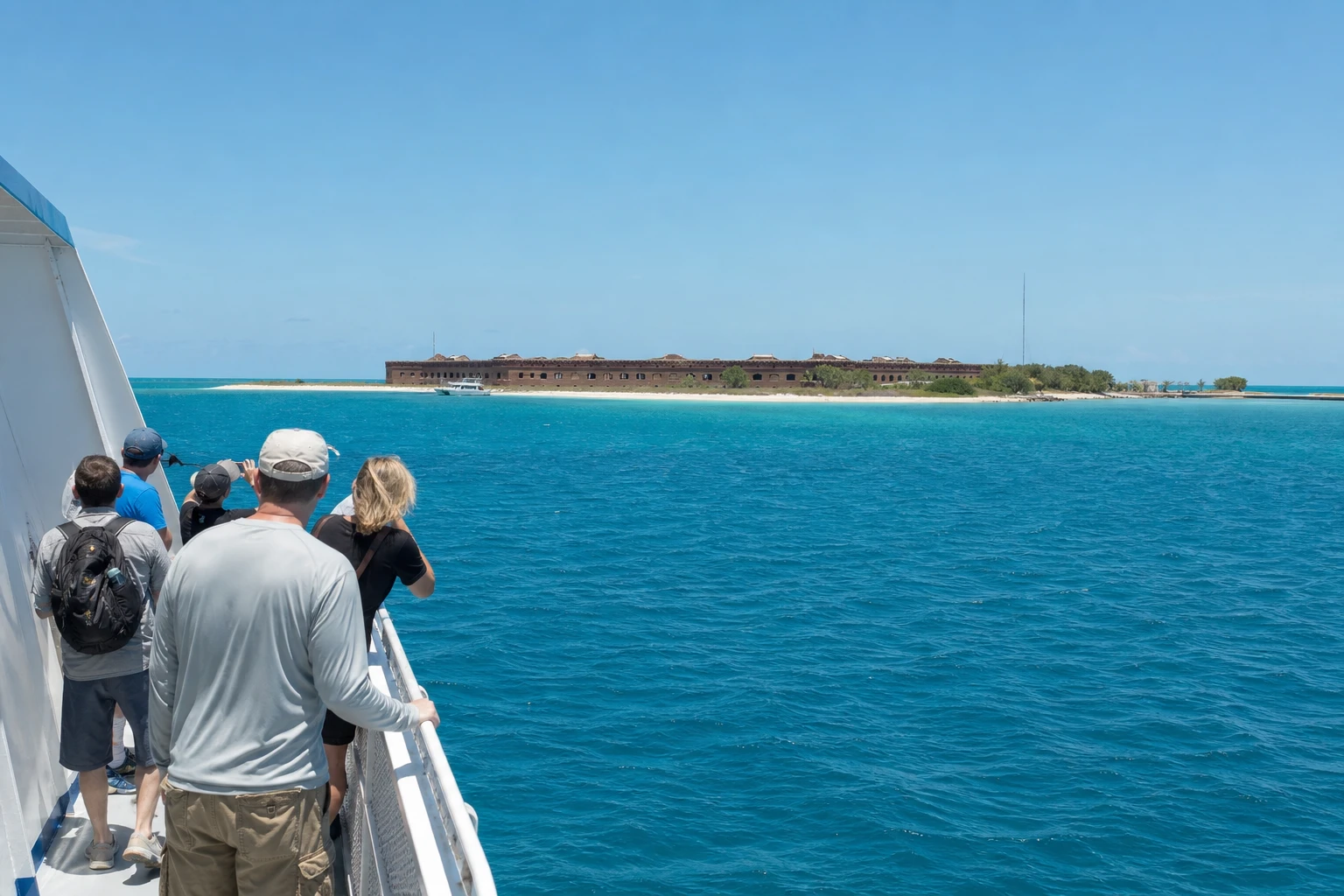
A Dry Tortugas ferry day trip carries you about 70 miles west of Key West to Garden Key, home of Fort Jefferson. The distance creates much of the appeal, but it also shapes the experience. Expect an early check-in, a long offshore crossing, a fixed island schedule, and a return to Key West near the end of the day. Cars cannot reach the park, so the voyage is an essential part of the outing.
- Set aside the full day, with published timing running from a 7:00 a.m. check-in to an approximate 5:15 p.m. return.
- Reserve in advance because the National Park Service strongly recommends reservations and standby seats depend on no-shows.
- Expect roughly four and a half hours on Garden Key, with the rest of the day devoted largely to check-in and travel.
- The published fare includes park admission, breakfast, lunch, snorkel equipment, and a narrated Fort Jefferson tour.
- Pack carefully because Garden Key has no food sales, drinking water, cell coverage, Wi-Fi, public trash disposal, or routine public bathrooms.
The ferry works best for travelers who want a structured, all-in-one visit focused on Garden Key. Food, equipment, park entry, and a fort tour are bundled into the trip, reducing the number of separate arrangements. The tradeoff is a long open-water journey and little control over arrival or departure times. Visitors hoping to explore several islands will find the ferry schedule too restrictive for that goal.
Book before building the rest of a Key West itinerary around this excursion. Yankee Freedom is the National Park Service concession ferry for day visitors and campers, and reservations are strongly recommended. Check the live booking details for availability, the current fare, taxes, parking information, cancellation terms, and any date-specific instructions.
Dry Tortugas ferry schedule at a glance
| Stage | Published time | What to expect |
|---|---|---|
| Check-in | 7:00 a.m. | Present identification and complete the morning check-in process. |
| Boarding | 7:30 a.m. | Follow crew instructions and settle in for the offshore trip. |
| Key West departure | 8:00 a.m. | Begin the crossing to Garden Key. |
| Fort Jefferson arrival | Approximately 10:15 a.m. | Arrival can shift with weather and operating conditions. |
| Narrated fort tour | 11:00 a.m. | Join the included tour or organize your independent island time. |
| Garden Key departure | 3:00 p.m. | Return to the ferry by the required boarding time. |
| Key West return | Approximately 5:15 p.m. | Allow for possible changes caused by offshore conditions. |
Treat these times as the framework rather than a minute-by-minute guarantee. Offshore weather can alter the itinerary, and the arrival time is approximate. The National Park Service describes the visit itself as roughly four and a half hours on the island. That is enough for a fort tour and another activity, but the time passes quickly once lunch, changing clothes, and reboarding are included.
The schedule occupies most of the usable day. Avoid placing a tightly timed dinner, flight, or other nonrefundable plan immediately after the estimated return. A little breathing room is useful when the day depends on sea conditions and a 140-mile round trip.
Check-in requires an early, organized start
Adults need photo identification for boarding. Set out identification, swimwear, sun protection, and any personal medication the night before. Review the booking confirmation for the meeting point and current arrival instructions, then plan to reach check-in without depending on a last-minute breakfast stop. Breakfast is included in the published fare.
Travelers driving to check-in should examine parking arrangements before the morning of departure. The Key West Parking Guide explains the city’s parking choices and typical planning considerations, while the ferry booking details should provide information specific to your departure. Travelers staying nearby can also review options for getting around Key West without a car and simplify the early start.
- Place every adult’s photo identification with the tickets or booking confirmation.
- Confirm the current check-in location and arrival instructions.
- Allow extra time for parking or local transportation.
- Wear or pack clothes that can handle both the boat and the beach.
- Keep sunscreen, medication, and valuables easy to reach.
The crossing is a major part of the experience
The published itinerary allows about two hours and fifteen minutes in each direction. Much of the day therefore unfolds offshore, with open water separating Key West from the small destination ahead. Travelers who enjoy boat travel gain a long maritime approach to the park. Those who become restless or uncomfortable on extended crossings should weigh that time commitment carefully.

Weather affects both comfort and operations. If you are prone to motion sickness, make a personal plan before departure and keep any needed supplies accessible rather than buried in a bag. The National Park Service also advises visitors to remain aware of offshore weather, tides, and currents. Follow crew instructions whenever conditions change.
Nearby hotels to compare
Compare other stays around Old Town Key West so you can weigh location, room style, and overall trip fit.

Hyatt Vacation Club at Beach House, Key West
Stay in a classic Key West–style, tropical getaway set up as residential-style retreats with manicured gardens and beachside comfort. A connecting on-property dock makes it easy to rent a kayak and head out for Gulf of Mexico water adventures. Plan a vacation that feels more like having your own place by the water.
Check ratesThe return journey begins after several hours of walking, sun, swimming, or sightseeing, so dry clothing and a light layer can improve the ride back. The operator specifically recommends both. Keep enough energy for the second crossing rather than treating the 3:00 p.m. departure as the end of the outing.
What happens after the ferry reaches Garden Key
Garden Key is the center of the ferry visit and the location of Fort Jefferson. Services ashore are extremely limited. There is no cell coverage, public phone, internet access, Wi-Fi, food concession, drinking water, public trash disposal, or routine public bathroom service. While the ferry remains present, day passengers can use its bathrooms and fresh-water rinse.
Fort Jefferson and the narrated tour
The published itinerary places the narrated Fort Jefferson tour at 11:00 a.m., and the tour is included with the ferry fare. Exact operating details can change, so listen for instructions after arrival. A dedicated Fort Jefferson guide can help you decide what to prioritize before the trip, especially if you want time for both the tour and snorkeling.
Joining the tour provides a structured start to the island visit. Afterward, use the remaining time according to your interests and the day’s conditions. Keep the ferry’s departure time in mind as you explore. This is a remote destination with a firm transportation schedule, not a place where a missed ride has an easy backup.
Snorkeling and time near the water
Use of snorkeling equipment is included in the published fare. Bring a swimsuit and towel if you want to enter the water, along with dry clothes for the ride home. Snorkeling does not have to fill the entire visit. Travelers can divide their limited island time among the fort tour, independent exploration, lunch, changing, and water activities.
Conditions should guide the decision to snorkel. Pay attention to park and crew instructions concerning weather, tides, and currents. If the water does not suit your ability or comfort level, spend the time around Fort Jefferson instead. The goal is to enjoy the island without rushing into an activity simply because equipment is included.
Ferry day visitors generally do not have enough time to visit Loggerhead Key or other parts of the national park. Plan the day around Garden Key rather than arriving with a multi-island checklist. Private boats provide greater flexibility for reaching areas beyond the ferry’s standard destination.
How to use four and a half hours on the island
A simple sequence works better than an overloaded plan. The detailed Dry Tortugas day trip itinerary offers a fuller framework, but ferry passengers should begin by choosing one main activity after the fort tour. For many people, that will be snorkeling. Others will prefer additional time around Fort Jefferson without needing to change clothes or manage wet equipment.
- Listen for arrival, tour, safety, and reboarding instructions before setting off.
- Join the narrated Fort Jefferson tour if it matches your priorities.
- Choose snorkeling or additional fort time as the main activity for the remaining visit.
- Leave time for lunch, changing into dry clothes, and using the ferry facilities.
- Return well before the required boarding time for the published 3:00 p.m. departure.
Avoid trying to account for every minute before arrival. Weather and operational timing can shift the flow of the day. Instead, identify your top two priorities and treat anything else as a bonus. That approach protects the experience from feeling hurried while keeping the fixed departure firmly in view.

What the ferry ticket includes and what to confirm
The ferry bundles several major parts of the excursion into one booking. The published fare includes entrance to the national park and Fort Jefferson, breakfast, lunch, use of snorkeling equipment, and a narrated fort tour. This bundled format is one of the ferry’s strongest practical advantages for a first visit.

| Included in the published fare | Confirm during booking |
|---|---|
| Park and Fort Jefferson entrance | Current total fare and taxes |
| Breakfast and lunch | Availability for the chosen date |
| Use of snorkeling equipment | Parking arrangements and costs |
| Narrated fort tour | Cancellation and change terms |
| Round-trip ferry transportation | Any date-specific check-in instructions |
Check the live booking total rather than relying on an older price quoted elsewhere. Availability, taxes, parking costs, and cancellation terms can affect the final decision. Review those items once, save the confirmation, and focus the rest of the planning on the early start and remote setting.
What to pack for the ferry and Garden Key
Pack for a boat ride, strong sun, and an island with almost no visitor services. The broader Key West packing list covers seasonal basics for the rest of a Florida Keys stay. For this excursion, prioritize identification, water, sun protection, swim gear, dry clothing, and items that keep the return crossing comfortable.
- Photo identification for every adult passenger
- Comfortable footwear suitable for walking
- A hat and sunscreen
- Swimsuit and towel
- Dry clothes for the return crossing
- A light layer for changing conditions on the boat
- Enough drinking water for your planned island activities
- Personal medication and a motion-sickness plan if needed
- A small bag for carrying out your own trash
- Booking confirmation stored where it is easy to reach
Keep the load manageable. You will need to move between check-in, the vessel, and the island while keeping track of personal items. Since Garden Key lacks drinking water and public trash disposal, organize water carefully and bring all waste back to the ferry. The ferry’s bathrooms and fresh-water rinse remain available while the vessel is present.
Weather, schedule changes, and sold-out dates
Offshore weather deserves more attention here than on a typical city tour. Conditions can alter the ferry itinerary and affect tides, currents, and passenger comfort. Check current park and operator information before departure, then follow announcements during the trip. Keep the evening flexible because the published return time is approximate.
For travelers planning late 2026 visits, the operator’s calendar posted on August 14 lists no ferry service on August 21 and a maintenance yard period from October 11 through October 25. Recheck these dates before booking because operational calendars can change.
Standby is a poor foundation for an important vacation day. The operator says standby sign-up begins at 6:30 a.m., with a 7:45 a.m. check-in cutoff, and seats are available only when reserved passengers fail to appear. A confirmed reservation remains the dependable option.
Accessibility questions to settle before reserving
Travelers with mobility, sensory, medical-equipment, or other access needs should contact Yankee Freedom and the national park before reserving. Ask separately about boarding, movement aboard the vessel, dock transfer, beach access, snorkeling, and routes through Fort Jefferson. Each stage presents a different practical question, so a general website accessibility statement does not replace trip-specific planning.
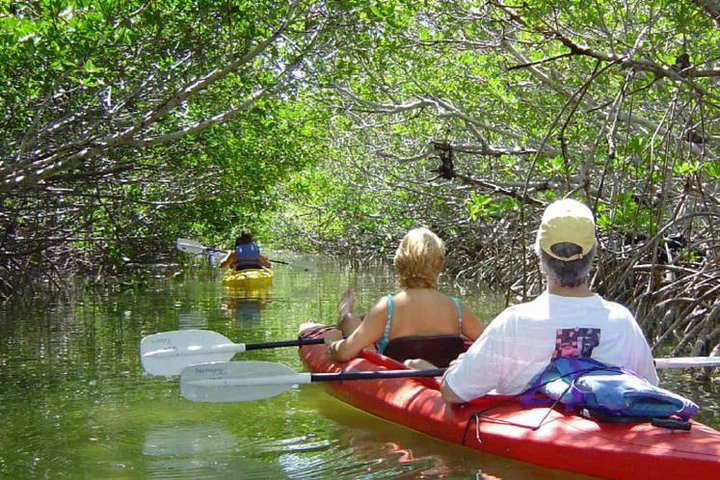
Key West Mangrove Kayak Eco Tour
Along with your experienced guide you will paddle at a relaxing pace and explore the shallow, calm, blue-green waters of the back country of Key West...

The National Park Service allows official service animals, identified as dogs and miniature horses, within the fort. Confirm ferry arrangements and any other relevant park procedures in advance. Travelers who use medical equipment should also discuss power, storage, and boarding requirements before committing to the excursion.
The Key West Accessibility Guide covers wheelchairs and mobility planning for the city portion of a visit. The ferry excursion requires its own conversation because it combines marine transportation, an island landing, outdoor surfaces, and a fixed timetable. Confirm the complete travel chain rather than focusing only on the destination.
How the ferry compares with seaplane and private-boat access
The ferry is the lower-complexity choice for a structured Garden Key visit because meals, snorkel equipment, entrance, and a narrated fort tour are bundled together. Its main limitation is the combination of a long crossing and fixed departure times. Seaplane visitors also work within a schedule, while private boats provide the greatest flexibility beyond Garden Key.
| Access method | Main advantage | Main tradeoff |
|---|---|---|
| Ferry | Bundled food, snorkel gear, entrance, and fort tour | Long offshore crossing and fixed timetable |
| Seaplane | Flight-based scheduled access to Garden Key | Visit remains constrained by transportation timing |
| Private boat | Greatest flexibility beyond Garden Key | Requires an independent boating plan |
A detailed Dry Tortugas ferry versus seaplane comparison can help travelers decide how much they value travel time, structure, and the experience of arriving by sea. Choose the ferry when the voyage itself appeals and the bundled format simplifies the day. Consider another method when schedule flexibility or reaching areas beyond Garden Key matters more.
Is the Dry Tortugas ferry day trip worth it?
The ferry is worthwhile for travelers who want to devote a full day to reaching one of the most remote destinations accessible from Key West. It combines the offshore journey with Fort Jefferson, optional snorkeling, meals, equipment, and a clear schedule. The long crossing is the central compromise, and only about four and a half hours are spent on Garden Key.
Reserve early, pack for sun and limited services, and choose two priorities for the island. Travelers comfortable with the fixed timetable can enjoy a remarkably focused day without coordinating separate transportation, food, equipment, and admission. Those seeking a shorter transfer or flexible multi-island exploration should compare the alternatives before booking.
Frequently asked questions
How long is the Dry Tortugas ferry day trip?
Plan on roughly ten hours and fifteen minutes from the published 7:00 a.m. check-in to the approximate 5:15 p.m. return. The itinerary includes an 8:00 a.m. departure, arrival around 10:15 a.m., and departure from Garden Key at 3:00 p.m. Weather can change the timing.
How much time do ferry passengers get at Fort Jefferson?
Ferry passengers receive roughly four and a half hours on Garden Key, where Fort Jefferson is located. That island time includes the fort tour, lunch, snorkeling or independent exploration, changing, and reboarding.
What is included with the Dry Tortugas ferry ticket?
The published fare includes round-trip transportation, park and Fort Jefferson entrance, breakfast, lunch, use of snorkeling equipment, and a narrated fort tour. Check the live booking total for current pricing, taxes, parking costs, availability, and cancellation terms.
Nearby hotels to compare
Compare other stays around Old Town Key West so you can weigh location, room style, and overall trip fit.
Hyatt Vacation Club at Beach House, Key West
Stay in a classic Key West–style, tropical getaway set up as residential-style retreats with manicured gardens and beachside comfort. A connecting on-property dock makes it easy to rent a kayak and head out for Gulf of Mexico water adventures. Plan a vacation that feels more like having your own place by the water.
Check ratesDo I need to reserve the Dry Tortugas ferry in advance?
Yes, advance reservations are strongly recommended. Standby seats depend entirely on no-shows, even though prospective standby passengers must arrive early and complete the operator’s sign-up process.
Can you drive to Dry Tortugas National Park?
No, Dry Tortugas National Park cannot be reached by car. It lies about 70 miles west of Key West, and ferry day passengers travel to Garden Key.
Can ferry passengers visit Loggerhead Key?
Ferry day passengers generally do not have time to visit Loggerhead Key or other areas beyond Garden Key. Private boats provide the greatest flexibility for exploring more of the park.
Are bathrooms, food, and drinking water available on Garden Key?
Garden Key has no food concession, drinking water, or routine public bathrooms. Breakfast and lunch are included with the ferry fare, and day visitors can use the ferry’s bathrooms and fresh-water rinse while the vessel is present.
Is the Dry Tortugas ferry physically accessible?
Accessibility arrangements need to be confirmed before booking. Contact Yankee Freedom and the national park about boarding, movement aboard the vessel, dock transfer, outdoor routes, medical equipment, snorkeling access, and service-animal needs.

The Reach Key West, Curio Collection by Hilton
A beachfront Hilton Curio Collection resort in Old Town Key West with a private beach, pool, spa access, and easy access to Duval Street and Southernmost Point.
Check rates
Guided Night Kayak Adventure Tour in Luminous Lagoon
Our Key West guided Night Kayak Tour is not just a journey through the water, but a night time nocturnal adventure! Our local guides will take you dee...

Key West Glass-Bottom Boat Tour with Sunset Option
Step aboard the Pride of Key West, the island’s only Glass Bottom Boat. This family-friendly tour invites you to explore North America’s only livi...