Private Boat to Dry Tortugas: Is It Worth It
A private boat to Dry Tortugas gives skilled boaters and charter groups unusual freedom, but the 70-mile offshore route, changing dock access, weather, and self-sufficiency demands make it a serious commitment.
A private boat is worth it for the right kind of Dry Tortugas trip
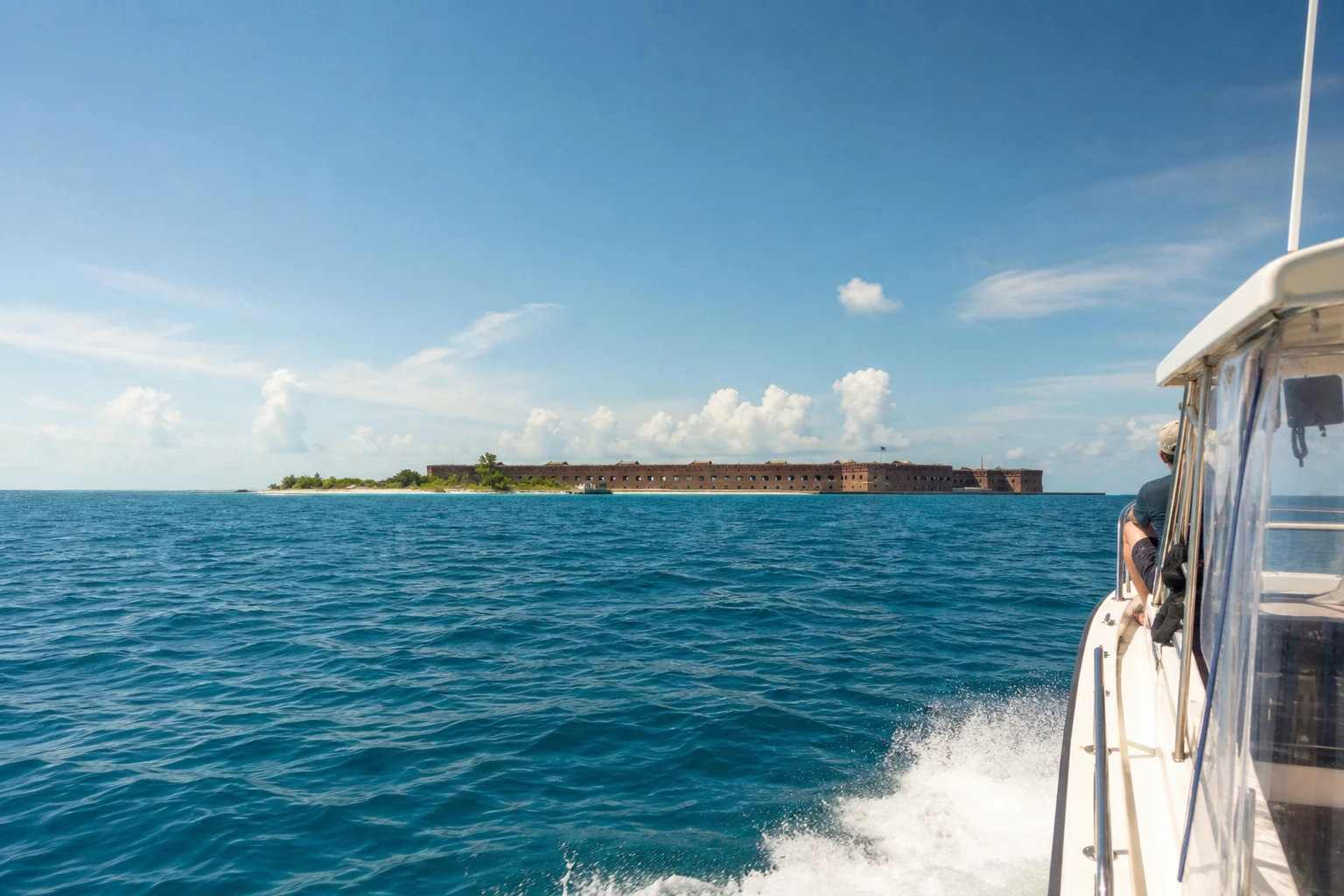
A private boat to Dry Tortugas is worth it for capable offshore boaters and groups chartering a suitable vessel who want freedom beyond a standard Garden Key visit. It can turn the park into a flexible snorkeling, diving, exploring, or overnight-anchoring itinerary. The tradeoff is substantial: Dry Tortugas lies about 70 miles west of Key West, across open water with no land in sight and no park fuel, food, water, trash service, or public recycling.
- A private vessel offers the best chance to explore beyond Garden Key, including Loggerhead Key when conditions and the itinerary allow.
- The route is roughly 70 miles each way, so this is an offshore passage rather than a quick sightseeing ride.
- Dock access is limited and changeable. Anchored visitors need their own dinghy, kayak, canoe, or small boat to reach shore.
- The verified park entrance fee is $15 per visitor age 16 or older, valid for seven consecutive days; it is paid digitally.
- Summer is generally calmer but rainier, while winter is drier but windier. Sea state, not a calendar promise, should drive the go or no-go decision.
Here, a private boat can mean an owner-operated recreational vessel or a privately chartered boat. The operating responsibilities differ, but both choices share the same distance, weather exposure, landing constraints, park rules, and need for a well-planned return journey. If the goal is simply a brief look at Fort Jefferson on a fixed schedule, private boating can be more commitment than the experience requires.

Dry Tortugas National Park Day Trip by Luxury Private Boat
Experience the Dry Tortugas in Unrivaled Luxury and Style aboard the Axopar 37 XC. This exclusive day trip offers the thrill of a high-performance lux...

Full-Day Tour of Florida Keys Including Aquarium Encounters from Key West
Depart the island of Key West & enjoy a full day of sightseeing along the iconic Overseas Highway! You'll travel hal...

Go City: Miami Explorer Pass - Choose 2, 3, 4 or 5 Attractions
Go City's Explorer pass is the best Miami pass for savings and flexibility Create your own sightseeing itinerary and...

Key West 90-Minute Guided Jet Ski Island Tour – 26 Miles
This 90-minute guided tour covers 26 miles around Key West, offering a longer and more complete riding experience th...
The rare advantage is time beyond Garden Key
Private boats offer a degree of independence that scheduled transport cannot easily match. Ferry and seaplane visitors normally spend their time at Garden Key, home to Fort Jefferson. Their travel time and fixed schedules generally leave no room for Loggerhead Key. A private vessel creates the option to build Loggerhead into the day or to shape an itinerary around time on the water, subject to weather, navigation, and park restrictions.
That freedom matters most to travelers who see the fort as one part of the trip rather than the whole purpose. A Fort Jefferson guide covering what to see and how long you need can help define how much Garden Key time belongs in the plan. Travelers focused only on the fort should also compare the simpler rhythm of Dry Tortugas ferry versus seaplane options before committing to a private vessel.
| Your main priority | How a private boat fits |
|---|---|
| Exploring beyond Garden Key | A strong fit. A private vessel can make Loggerhead Key part of the itinerary when conditions and logistics support it. |
| A single, straightforward Fort Jefferson visit | Often less essential. Scheduled visitors normally spend their limited park time on Garden Key. |
| A flexible day for water-based activities | A strong fit for groups prepared for weather-dependent planning and self-sufficient operations. |
| Predictable shore transfers and simple logistics | A weaker fit because dock availability is restricted and anchored boats need their own shore-transfer craft. |
The 70-mile reality: this is offshore navigation
The distance is the central fact in this decision. Dry Tortugas is approximately 70 miles west of Key West, requiring open-ocean navigation with no land in sight. NPS directs boaters to use NOAA charts 11438 and 11434. A vessel heading there needs a realistic range plan, reliable navigation, and a crew ready to treat the crossing as the main event rather than a short transfer between attractions.
Places to stay for this itinerary
Pair the day-by-day plan with a hotel location that keeps the trip simple.
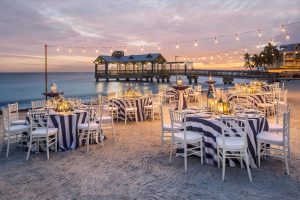
The Reach Key West, Curio Collection by Hilton
A beachfront Hilton Curio Collection resort in Old Town Key West with a private beach, pool, spa access, and easy access to Duval Street and Southernmost Point.
Check rates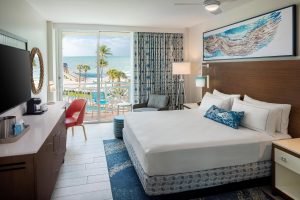
Hyatt Vacation Club at Beach House, Key West
Stay in a classic Key West–style, tropical getaway set up as residential-style retreats with manicured gardens and beachside comfort. A connecting on-property dock makes it easy to rent a kayak and head out for Gulf of Mexico water adventures. Plan a vacation that feels more like having your own place by the water.
Check rates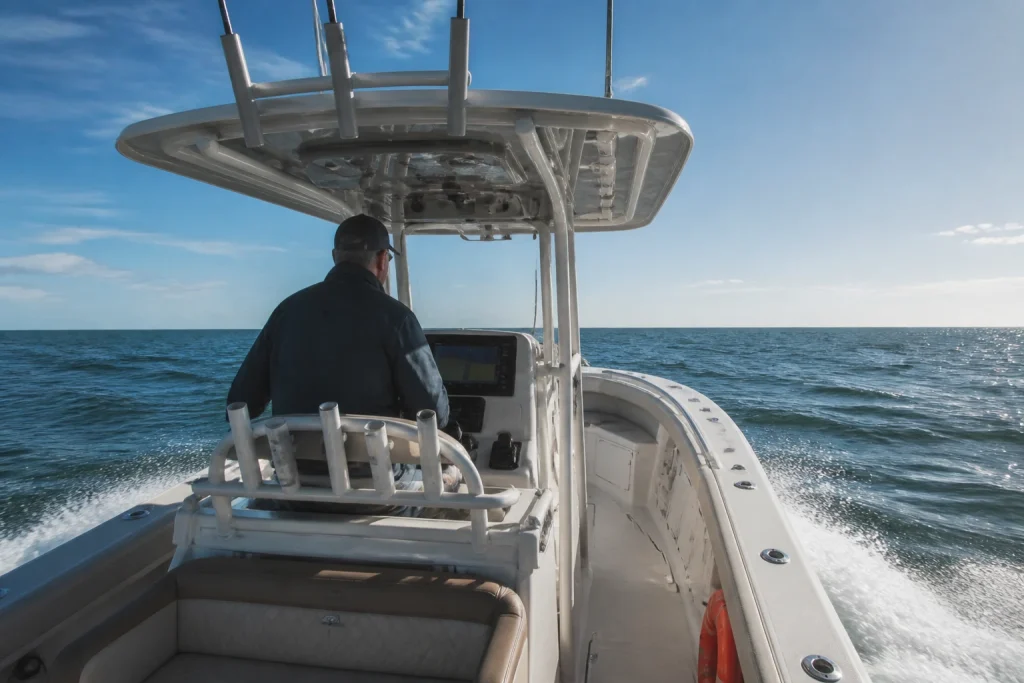
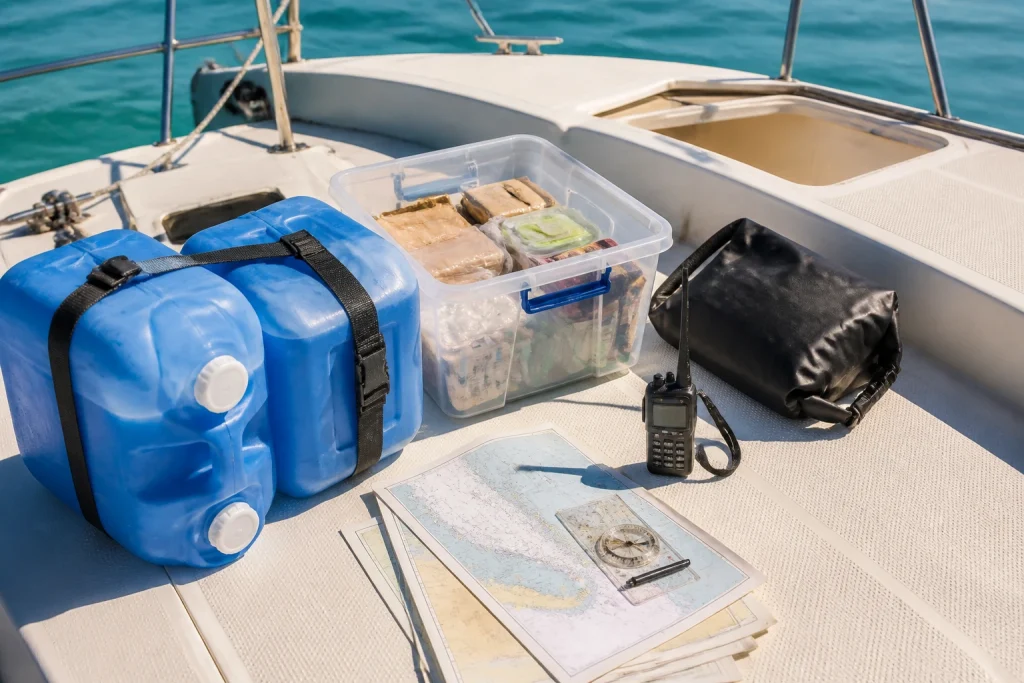
Self-sufficiency is nonnegotiable once you arrive. The park has no fuel, food, drinking water, trash service, or public recycling. Bring what the boat and everyone aboard need, plan fuel for the complete operation, and retain all waste for the return to Key West. The isolation is part of Dry Tortugas' appeal, but it leaves little room for casual packing or last-minute fixes.
Owner-operated boat or private charter: choose the responsibility you want
Running your own boat gives the greatest control, but it also puts the navigation, fuel planning, weather calls, landing plan, supplies, and return passage on your crew. A private charter can make sense for a group that wants a tailored trip without operating the vessel themselves. It does not remove the park's weather, transfer, or access constraints, so the itinerary still needs to be designed around real offshore conditions.
Questions to settle before reserving a private charter
- Ask what areas the captain expects to visit, including how much time is planned for Garden Key and whether Loggerhead Key is a realistic possibility.
- Confirm the weather-related cancellation, postponement, and return-to-Key-West approach before building the rest of your vacation around the outing.
- Ask how shore transfers will work if dock use is unavailable or limited, including whether a tender is carried.
- Get a clear quote showing what is included and what remains separate. Private-charter rates, fuel charges, captain arrangements, and marina costs vary by boat and itinerary.
- Discuss the park entrance fee, check-in process, special requirements for larger groups or unusual activities, and any mobility needs before departure.
Garden Key arrivals require a dock plan and a backup shore-transfer plan
Do not plan a private-boat trip around guaranteed dock access. Garden Key dock use is limited to two cumulative hours per vessel per day, and overnight docking is prohibited. The eastern half of the main dock is reserved for the ferry from 10:00 a.m. to 3:00 p.m. Current operating rules also state that there are no visitor slips because of Hurricane Ian damage. Ferry, supply, emergency, and government-vessel needs can further affect access.
Anchoring does not provide a park shuttle. Visitors arriving at anchor must use their own dinghy, kayak, canoe, or small boat to reach the dinghy beach. If dock conditions are uncertain on arrival, park staff ask boaters to contact them on VHF Channel 16. This is a small operational detail with a big effect on how easily everyone gets ashore.
Overnight anchoring is limited to sandy bottom within one nautical mile of the Garden Key lighthouse. Anchoring is not allowed in the Research Natural Area, and visitors using Research Natural Area moorings are limited to daytime use of up to two hours. Anchors and mooring gear must avoid damaging coral, seagrass, and submerged cultural resources. Personal watercraft are prohibited in the park.
Weather should decide the departure, not the month on the calendar
Summer is generally calmer than winter, but it is also rainier. Winter is generally drier and windier. Sudden tropical storms can occur at any time of year. Those broad patterns are useful for setting expectations, yet they cannot guarantee a comfortable or safe crossing on a particular date. The sea state for the outbound and return passages is the deciding factor.
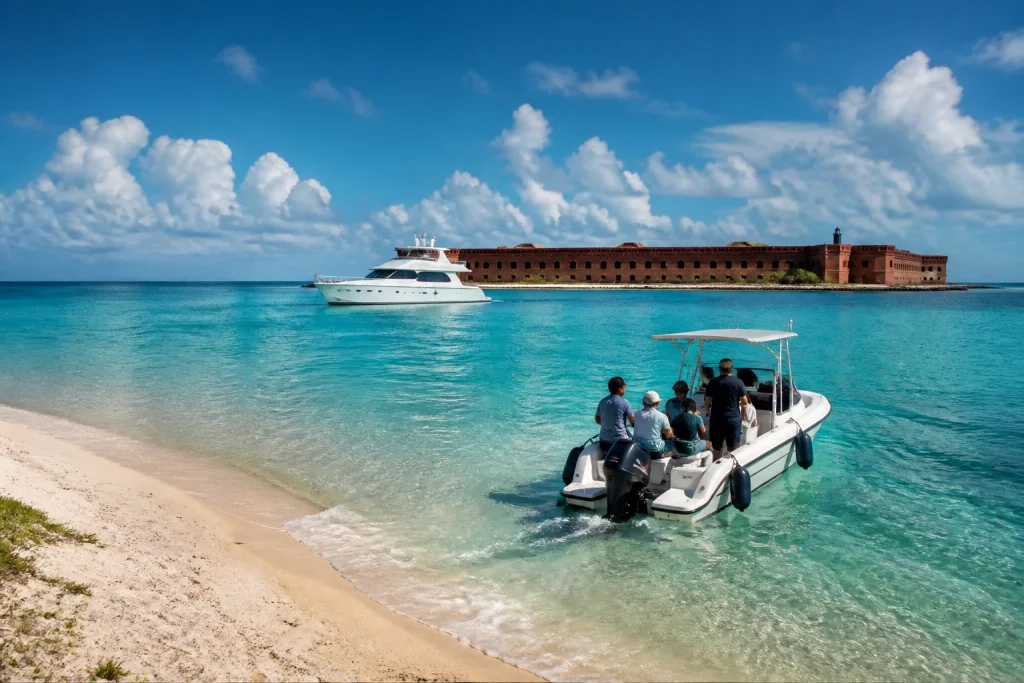
Build in a backup Key West day. A weather-driven change is far easier to absorb when the rest of the itinerary is not packed too tightly.
The seasonal Shark Special Protection Zone closure runs from June 1 through October 31, and other islands or zones can have seasonal or year-round restrictions. Check current closures while finalizing the route, particularly for a summer trip when weather and seasonal protections can both shape the day's options.
Costs: know the fixed park fee, then price the boat trip by quote
The fixed cost is straightforward: the Dry Tortugas entrance fee is $15 for each visitor age 16 or older, valid for seven consecutive days. Visitors under 16 are exempt. The park is cashless, and private boaters need to use a digital payment method. Obtaining the pass before departure avoids trying to solve payment details after an offshore crossing.
The boat cost is inherently variable. A private charter price, self-operated fuel expense, captain charge, and marina costs depend on the vessel, group size, itinerary, and conditions. The roughly 140-mile round trip and lack of fuel in the park make operating costs meaningful, but there is no useful universal dollar figure for this experience. Compare complete quotes or calculate your own vessel's actual operating plan instead of relying on a generic estimate.
Have a question about this guide?
Ask for tour ideas, hotel suggestions, or a simple trip plan that combines both.
Trip Helper
Accessibility needs deserve a vessel-specific plan
A private boat should not be assumed to offer a predictable wheelchair-accessible route to Garden Key. Dock use is restricted, and an anchored arrival requires transfer to a dinghy, kayak, canoe, or small boat before reaching the dinghy beach. Travelers with mobility, balance, boarding-transfer, or medical needs should establish a vessel-specific accessibility plan with the charter operator and confirm Garden Key arrangements with the park before booking.
A Key West accessibility guide for wheelchairs and mobility can help shape the shore portion of a vacation. The Dry Tortugas crossing, however, needs its own focused conversation because the vessel, dock conditions, tender transfer, and sea state all matter.
Plan a private-boat trip in this order
- Decide what the trip is meant to accomplish: Fort Jefferson, time beyond Garden Key, snorkeling or diving, or an overnight anchoring itinerary.
- Choose an owner-operated trip only if the crew and vessel are ready for the open-ocean route. Otherwise, evaluate a private charter built for the passage.
- Make the weather call central to the schedule and keep a flexible Key West backup day.
- Pay the digital entrance fee in advance, plan to check in at Garden Key, and review current rules for any special activity or large group.
- Prepare food, water, fuel, trash retention, NOAA charts 11438 and 11434, and a dependable shore-transfer plan.
- Review dock restrictions, anchoring rules, seasonal closures, and any accessibility arrangements before casting off.
Use a Key West packing list for any season to round out personal gear, but put the boat's water, food, fuel, waste, navigation, and transfer needs first. An overnight anchoring plan is also different from sleeping ashore. Travelers hoping to stay on land should use a Dry Tortugas camping guide to organize that separate part of the visit.
Who should choose a private boat to Dry Tortugas?
The best candidates are experienced offshore boaters or groups chartering a suitable vessel who value control over their time and want more than a standard Garden Key visit. The experience is especially compelling for people who want to pursue the possibility of Loggerhead Key, build in water-based exploration, or remain overnight at anchor within park rules.
It is usually the wrong fit for first-time offshore operators, travelers who only want Fort Jefferson, visitors who need a highly predictable accessible transfer, or anyone uncomfortable with a weather-dependent plan and the responsibility of full self-sufficiency. In those cases, a scheduled way of reaching Garden Key can be the more enjoyable choice simply because it matches the trip's real priorities.
The practical answer
A private boat to Dry Tortugas earns its higher effort when freedom is the point. It gives prepared travelers room to look beyond Garden Key, adapt the day to their interests, and experience the park on a scale that scheduled transport cannot usually provide. Its main limitation is equally clear: this is a remote offshore operation with weather, transfer, fuel, and access realities that cannot be treated as afterthoughts. Choose it for capability and flexibility, then plan every detail accordingly.
Dry Tortugas National Park Day Trip by Luxury Private Boat
Experience the Dry Tortugas in Unrivaled Luxury and Style aboard the Axopar 37 XC. This exclusive day trip offers the thrill of a high-performance lux...
The Reach Key West, Curio Collection by Hilton
A beachfront Hilton Curio Collection resort in Old Town Key West with a private beach, pool, spa access, and easy access to Duval Street and Southernmost Point.
Check ratesDry Tortugas National Park Day Trip by Luxury Private Boat
Experience the Dry Tortugas in Unrivaled Luxury and Style aboard the Axopar 37 XC. This exclusive day trip offers the thrill of a high-performance lux...
Frequently asked questions
Can you take your own boat to Dry Tortugas?
Yes, capable recreational boaters can make the trip, but it is a serious offshore passage of roughly 70 miles from Key West. Plan to be fully self-sufficient because the park has no fuel, food, drinking water, trash service, or public recycling.
How long does a private boat trip to Dry Tortugas take?
There is no single standard travel time because boats travel at different speeds and sea conditions can change the passage. Treat it as a full offshore outing, with a roughly 70-mile route each way plus time for arrival, shore transfer, exploration, and the return crossing.
How much is the Dry Tortugas entrance fee for private boaters?
The entrance fee is $15 per visitor age 16 or older and is valid for seven consecutive days. Visitors under 16 are exempt, and private boaters must pay digitally because the park is cashless.
Can private boats dock at Garden Key?
Private boats can use the Garden Key dock only under strict limits, and overnight docking is prohibited. Each vessel is limited to two cumulative hours of dock use per day, the eastern half of the main dock is reserved for the ferry from 10:00 a.m. to 3:00 p.m., and there are currently no visitor slips because of Hurricane Ian damage.
Do I need a dinghy for a private boat trip to Dry Tortugas?
You need a shore-transfer craft if you plan to anchor, because the park does not provide a shuttle from anchorage. Bring your own dinghy, kayak, canoe, or small boat to reach the dinghy beach.
Is a private boat to Dry Tortugas a good choice for travelers with limited mobility?
It can work only when the specific vessel and transfer plan suit the traveler's needs. Restricted dock access and possible dinghy transfers make it important to arrange a vessel-specific accessibility plan and confirm Garden Key access details before booking.
Experiences to explore
 Explore experience ↗
Dry Tortugas National Park Day Trip by Luxury Private Boat
◷ 8 hr
Experience the Dry Tortugas in Unrivaled Luxury and Style aboard the Axopar 37 XC. This exclusive day trip offers the thrill of a high-
From $1,500.00 USD
View dates Explore experience ↗
Key West Private Snorkeling & Reef Boat Charter
◷ 4 hr
This private Key West snorkeling charter avoids the fixed schedule and crowds of a large group boat. The captain selects suitable sites
From $1,195.00 USD
View dates Explore experience ↗
Dry Tortugas National Park Boat Charter from Key West
◷ 8 hr
Explore the stunning Dry Tortugas National Park with a private boat charter tailored just for you. Departing from Key West, enjoy a ful
See dates for Current pricing
View dates