Key West Tarpon Fishing Charters: Best Time and What to Expect
Spring through early summer offers the clearest planning window for a tarpon-focused Key West trip. Learn how to choose the right charter, what the fight and release involve, which questions to ask before booking, and how weather and Florida regulations shape the experience.
A Key West tarpon charter combines patient hunting with sudden bursts of speed, spray, and airborne fish. Spring through early summer is the clearest period to plan a tarpon-focused visit, but timing is only part of the decision. The right guide, boat style, trip length, weather policy, and release practices all affect the day. Tarpon are powerful game fish rather than a take-home catch, so the experience centers on the fight and a careful release.
- Plan for March through May as the strongest broad window, with May and June often attracting especially strong demand.
- Book a flats or backcountry guide who specifically targets tarpon rather than assuming every fishing charter offers the same experience.
- Expect a physical fight followed by a quick, in-water release, not a fish to bring back for dinner.
- Request an all-in quote covering duration, anglers, tackle, bait, license arrangements, extra charges, gratuity expectations, and cancellation terms.
- For late-summer or early-fall travel, build flexibility into flights and lodging because hurricane-season conditions can disrupt plans.
- Discuss mobility, boarding, shade, seating, toilet access, and motion concerns with the captain before paying a deposit.
The best season for Key West tarpon fishing
March through May is the strongest broad planning window for a tarpon-centered trip. Florida Keys tourism guidance identifies spring as a great time to target the species, while a Keys fishing brochure extends the listed season through August. For travelers arranging a special trip around tarpon, spring through early summer provides the clearest balance of seasonal guidance and local charter activity.
May and June deserve extra attention. One Key West flats operator specifically describes those months as tarpon season, which also signals stronger booking demand. Reserve early if those dates matter, but do not treat any month as a guarantee. Fish movement, weather, water conditions, and the captain’s chosen approach still shape each trip.
| Travel period | How to plan |
|---|---|
| March through May | The strongest broad window for a tarpon-focused Key West trip. |
| May and June | A particularly important period for local tarpon demand, so earlier booking is sensible. |
| June through August | Still included in the wider Florida Keys tarpon season, with increasing weather considerations later in summer. |
| Other months | Fishing remains possible, but ask about current tarpon prospects and a mixed-species backup plan. |
Key West supports fishing through the year, although the most suitable target mix changes with the season. Outside the core tarpon window, ask the captain whether the trip will remain strictly tarpon-focused or shift toward whatever suits current conditions. That conversation prevents a general fishing trip from being mistaken for a guaranteed tarpon encounter.
Choose a flats or backcountry charter for shallow-water tarpon
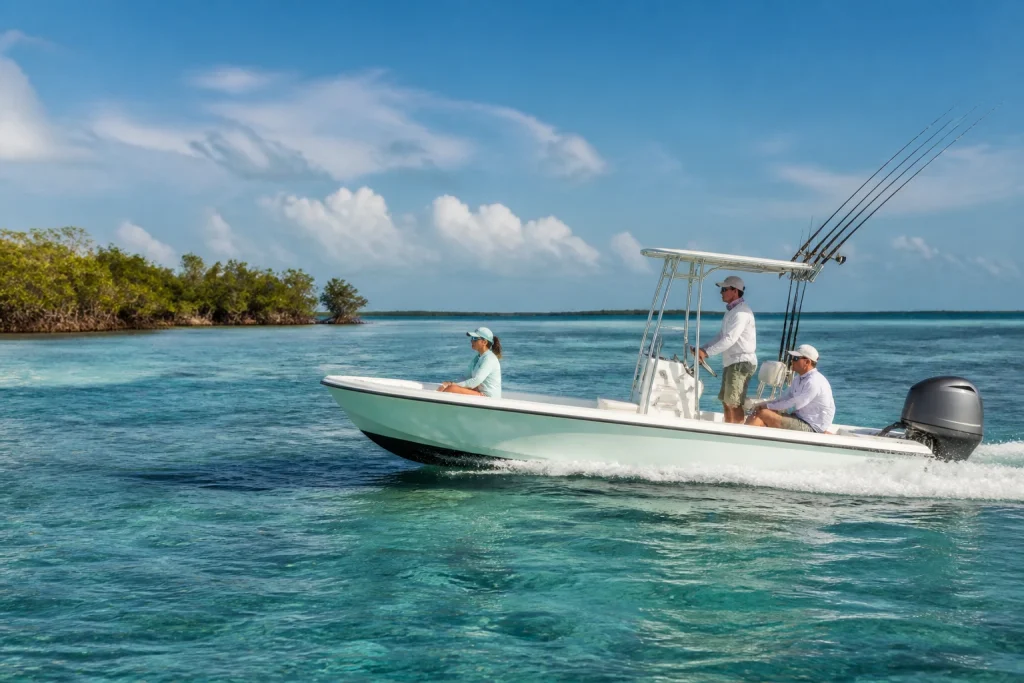
Charter type matters as much as the date. Florida Keys charter boats range from center consoles to large, air-conditioned sport-fishing vessels, but those boats serve different purposes. For shallow-water tarpon work, start with a flats or backcountry guide who explicitly offers tarpon trips. Do not assume an offshore or deep-sea charter automatically uses the same locations, equipment, or techniques.
Local knowledge is especially useful because Keys waters can be challenging to navigate without experience. A captain can match the fishing plan to local conditions and suitable areas. Travelers who want a wider comparison can consult the broader Key West fishing charter guide, while the guide to Key West flats fishing explains the shallow-water style in more depth.
- Do you regularly run tarpon-focused trips during my travel dates?
- Will this be a dedicated tarpon trip or a broader backcountry charter?
- What boat style will be used, and how many anglers can fish comfortably?
- Which tackle and fighting support do you provide?
- What happens if conditions are unsuitable for the original plan?
- How do you handle large fish, photography, and release?
What a tarpon charter feels like from hookup to release
Your confirmation should identify the meeting location, departure time, trip length, and what the boat supplies. Arrive ready to listen. The captain will need to explain where to stand or sit, how the tackle works, and what to do when a fish takes the line. Following those directions becomes especially important when a large tarpon changes direction or leaves the water.
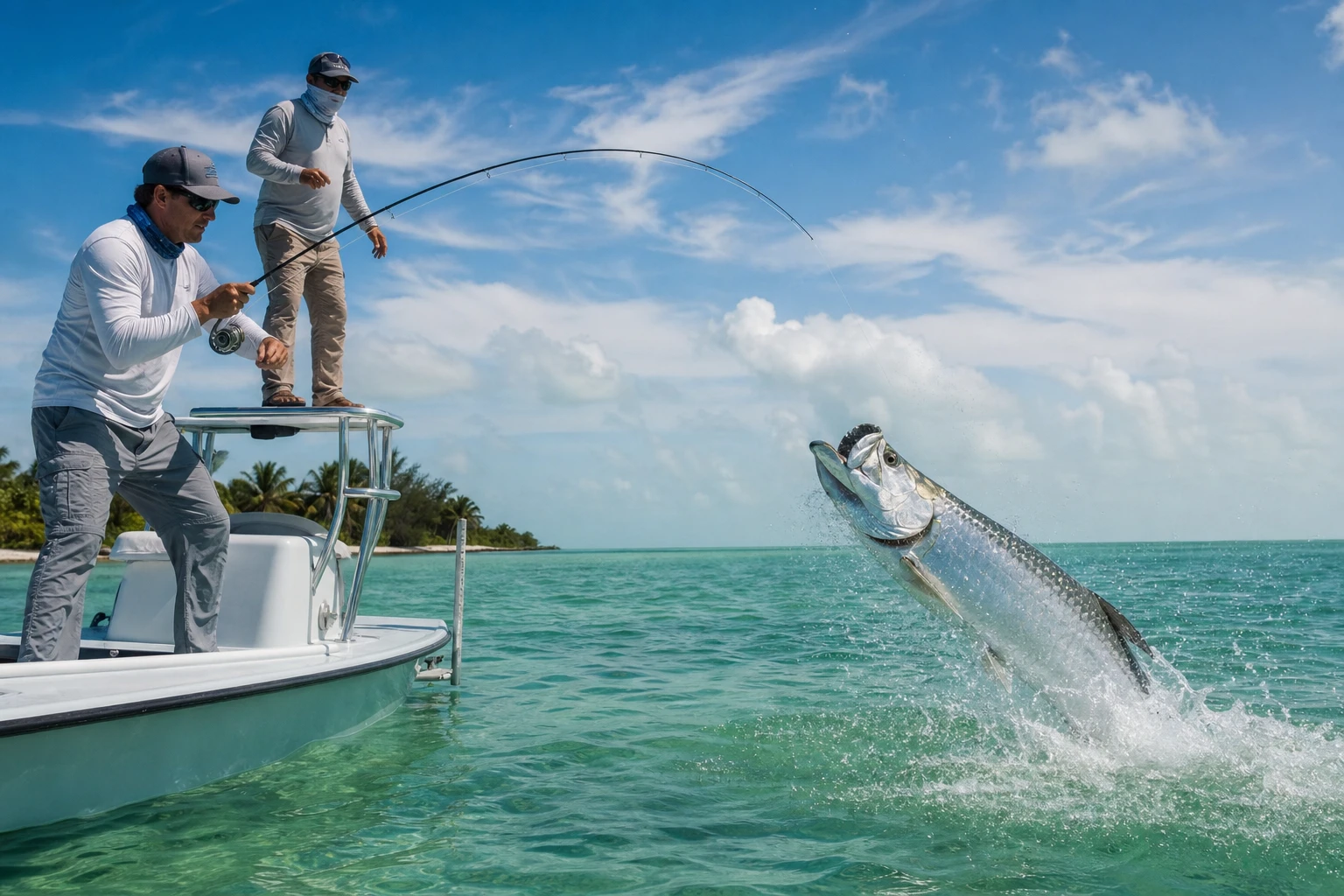
A tarpon trip can include stretches of scanning, repositioning, and preparing a cast. The dramatic portion can happen quickly. Tarpon are known for power, stamina, and acrobatic jumps, so maintaining pressure and responding to the captain’s instructions requires concentration. A hookup is never guaranteed, and even a hooked fish can escape before it reaches the boat.
Large fish can produce long, tiring fights. Florida wildlife guidance recommends tackle heavy enough for the job and fighting support such as a belt or chair when appropriate. Bringing the fish in efficiently is better for both angler and tarpon. Tell the captain before departure about back, shoulder, grip, balance, or stamina concerns so the setup can be discussed honestly.
- Meet the captain and review the plan, safety instructions, and tackle.
- Travel to an area suited to the day’s conditions and search for fish.
- Follow the guide’s directions for presenting the hook-and-line setup.
- Use steady technique and available fighting support during a hookup.
- Keep handling brief and complete the release with the fish in the water when required.
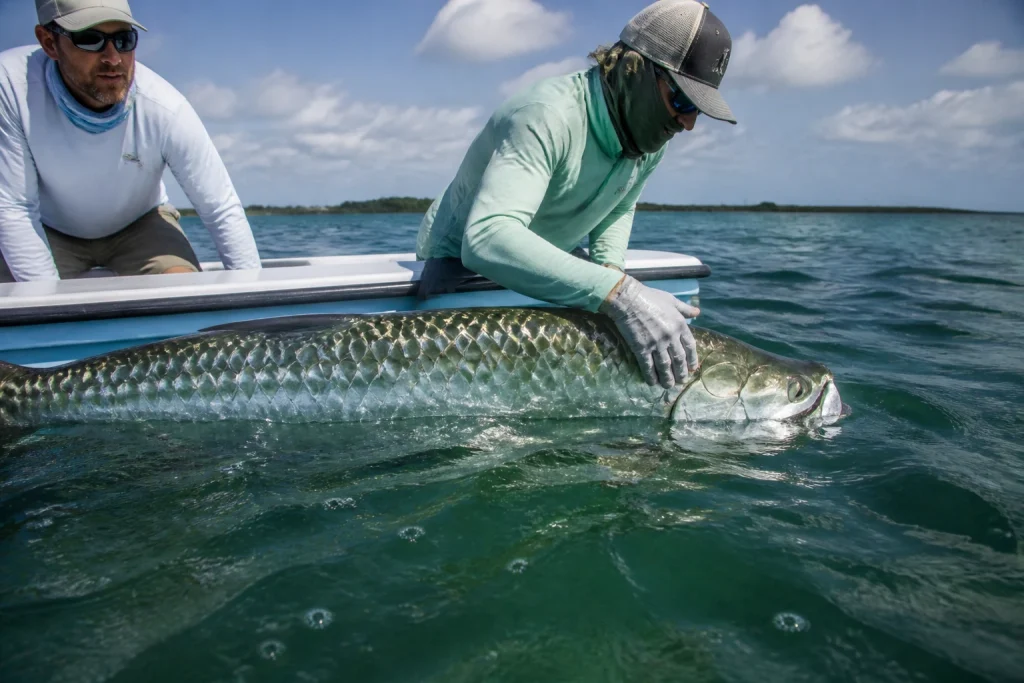
The release is an essential part of the trip. Tarpon fishing in Florida is catch-and-release except for a tightly restricted record-pursuit tag exception. Fish longer than 40 inches must remain in the water unless they are being pursued under that exception. The normal finish is therefore an in-water release rather than lifting a large fish aboard for a trophy photograph.
Match the booking length to stamina and fishing priorities
There is no single trip length that fits every visitor. A shorter booking can suit travelers with limited stamina or a crowded itinerary, while a longer trip gives the captain more time to adapt the plan. Ask each operator what the quoted duration includes and whether travel time to fishing areas is part of the booked period.
Angler count also affects comfort and participation. Ask how many people can actively fish, not simply how many passengers the vessel can carry. A boat’s legal or physical capacity does not explain how casting space, fighting positions, shade, and seating will work for your group. Families and mixed-experience parties should describe each person’s expectations before selecting a trip.
Beginners should be open about their experience rather than trying to sound seasoned. A captain can explain the tackle and expected movements more effectively when the starting point is clear. Experienced anglers should be equally specific about preferred techniques and whether the main goal is one serious tarpon opportunity or a broader day of fishing.
- How much physical effort is comfortable for each angler?
- Does everyone want to fish, or will some people ride as companions?
- Is shade or frequent seated rest important?
- Would the group prefer a dedicated tarpon hunt or a flexible species mix?
- How much of the day can remain open if weather changes the plan?
How to compare charter costs without a misleading headline price
Charter prices vary by operator, trip duration, group size, season, and inclusions. A bare starting rate is less useful than an all-in quote for your exact party and date. Ask for the full expected amount before paying a deposit, then compare what each operator provides rather than choosing solely by the lowest number.
- Booked duration and maximum number of anglers
- Bait, tackle, and other fishing equipment
- Fishing-license arrangements for everyone aboard
- Taxes and any fuel or service surcharges
- Deposit amount and final-payment timing
- Gratuity expectations
- Weather cancellation, rescheduling, and refund terms
Cancellation rules deserve close attention during the busiest tarpon period. One local flats operator requires 30 days’ cancellation notice for May and June bookings, but that is an operator-specific policy rather than a Key West standard. Read the terms attached to your chosen charter and consider how they interact with flights, lodging, and travel insurance.
Confirm the precise meeting point before choosing transportation or accommodation. If the charter is the centerpiece of the trip, compare Key West hotels only after you know where and when you must meet the captain. A convenient location can simplify an early departure, but the booking confirmation should drive that decision.
Florida tarpon rules every angler should understand
Florida treats tarpon as a catch-and-release fishery, with a narrow exception involving a tag for state or world-record pursuit. Hook-and-line fishing is required. Snagging, spearing, and certain multiple-hook configurations used with natural bait are prohibited. Regulations can change, so review the current Florida Fish and Wildlife Conservation Commission rules before departure and follow the captain’s instructions on the water.
| Rule or practice | What it means on a charter |
|---|---|
| Catch and release | Plan to return the tarpon to the water rather than keep it. |
| Fish longer than 40 inches | Keep the fish in the water unless the record-pursuit tag exception applies. |
| Legal method | Use hook-and-line equipment and avoid prohibited methods. |
| Handling | Release promptly and minimize contact with the fish. |
| Photography | Prepare for an efficient in-water image rather than lifting a large fish aboard. |
Do not assume the charter automatically resolves every licensing question. Ask whether the operator’s arrangements cover all paying anglers and companions who intend to fish. Confirming this alongside bait, tackle, and other inclusions keeps the legal and financial details in one conversation.
Responsible fights protect tarpon from exhaustion and sharks
Conservation begins before the hookup. Tackle should be strong enough to land the fish efficiently, and anglers should use a fighting belt or chair when appropriate. Once the fish reaches the boat, handling should remain minimal and the release should happen quickly. Extending the fight or photograph adds stress without improving the experience.
Sharks add another concern. Florida wildlife guidance advises bringing a tarpon in quickly and cutting the line close to the hook if sharks appear, then moving to another area. A responsible captain should prioritize the fish’s welfare instead of prolonging a dangerous situation for another photograph or attempt.
Bridge and pier tarpon fishing creates particular release problems because large fish cannot be safely lifted from the water and can end up trailing line. Florida guidance recommends avoiding those settings for tarpon. A conservation-minded boat guide can manage the fight, positioning, and in-water release more effectively.
Discuss photography before fishing begins. Have the camera or phone ready, keep instructions simple, and accept that fish welfare comes first. A brief image beside the boat can preserve the moment without turning the release into a lengthy production.
Weather planning matters most in late summer and early fall
Key West’s hurricane season runs from June 1 through November 30, with the highest storm risk generally occurring from mid-August through mid-October. That period overlaps the later portion of the broader tarpon season. Travelers booking then should preserve flexibility and understand that U.S. 1 is central to evacuation from the Keys.
Check the forecast as the trip approaches and review the charter’s cancellation and refund terms before travel. Ask who decides when conditions are unsuitable, whether the trip is rescheduled or refunded, and how late that decision can be made. Apply the same care to nonrefundable transportation and lodging reservations.
A weather backup plan does not need to be complicated. Leave part of the itinerary movable, avoid stacking every major reservation into one narrow window, and keep the operator’s contact information available. If the charter shifts dates, a flexible schedule can save the fishing day without disrupting the entire visit.
What to bring on the boat
Pack for exposure, movement, and limited storage rather than for a day on shore. Confirm what the captain already supplies and whether food or drinks are included. The Key West packing list for any season can help with the wider trip, but keep the fishing bag compact and easy to secure aboard the boat.
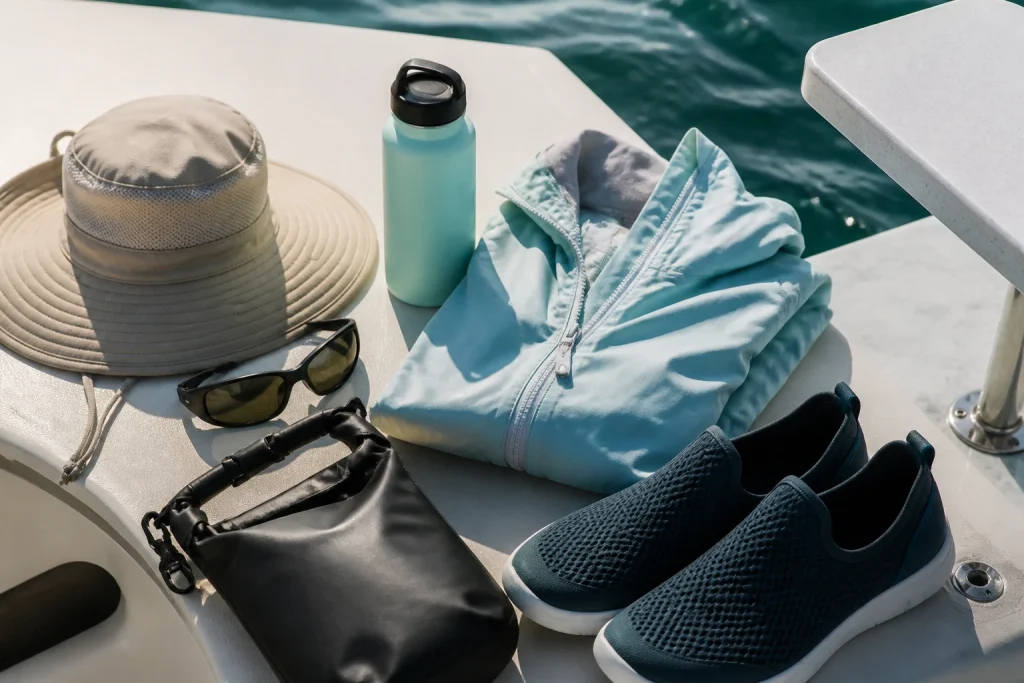
- Sun-protective clothing, a secure hat, and sunglasses
- Water and approved snacks if they are not supplied
- A light rain layer that packs into a small space
- Non-slip footwear suitable for the captain’s boat rules
- Personal medication and any motion-sickness supplies you normally use
- A small dry pouch for identification, phone, and valuables
- A camera or secured phone that can be ready for a quick release photograph
Leave bulky coolers, unnecessary tackle, and loose accessories behind unless the operator approves them. Space and storage differ among vessels. If you plan to bring specialized rods, photography equipment, or mobility aids, describe them before booking rather than arriving with gear the boat cannot safely accommodate.
Accessibility depends on the individual dock and vessel
Accessibility varies among Key West charters, boats, and departure points. Do not rely on a general description of the destination when evaluating a specific fishing trip. Contact the captain before booking and describe the traveler’s mobility, balance, transfer, sensory, and assistance needs in practical terms.
- What is the route from the dock to the boat?
- Are there steps, gaps, ladders, or narrow passages during boarding?
- Can the traveler remain seated while the vessel is moving?
- Is a fighting chair or belt available, and what support can the crew provide?
- Is shade available throughout the trip?
- Is there an accessible toilet, or any toilet, aboard?
- Can a non-angling companion ride, and how is that person priced?
The Key West accessibility guide can help with the rest of the visit, but boat-specific questions still require direct answers from the operator. If motion sensitivity or a medical condition affects participation, discuss the expected vessel movement and seek personal medical guidance when appropriate.
How to identify a strong tarpon captain
A good match begins with specific experience. Look for a captain who regularly targets tarpon during your dates, uses an appropriate flats or backcountry boat, explains the release process clearly, and answers questions about physical effort without brushing them aside. Conservation practices should be part of the normal trip description, not an afterthought.
- Confirm that tarpon are a normal target for the captain during your travel period.
- Ask whether the charter will be dedicated to tarpon or include backup species.
- Compare the fishing space and comfort of the proposed vessel.
- Discuss angler experience, stamina, mobility, and companion needs.
- Review tackle, fighting support, handling, and shark-response practices.
- Get an all-in quote and read the deposit and cancellation policy.
- Confirm the meeting point, departure instructions, and weather procedure.
Be cautious with anyone who presents a hookup as certain. Key West offers year-round fishing possibilities, but captains still work with changing conditions and seasonal target mixes. A useful answer explains the plan for your dates, the likely approach, and what alternatives are available if tarpon are not the best option that day.
When another Key West fishing style may fit better
Tarpon charters best suit anglers excited by a challenging fight, catch-and-release ethics, and the possibility of considerable effort for a limited number of chances. Travelers mainly interested in keeping edible fish, relaxing on a larger vessel, or sampling several targets should explain those priorities before reserving a tarpon-specific trip.
Key West’s charter fleet includes both small center consoles and much larger sport-fishing boats. Visitors drawn to larger offshore vessels can compare deep-sea fishing in Key West instead of assuming it is interchangeable with a flats trip. The better option depends on preferred boat comfort, fishing style, target species, and tolerance for physical effort.
Outside the strongest tarpon window, a flexible fishing charter can still make sense. Ask the captain to describe the seasonal target mix and whether tarpon will remain the primary goal. That approach preserves the appeal of a day on Keys waters without building the entire trip around an unlikely promise.
Is a Key West tarpon charter right for you?
A tarpon charter is a strong choice for anglers who value the hunt, can handle an energetic fight, and embrace a quick release as the proper ending. Its main limitations are seasonality, uncertain hookups, physical effort, and charter-specific comfort. Those are manageable when discussed before booking rather than discovered at the dock.
For the clearest plan, target spring through early summer, select a genuine flats or backcountry tarpon guide, and obtain an all-in quote for your group. Review current regulations, weather terms, boarding arrangements, and the release procedure. Then leave room for the captain to adapt. Key West’s water sets the stage, but preparation makes the experience safer, smoother, and more rewarding.
Frequently asked questions
What is the best time for a tarpon fishing charter in Key West?
March through May is the strongest broad planning window, with May and June receiving particular attention from local tarpon operators. A wider Florida Keys season extends through August, but conditions and fishing approach still affect each trip.
Can you catch tarpon in Key West year-round?
Tarpon can be part of a broader year-round fishing plan, but the best target mix changes by season. Outside spring and early summer, ask the captain about current prospects and whether the trip will include alternative species.
Can you keep a tarpon caught in Key West?
No, ordinary Florida tarpon fishing is catch-and-release. A tightly restricted tag exception exists for state or world-record pursuit, but it is not part of a normal recreational charter.
Can a large tarpon be lifted into the boat for a photo?
Tarpon longer than 40 inches must remain in the water unless the record-pursuit tag exception applies. Plan for a quick in-water photograph and release rather than bringing a large fish aboard.
Are Key West tarpon charters physically demanding?
They can be physically demanding because tarpon are powerful, acrobatic fish with considerable stamina. Heavy tackle and fighting support can help, but anglers should tell the captain about strength, balance, back, shoulder, or grip concerns before booking.
Do tarpon charter prices include bait, tackle, and fishing licenses?
Inclusions depend on the operator and booking. Request an all-in quote that identifies bait, tackle, license arrangements, taxes, surcharges, gratuity expectations, and weather-cancellation terms.
How long should a Key West tarpon charter be?
Choose the duration according to your stamina, schedule, group size, and willingness to allow the captain time to adapt. Confirm whether travel to the fishing area is included in the booked period before comparing quotes.
Are Key West tarpon boats wheelchair accessible?
Accessibility is charter-specific and should be confirmed before booking. Ask about the dock-to-boat transfer, step height, seating, shade, toilet access, fighting support, vessel movement, and room for a companion or mobility aid.
Should I book a tarpon charter during hurricane season?
You can book during hurricane season, but keep the itinerary flexible and understand the operator’s weather, rescheduling, and refund terms. The season runs from June 1 through November 30, with the highest storm risk generally from mid-August through mid-October.
What happens if sharks approach a hooked tarpon?
The fish should be brought in quickly, and Florida wildlife guidance advises cutting the line close to the hook if sharks appear before moving to another area. A responsible captain will put fish welfare ahead of extending the fight.
Hotel bases to compare after this tour
Once you have the tour shortlist, compare a few stays that can make the trip logistics easier.

Hyatt Vacation Club at Beach House, Key West
Stay in a classic Key West–style, tropical getaway set up as residential-style retreats with manicured gardens and beachside comfort. A connecting on-property dock makes it easy to rent a kayak and head out for Gulf of Mexico water adventures. Plan a vacation that feels more like having your own place by the water.
Check rates
The Reach Key West, Curio Collection by Hilton
A beachfront Hilton Curio Collection resort in Old Town Key West with a private beach, pool, spa access, and easy access to Duval Street and Southernmost Point.
Check ratesStill comparing Key West Tarpon Fishing Charters: Best Time And What To Expect?
Ask for tour ideas, hotel suggestions, or a simple trip plan that combines both.