Key West Scuba Diving vs Snorkeling: Which Should You Book
Snorkeling offers an easy, surface-level look at Key West reef habitat, while scuba is better for qualified travelers who want depth or wreck diving. Compare costs, rules, conditions, and booking questions before choosing.
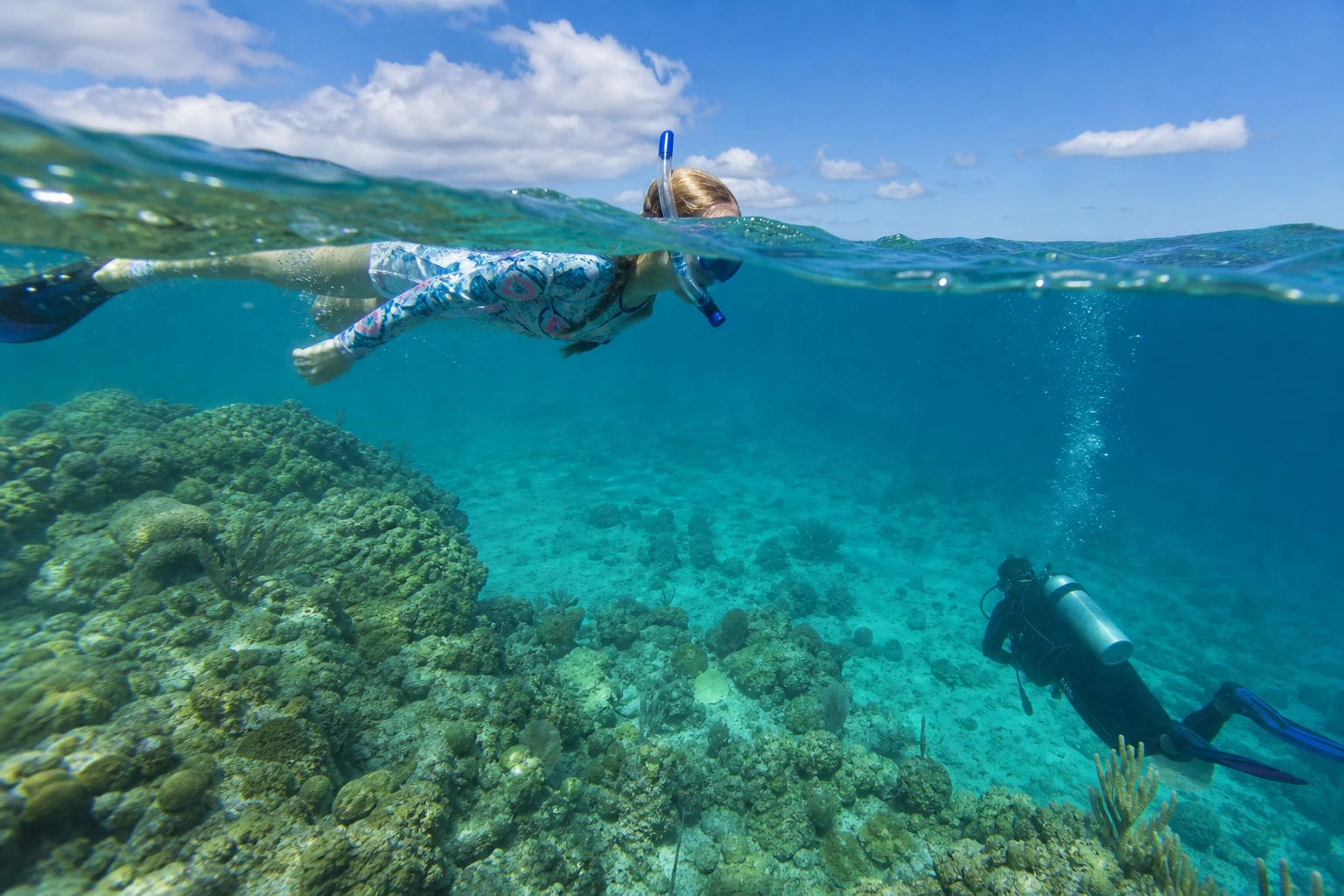
The choice between Key West scuba diving and snorkeling comes down to depth, training, budget, and the kind of underwater experience you want. Snorkeling is the lower-commitment option for exploring shallow reef habitat from the surface. Scuba is the stronger choice for qualified travelers who want deeper exploration or a wreck-focused outing such as the USNS Vandenberg.
The quick answer: snorkeling for ease, scuba for depth
- Book snorkeling if you want a reef-focused experience without committing to a certification-based wreck dive.
- Book scuba if you have suitable training and want to explore below the surface or pursue a deeper wreck itinerary.
- Do not assume the two trips visit identical sites. The operator selects each itinerary.
- Expect scuba to cost more, especially when instruction or full rental equipment is included.
- Choose an operator with clear reef rules, participation requirements, and a practical weather policy.
For most first-time visitors who simply want to see the reef, snorkeling is the straightforward booking. Certified divers should choose scuba when depth and underwater exploration are central to the trip. A mixed group should compare both products before reserving, since one company can offer both activities without sending every guest to the same site or on the same itinerary.

Key West Ultimate Watersports Adventure with Snorkeling Upgrade
What makes the Ultimate Adventure H2.0 in Key West truly unique is its all-in-one approach to water fun, combining multiple thrilling activities into...

Key West Sailing & Snorkeling: A Reef Adventure
Join us for a snorkel adventure to the only living coral reef in North America. We have several fantastic reefs to c...

Key West Reef Morning Snorkeling with Breakfast and Mimosas
Rise and Reef Key West Snorkel Trip on The 65 foot custom built Sandie Cat. Your 3 hour snorkel trip will start with...

Key West Afternoon Reef Snorkeling with Open Bar
Dip and Sip Key West Snorkel Trip on The 65 foot custom built Sandie Cat. Your 3 hour snorkel trip will start a sa...
| Decision factor | Snorkeling | Scuba diving |
|---|---|---|
| Primary perspective | Surface view of shallow reef habitat | Underwater exploration, including deeper wreck-focused options |
| Commitment | Lower commitment | More equipment, screening, and possible training requirements |
| Best fit | Travelers seeking a reef outing without a certification-based wreck dive | Qualified travelers who value depth or wreck access |
| Typical cost direction | Usually the less expensive choice | Usually costs more, especially with gear or instruction |
| Site certainty | Operator chooses the destination | Operator chooses the destination and checks eligibility |
Both activities can visit protected reef areas
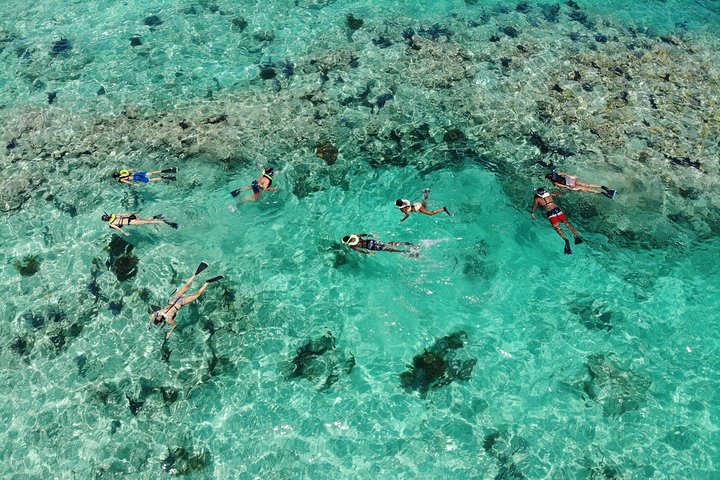
Scuba diving and snorkeling are both permitted in Sanctuary Preservation Areas within Florida Keys National Marine Sanctuary, including Rock Key and Sand Key. That shared access makes snorkeling a genuine reef experience rather than a consolation prize for travelers who do not dive. Sunlight, open water, and shallow reef structure can still make a surface outing memorable.
Shared legal access does not mean every snorkel and dive boat follows the same route. Operators decide where to go, and the destination can depend on the booked product and current operating conditions. Ask for the planned type of site rather than choosing solely by a photograph or a broad promise of reef access.
This distinction matters when expectations are specific. A traveler interested in shallow reef habitat can be well served by snorkeling. Someone whose main goal is a deeper wreck should look for the appropriate scuba itinerary and confirm that both the trip and personal qualifications line up.
Choose snorkeling for a simpler reef outing
Snorkeling is the practical pick when you want to remain at the surface and avoid planning a certification-based wreck dive. It carries a lower commitment than scuba while still offering access to the broad category of protected reef areas where both activities are allowed.

It also suits trips where the underwater activity is only one part of the day. There is less reason to organize the experience around training status, logged dives, a dive computer, or wreck eligibility. Exact check-in procedures, equipment, and trip length still depend on the selected operator.
Snorkeling is likely the better booking when
- Your main goal is seeing shallow reef habitat from the surface.
- You prefer the lower-cost direction of the two activities.
- You do not need access to a deeper wreck itinerary.
- Your group wants a lower-commitment water activity.
- You are comfortable confirming swimming, flotation, and ladder arrangements with the operator.
Lower commitment does not remove the need for careful booking. Travelers with limited swimming ability should ask about flotation devices, crew support, time in open water, and the method used to return to the vessel. Do not assume that every snorkel boat has the same boarding setup or assistance.
Choose scuba for depth and wreck-focused exploration
Scuba is the clear fit for qualified travelers who want to spend their time below the surface or book a deeper wreck-focused outing. In the Key West area, the USNS Vandenberg is a prominent example of the type of objective that separates a scuba itinerary from a surface snorkeling trip.
Eligibility can be specific. One Key West-area provider lists Advanced Open Water certification for its Vandenberg trip, or Open Water certification with 10 to 12 logged dives, and also requires a dive computer. Those are provider requirements, not universal rules, so compare them with the conditions attached to your exact booking.
Divers drawn to that experience can use a Key West shipwreck diving guide to understand the subject before comparing operators. Pay attention to the named site, required experience, equipment inclusions, and whether the booking is actually reef-focused or wreck-focused.
Travelers without certification should treat a beginner scuba experience as its own product, not as an ordinary certified-diver reservation. A Key West-area rate sheet lists Discover Scuba separately, showing why it is important to choose the correct booking category. The Key West scuba diving for beginners guide can help frame the next questions to ask.
Key West 2 Reef Snorkel Tour & Sunset Cruise with Beer & Wine
Enjoy this 3 hour sunset combo trip. We will cruise out to Key West’s best reef location, where you are welcome to...

Half-Day Trip from Key West with Kayaking, Snorkeling & Sunset
This trip combines sailing, snorkeling, kayaking, and local insight in a laid-back, small-group setting. You'll sail...

Key West Dolphin Watch and Snorkel Tour - Eco Adventure
Fury's Dolphin Watch & Snorkel Tour offers a unique blend of wildlife observation and snorkeling in Key West. Aboard...
Scuba generally costs more than snorkeling
Scuba usually sits higher on the budget because the total can include tanks, weights, rental equipment, or instruction. A provider-specific Key West-area rate sheet follows that pattern, with snorkeling priced below reef or Vandenberg diving and Discover Scuba priced higher again. Those figures do not establish a destination-wide average.
Compare the final package rather than the headline price. Taxes, equipment, training, discounts, and eligibility can change what you pay. Prices and inclusions also vary by provider and date, so review the current booking details before entering payment information.
- Is all required equipment included?
- Does the rate apply to the general public?
- Is instruction included or sold separately?
- Are certification or logged-dive requirements attached to the trip?
- What happens if weather or sea conditions prevent departure?
- Does the cancellation policy offer rebooking, a refund, or another arrangement?
For a certified diver who already has the necessary experience, scuba can justify the extra expense through access to a desired underwater objective. For a traveler focused on shallow reef scenery, snorkeling often provides the cleaner balance between cost and commitment.
Reef rules apply to snorkelers and divers
Responsible behavior is mandatory, regardless of the activity selected. Florida Keys National Marine Sanctuary rules prohibit diving or snorkeling without a dive flag. They also prohibit removing or injuring coral or live rock and feeding marine life. In Sanctuary Preservation Areas, visitors must not touch or stand on living or dead coral.

- Use the required dive flag and follow the vessel crew's instructions.
- Never stand on coral, including coral that looks dead.
- Do not touch, remove, or injure coral or live rock.
- Do not feed fish or other marine life.
- Keep equipment and fins under control around reef structure.
These rules should shape the operator you choose. A clear pre-entry briefing is valuable for beginners who are still learning how to position themselves around reef habitat. Experienced guests benefit too, especially when unfamiliar rental gear or a new site changes how they move in the water.
Use responsible practices as an operator filter
NOAA's Blue Star program recognizes dive and snorkel operators that commit to reef education and responsible-tourism practices. Blue Star participation is a useful booking filter, particularly for first-time guests who would benefit from a thorough reef briefing before entering the water.
Recognition is only one part of the decision. The operator should also explain the planned activity, participation requirements, equipment package, boarding method, and weather policy. If scuba is your choice, compare the best scuba diving tours in Key West by the experience they deliver rather than by price alone.
- Choose snorkeling, certified scuba, beginner scuba, or wreck diving before comparing departures.
- Confirm the type of site the operator expects to visit, while allowing for condition-driven changes.
- Check every training, certification, logged-dive, and equipment requirement attached to the product.
- Review boarding arrangements and available assistance if anyone has mobility or swimming concerns.
- Read the cancellation and rebooking terms for weather-related changes.
- Recheck the meeting point and departure instructions in the booking confirmation.
Key West businesses can offer both diving and snorkeling through a land-based shop, so visitors do not need their own boat to arrange either activity. Meeting points and departure procedures are operator-specific. Use the location and arrival instructions attached to your reservation instead of assuming that all trips leave from the same dock.
Still comparing Key West Scuba Diving Versus Snorkeling?
Ask for tour ideas, hotel suggestions, or a simple trip plan that combines both.
Trip Helper
Weather and sea conditions can change the plan
There is no dependable month-by-month rule that makes one activity universally better than the other. Boat trips depend on weather and sea state, and conditions can affect the destination, departure, or overall experience. Confirm the likely reef or wreck plan and review the operator's cancellation terms shortly before the trip.
Visibility and normal operations should never be treated as guaranteed. Check the current marine forecast, water-quality information, reef notices, and storm-related status on the day of departure. Follow the operator's instructions if the destination changes or the trip is postponed.
A flexible schedule is useful when the water activity matters more than a specific day. Avoid placing the trip immediately before a departure from Key West if losing the opportunity to rebook would be especially disappointing. This is a planning choice rather than a promise that another departure will be available.
Accessibility and swimming ability require direct questions
Neither snorkeling nor scuba should be treated as universally accessible. Vessel layouts, dock access, ladders, transfer needs, crew assistance, flotation equipment, and participation requirements differ. Travelers who need accommodations should speak with the exact operator before booking.

Ask how guests move between the dock and vessel, how they enter and leave the water, and what assistance the crew can provide. Also discuss any relevant medical or participation screening. The Key West accessibility guide for wheelchairs and mobility can help with planning on land, but activity-specific arrangements still belong with the tour operator.
Limited swimming ability deserves the same direct approach. Ask what flotation devices are available, what the crew expects from participants, and whether remaining aboard is possible if conditions feel uncomfortable. Do not book solely because an activity is described as beginner-friendly.
Prepare for the booking you actually selected
Start with the operator's equipment list and add personal items needed for the rest of your day. A Key West packing list for any season is useful for the wider trip, while the activity confirmation should remain the authority for specialized scuba or snorkeling gear.
- Booking confirmation and the correct meeting-point details
- Any certification or logged-dive information required for scuba
- Personal items recommended by the operator
- A plan for valuables that should remain dry
- Any approved equipment you have chosen to bring yourself
- Questions about fit, flotation, boarding, or assistance
If you are renting equipment, confirm what the package contains before arrival. Scuba pricing can change significantly when full gear is added, and beginner instruction is a separate cost category in at least one local rate sheet. A lower advertised price is less helpful if it excludes equipment required for the booked activity.
Plan transportation around the confirmed shop or dock, not around a generic waterfront area. Visitors researching getting around Key West without a car should compare their activity's arrival time with the exact meeting point. One operator's North Roosevelt Boulevard location is only an example and should not be applied to other companies.
Match the activity to your travel scenario
| Traveler scenario | Better starting choice | Why |
|---|---|---|
| First reef outing with no wreck goal | Snorkeling | Lower commitment with access to the broad category of protected shallow reef habitat |
| Certified diver seeking a deeper objective | Scuba | Better aligned with underwater and wreck-focused itineraries |
| Traveler focused on the lowest overall cost | Snorkeling | Provider examples place it below scuba, gear-inclusive diving, and beginner instruction |
| Noncertified traveler curious about scuba | Beginner scuba product | Instructional experiences are a separate booking category with their own price and requirements |
| Mixed group with different interests | Compare both products | Some local businesses offer both, but sites and departure arrangements can differ |
| Traveler needing boarding assistance | Either, after confirmation | Accessibility depends on the exact vessel, ladder, transfers, and available crew support |
The table is a starting point, not a substitute for product details. The correct booking combines your goal with the operator's itinerary, qualification rules, equipment package, and current conditions. A famous wreck is irrelevant if the selected trip is reef-only, just as scuba adds unnecessary complexity when a surface reef view is all you want.

Key West Reef Snorkel & Sail Adventure
Join us for a snorkel adventure to the only living coral reef in North America. We have several fantastic reefs to c...

Key West: All-Inclusive Watersports Adventure with Lunch & Beer
Get ready for the thrill of a lifetime with our Do It All Watersports Combo, the ultimate way to experience the best...

Key West Rum and Reggae: Reef Snorkel Adventure and Sunset Sail
Fury’s Snorkel Adventure is unique for its combination of thrilling snorkeling and a vibrant sailing experience. G...
The final choice for your Key West trip
Book snorkeling for the easiest route to a reef-focused outing, especially when you want to stay at the surface, limit the cost, or avoid organizing the day around dive qualifications. It offers meaningful access to protected reef areas, although the operator still controls the actual itinerary.
Book scuba when underwater depth, certified diving, or a wreck such as the Vandenberg is the main reason for going. Confirm qualifications, equipment, accessibility, and weather terms before paying. Whichever activity wins, choose responsible operations, respect sanctuary rules, and arrive ready to protect the reef you came to see.
Frequently asked questions
Is scuba diving or snorkeling better in Key West?
Snorkeling is better for a lower-commitment surface reef experience, while scuba is better for qualified travelers seeking depth or a wreck-focused outing. Your budget, experience, and preferred type of site should decide the booking.
Can snorkelers and scuba divers visit the same reefs near Key West?
Both activities are allowed within the broad category of Sanctuary Preservation Areas, including Rock Key and Sand Key. They do not necessarily visit identical locations because the operator chooses each trip's itinerary.
Do I need scuba certification to see the Key West reef?
No, snorkeling provides a reef-focused option without booking a certification-based wreck dive. Noncertified travelers interested in scuba should look for a dedicated beginner program and follow that operator's participation requirements.
Can I scuba dive the USNS Vandenberg as a beginner?
Vandenberg trips can carry experience requirements that make them unsuitable for an entry-level booking. One local provider requires Advanced Open Water certification, or Open Water certification with 10 to 12 logged dives, plus a dive computer, but requirements vary by operator.
Is snorkeling cheaper than scuba diving in Key West?
Snorkeling generally follows the lower-cost direction. Scuba costs can rise when tanks, weights, full rental gear, or instruction are included, but current totals vary by provider, date, package, and eligibility for discounts.
Can I touch coral while snorkeling or diving?
No. In Sanctuary Preservation Areas, visitors must not touch or stand on living or dead coral. Sanctuary rules also prohibit removing or injuring coral or live rock and feeding marine life.
What is the best time of year for Key West snorkeling or scuba diving?
No single month is guaranteed to be best for either activity. Weather and sea state affect boat trips, so check current conditions, the expected destination, and the operator's cancellation or rebooking terms shortly before departure.
Are Key West snorkeling and scuba boats wheelchair accessible?
Accessibility depends on the individual vessel and operator. Ask about dock access, transfers, ladders, flotation devices, crew assistance, and participation or medical requirements before booking.
Key West Ultimate Watersports Adventure with Snorkeling Upgrade
What makes the Ultimate Adventure H2.0 in Key West truly unique is its all-in-one approach to water fun, combining multiple thrilling activities into...
Key West Afternoon Reef Snorkeling with Open Bar
Dip and Sip Key West Snorkel Trip on The 65 foot custom built Sandie Cat. Your 3 hour snorkel trip will start a sa...

Key West Hop-On Hop-Off Trolley Tour
The hop-on hop-off trolley tour of Key West is a fantastic way to explore this historic island. Sit back and relax w...
Hotel bases to compare after this tour
Once you have the tour shortlist, compare a few stays that can make the trip logistics easier.

Hyatt Vacation Club at Beach House, Key West
Stay in a classic Key West–style, tropical getaway set up as residential-style retreats with manicured gardens and beachside comfort. A connecting on-property dock makes it easy to rent a kayak and head out for Gulf of Mexico water adventures. Plan a vacation that feels more like having your own place by the water.
Check rates
The Reach Key West, Curio Collection by Hilton
A beachfront Hilton Curio Collection resort in Old Town Key West with a private beach, pool, spa access, and easy access to Duval Street and Southernmost Point.
Check ratesKey West Ultimate Watersports Adventure with Snorkeling Upgrade
What makes the Ultimate Adventure H2.0 in Key West truly unique is its all-in-one approach to water fun, combining multiple thrilling activities into...
Key West Sailing & Snorkeling: A Reef Adventure
Join us for a snorkel adventure to the only living coral reef in North America. We have several fantastic reefs to c...
Half-Day Trip from Key West with Kayaking, Snorkeling & Sunset
This trip combines sailing, snorkeling, kayaking, and local insight in a laid-back, small-group setting. You'll sail...
Key West Reef Morning Snorkeling with Breakfast and Mimosas
Rise and Reef Key West Snorkel Trip on The 65 foot custom built Sandie Cat. Your 3 hour snorkel trip will start with...
The Reach Key West, Curio Collection by Hilton
A beachfront Hilton Curio Collection resort in Old Town Key West with a private beach, pool, spa access, and easy access to Duval Street and Southernmost Point.
Check rates
Classic Key West Schooner Sunset Sail with Full Open Bar
There's no better way to savor the magic of a Key West sunset than aboard a majestic schooner, complete with a full open bar. This enchanting journey...

Key West Half-Day Fishing Charter
Fish like never before! Our custom build 64' catamaran is perfect for a more stable, relaxing ride. You'll fish for a wide variety of the tropical fis...