Key West Dive Charter Prices: What to Expect
Compare published Key West dive charter prices, equipment charges, public and private boat formats, certification rules, and the questions to ask before booking.
Key West dive charter prices depend on the boat format, number of tanks, equipment package, dive site, and level of personal service. Published two-tank examples span roughly $113 to $245, while a private four-hour charter can exceed $1,000 before rental gear. The headline number is only a starting point. A useful comparison accounts for tanks, weights, full equipment, a computer, nitrox, and any required guide.
- Published two-tank examples reviewed for Key West range from roughly $113 to $245, with different equipment inclusions.
- Small-boat pricing can start near $149 per diver, while a fully private boat can cost about $1,050 plus gear.
- Rental equipment, dive computers, nitrox, and a divemaster can raise the final total.
- Wreck trips can require advanced certification, recent experience, a computer, or additional guidance.
- Compare the complete trip package, cancellation policy, departure point, and boat capacity before paying.
For most certified visitors, the central choice is between a shared reef boat and a smaller or private charter. Shared trips usually provide the clearest entry point, while private boats charge more for flexibility and group control. Published prices change, and even one operator page contains conflicting package figures. Treat every number below as a planning example and use the live booking total for your final budget.
Published Key West dive price examples
The following examples show why two trips labeled “two-tank diving” can have very different prices. Boat size, equipment, guide service, and whether the fare covers one diver or the whole vessel all matter. These figures are not a fixed island-wide rate.
| Trip format | Published price example | What the listing indicates | Budget caution |
|---|---|---|---|
| Public two-tank reef boat | Key West Dive Center displays $113 with tanks and weights or $149 with full equipment | Afternoon dual-reef trip | The page also contains $99 and $129 package wording, so confirm the current checkout price |
| Public two-tank open boat | Finz lists $200 with air tanks or $245 with full equipment | Equipment level changes the fare | Check what the full kit contains and whether any personal item must be supplied |
| Small-boat two-tank trip | Sand & Sea advertises approximately $149 per diver with a two-diver minimum | Four-hour trip on a six-passenger vessel | A rental kit is listed at $50, and an optional divemaster at $150 |
| Private two-tank boat | Finz lists $1,050 | Four-hour private boat | Rental equipment costs extra |
Key West Dive Center illustrates the importance of checking the final booking screen. Its afternoon trip page displays one pair of prices in the main tour section and lower package figures elsewhere on the same page. That makes the listing useful for understanding package structure, but not for setting a firm budget without a current quote.
Finz provides a different comparison. Its published open-boat fare is $200 with air tanks and $245 with full equipment. The gap between those packages is smaller than buying an entirely separate charter, but it still matters for two divers or several dive days. Compare total costs for the whole group rather than focusing on the lowest per-person number.
What the base dive fare may leave out
A base fare can cover little more than the boat space, tanks, and weights, or it can include a full rental setup. Published Key West examples identify separate charges or package differences for buoyancy equipment, regulators, computers, nitrox, and guide service. Read the equipment description line by line, especially if you are flying in without personal gear.
Common charges to check before booking
- Full rental equipment instead of tanks and weights only
- Dive computer rental
- Nitrox rather than standard air
- A divemaster or private guide
- Any personal equipment that the operator does not provide
- Charges tied to a private boat rather than a per-diver seat
The details can be surprisingly specific. Finz notes that a regulator mouthpiece must be personally supplied or purchased separately. A Navy MWR Key West price sheet lists a $16.14 gate-price computer rental and higher configurations for full gear and nitrox. Small line items are easy to overlook when comparing large package prices, but they can change which option is genuinely cheaper.
Still comparing Key West Dive Charter Prices: What To Expect?
Ask for tour ideas, hotel suggestions, or a simple trip plan that combines both.
Trip Helper
Shared boats versus private dive charters
A shared boat generally works best for one or two certified divers who want a standard reef outing at the lowest practical total. The schedule and site choice are controlled by the operator, and other guests share the vessel. The published open-boat examples from Key West Dive Center and Finz are priced per diver with different equipment packages.

A private charter charges for exclusivity, flexibility, or a smaller group environment. Finz lists $1,050 for a private four-hour, two-tank boat before rental equipment. Sand & Sea uses another model, advertising approximately $149 per diver for a four-hour, two-tank trip with a two-diver minimum and separate prices for rental gear and an optional divemaster.
Private pricing becomes easier to justify when several compatible divers can share the boat cost or when the group values a more tailored pace. Before choosing, review the best scuba diving tours in Key West and compare capacity, tank count, equipment, guiding, and intended sites. A lower fare on a larger boat and a higher fare on a small vessel are not equivalent products.
Who benefits most from paying for a private boat
- Families or established dive groups traveling together
- Divers who prefer a small passenger count
- Groups seeking a pace matched to their experience
- Travelers comparing a whole-boat cost rather than separate seats
- Divers willing to pay more for flexibility, subject to weather and safety decisions
Why reef and wreck prices are not directly comparable
Reef outings and deeper wreck trips involve different qualifications and planning. Sand & Sea advertises sites ranging from about 10 to 130 feet and requires current, appropriate certification. A deeper itinerary can therefore bring stricter experience requirements and additional costs for a computer or guide.
The Navy MWR Key West sheet states that the Vandenberg requires Advanced Open Water certification. It also says Open Water divers need 10 to 12 logged dives before that trip and must use a dive computer. Those requirements should not be treated as a universal policy for every operator, but they demonstrate why a wreck fare cannot be compared with a casual reef trip on price alone.
Review the chosen operator’s certification, logged-dive, recency, and computer rules before paying. A Key West shipwreck diving guide can also help you decide whether a wreck itinerary suits your training and comfort level. Do not choose a deeper trip simply because the advertised boat fare looks close to a reef package.
What noncertified visitors should budget for
A traveler without scuba certification should budget for an introductory program rather than assume a seat on a certified-diver boat is enough. Key West Dive Center describes a resort-style “Dive-in-a-Day” program that includes roughly 1.5 to 2 hours of pool instruction before diving. The training component changes both the schedule and the package cost.
A full Open Water course requires a much larger time commitment. The same operator’s FAQ says certification commonly takes about four days and quotes $475 to $525. That figure is useful as context rather than a universal Key West rate because course prices and inclusions vary.
If this will be your first underwater experience, compare introductory instruction, supervision, pool time, and open-water dives as one package. A guide to Key West scuba diving for beginners can help clarify the difference between a short resort program and full certification before you reserve vacation time.
Trip length and departure logistics affect value
Two tanks do not guarantee the same schedule. Key West Dive Center describes a 4.5-hour afternoon trip departing at 1:30 p.m. and traveling about seven miles south to the reef. Sand & Sea advertises a four-hour, two-tank option and a six-hour, three-tank option. The extra time and tank count should be part of any price comparison.
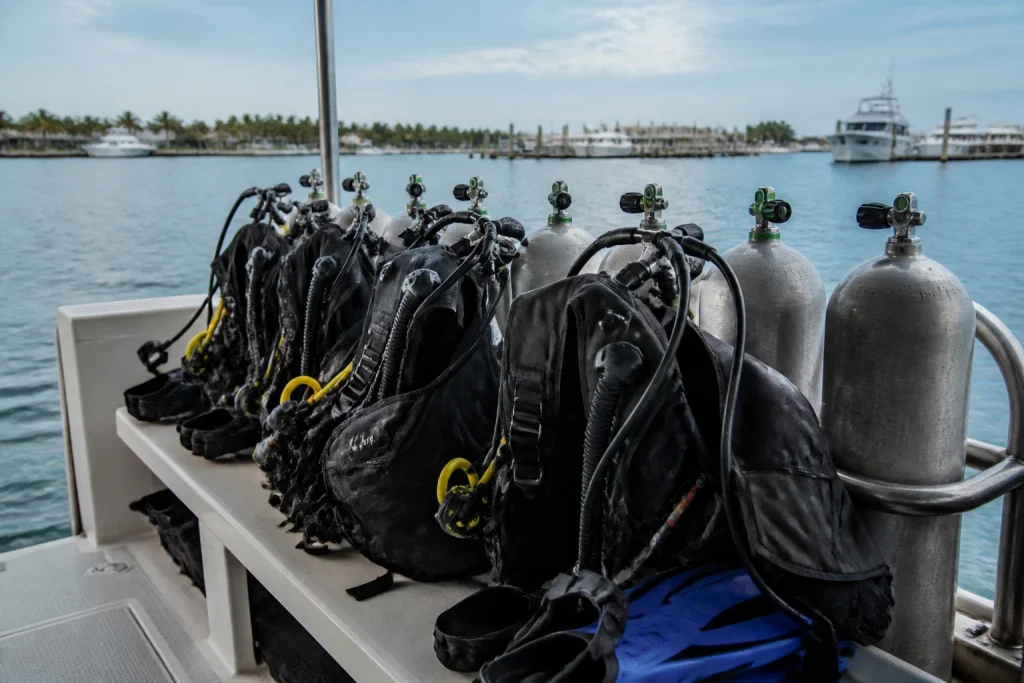
Ask where check-in occurs, when divers must arrive, and whether the advertised duration starts at check-in or departure. Also compare boat capacity, number of tanks, public or private status, and the expected return window. These details determine how much of the day the trip occupies and whether another activity can fit afterward.
The departure point also shapes your ground-transport plan. Visitors staying away from the marina should allow time to reach the dock with dive gear in hand. A guide to getting around Key West without a car can help with the land portion of the day, but the charter confirmation remains the place to check the exact marina and arrival instructions.
Weather can change the site without changing the trip
Sea conditions influence which reefs, wrecks, and activities are available. Sand & Sea explicitly states that weather dictates the day’s options. A captain can substitute a safer site even when guests booked with a particular destination in mind, so avoid building the entire value calculation around one promised reef or wreck.
- What happens if weather cancels the trip
- Whether the operator reschedules or refunds
- How alternate dive sites are selected
- When guests receive a final weather decision
- Which cancellation terms apply to the deposit or full payment
Read these policies before paying, especially when diving is the main reason for your visit. A flexible itinerary gives you more room to reschedule if wind or sea conditions interrupt the original plan.
Leave enough time between diving and flying
Do not place a dive trip too close to your flight home. Key West Dive Center’s afternoon dual-reef listing tells participants to wait at least 18 hours before flying after that trip. Post-dive flying guidance depends on the dive profile and applicable safety standards, so follow the instructions from your operator and training agency rather than treating one listing as a rule for every itinerary.
Scheduling the charter earlier in the vacation creates a useful buffer. It also leaves room for a weather reschedule and avoids turning the final day into a clock-watching exercise. Consider the complete trip calendar before choosing a cheaper departure that sits awkwardly close to a flight.
Ask detailed accessibility questions before reserving
Do not assume a dive vessel can accommodate a particular mobility, hearing, vision, medical, or assistance-device need. Public trip pages do not provide enough detail to establish accessibility for a specific boat. The most useful conversation focuses on the physical route from the dock to the seat and then into the water.
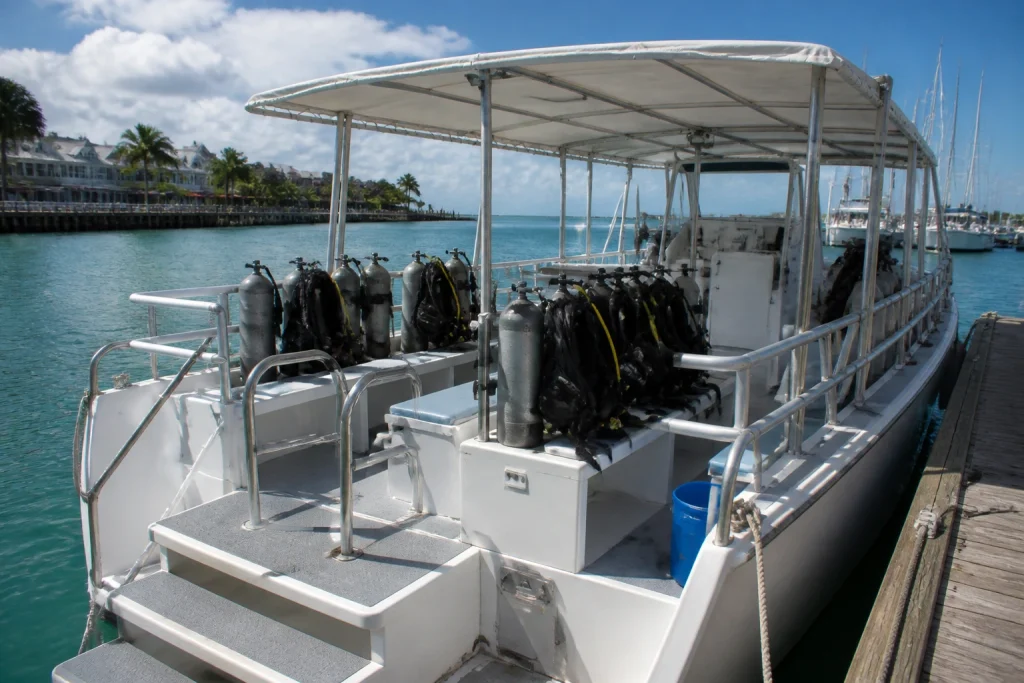
- How divers transfer from the dock to the boat
- The number and height of boarding steps
- Restroom access while aboard
- Available seating and shade
- Help with lifting, carrying, and donning equipment
- Whether a non-diving companion can ride
Key West Dive Center lists a $70 snorkeler or rider fare, but a companion ticket does not establish that the vessel is accessible. Travelers with specific needs can use the Key West accessibility guide for broader destination planning, then discuss the actual boat, dock, equipment handling, and assistance available with the selected operator.
How to compare quotes without missing a fee
- Confirm whether the amount is per diver or for the entire boat.
- Check the number of tanks and the planned trip duration.
- List every included item, including tanks, weights, buoyancy equipment, regulator, exposure protection, and computer.
- Ask whether nitrox, a divemaster, or private guiding costs extra.
- Verify the certification and logged-dive requirements for the intended sites.
- Review the departure point, check-in time, weather policy, cancellation terms, and return window.
Place each quote into the same format before comparing totals. One operator’s “full equipment” package can sit beside another operator’s boat-only price and look more expensive at first glance. Once rental gear, computers, guides, and tank choices are added, the ranking can change.
What to prepare for dive day
Bring the certification credentials required for your booked itinerary and any personal equipment specified by the operator. Review your confirmation for the marina, check-in time, included gear, and flying restriction. If you use prescription equipment or need a particular exposure-protection size, settle those details before arrival rather than at a busy dock.
- Required certification credentials
- Personal mask or other preferred equipment
- Swimwear and a dry change of clothes
- Sun protection suitable for a boat day
- Water and permitted snacks, if the operator does not provide them
- Motion-sickness preparation if you are prone to seasickness
A Key West packing list can help with the rest of the vacation, but keep the dive-day bag compact and confirm what the boat allows. Space is especially important on a small vessel, where loose luggage can crowd the working deck.
Practical ways to keep the total under control
- Compare complete totals rather than the lowest advertised seat price.
- Choose a shared boat if private use is not important to the group.
- Price rental equipment before deciding whether to travel with personal gear.
- Avoid paying for nitrox or private guidance unless it suits the dive plan and your qualifications.
- For a private charter, compare the whole-boat price with the group’s combined per-diver options.
- Protect the budget by understanding weather, cancellation, and rescheduling terms before payment.
The cheapest visible fare is not automatically the lowest final cost. A slightly higher package that includes the equipment you need can beat a lower boat fare followed by several rentals. The best value is the trip that matches your certification, group size, preferred boat format, and available time without leaving essential items outside the quote.
Choose the charter by total value, not one headline number
Certified reef divers can expect published two-tank examples in the broad neighborhood of $113 to $245, depending heavily on equipment and operator format. Small-boat trips can begin near $149 per diver plus extras, while one published private four-hour charter is $1,050 before rental gear. Prices can change, so compare the live total, qualifications, schedule, and policies before booking. That final review is the simplest way to avoid a bargain that grows expensive at the dock.
Frequently asked questions
How much does a two-tank dive trip cost in Key West?
Published examples reviewed range from roughly $113 to $245 per diver for a two-tank outing. The amount depends on the operator, boat format, and whether the package includes only tanks and weights or a full equipment setup.
How much is a private dive charter in Key West?
One operator lists a private four-hour, two-tank boat at $1,050 plus rental equipment. Other small-boat trips use per-diver pricing, so confirm whether a quote covers one seat or the entire vessel.
Does the dive charter price include scuba equipment?
Equipment inclusion varies by package. Some fares include tanks and weights only, while higher-priced options can include full rental equipment; computers, nitrox, guides, or specific personal items can still cost extra.
Can a beginner book a Key West dive charter?
A noncertified beginner should book an introductory scuba program rather than assume a standard certified-diver charter is suitable. One Key West program describes roughly 1.5 to 2 hours of pool work before diving.
Do wreck dives cost more than reef dives?
Wreck dives can produce a higher final cost when they require advanced certification, a dive computer, or additional guidance. Requirements depend on the wreck and operator, so compare qualifications as well as the boat fare.
How long is a two-tank Key West dive trip?
Published examples include four-hour and 4.5-hour two-tank outings. Check whether the stated duration begins at check-in or boat departure and confirm the expected return time.
Will a Key West dive charter visit the exact site advertised?
The planned site can change when weather or sea conditions make another location more appropriate. Review the operator’s alternate-site, cancellation, rescheduling, and refund policies before paying.
How long should I wait to fly after diving in Key West?
Follow the post-dive flying guidance given by your operator and training agency. One Key West afternoon dual-reef listing requires at least an 18-hour wait after that particular trip, but the instruction should not be generalized to every dive profile.
Hotel bases to compare after this tour
Once you have the tour shortlist, compare a few stays that can make the trip logistics easier.

The Reach Key West, Curio Collection by Hilton
A beachfront Hilton Curio Collection resort in Old Town Key West with a private beach, pool, spa access, and easy access to Duval Street and Southernmost Point.
Check rates
Hyatt Vacation Club at Beach House, Key West
Stay in a classic Key West–style, tropical getaway set up as residential-style retreats with manicured gardens and beachside comfort. A connecting on-property dock makes it easy to rent a kayak and head out for Gulf of Mexico water adventures. Plan a vacation that feels more like having your own place by the water.
Check rates