Key West Wreck Diving Tours: Best Options
Compare Key West wreck diving tours to the USS Vandenberg and Cayman Salvager, including depths, certification rules, schedules, costs, and booking tips.
Key West wreck diving tours concentrate a surprising amount of adventure into half a day, but the leading published trips are designed for experienced divers. Dive Key West and Captain Hook’s lists two clear choices: a two-tank USS Vandenberg trip and a Cayman Salvager outing with a reef component. Both require Advanced certification. The deeper Vandenberg also carries a recent-deep-dive requirement, making diver readiness just as important as choosing the wreck.
Best Key West wreck diving options at a glance
- Choose the USS Vandenberg for the signature large artificial reef and the more demanding depth profile.
- Choose the Cayman Salvager and reef trip for a shallower listed wreck profile with a reef component.
- Both published wreck trips require Advanced certification, so neither is an entry-level scuba excursion.
- Reserve about half a day, arrive for check-in one hour before departure, and reconfirm the selected time.
- Do not rely on a generic forecast. Wreck conditions can include swift current, and unsafe trips can be canceled.
The simplest decision is based on depth and recent experience. Advanced divers who are current at depth will find the Vandenberg the standout choice. Divers who meet the same certification requirement but prefer a shallower listed profile should look first at the Cayman Salvager. Anyone without Advanced certification should choose training or a suitable reef trip instead of treating the Cayman Salvager as a beginner shortcut.
USS Vandenberg vs. Cayman Salvager
These trips serve different versions of the same goal. The Vandenberg offers the scale and depth associated with Key West’s best-known wreck itinerary. The Cayman Salvager reduces the listed depth somewhat and adds a reef component. Neither choice removes the need for appropriate certification, current skills, and a realistic assessment of comfort below recreational reef depths.
| Comparison | USS Vandenberg | Cayman Salvager and reef |
|---|---|---|
| Best suited to | Experienced Advanced divers seeking the signature large artificial reef | Advanced divers preferring a shallower listed wreck profile and reef component |
| Published format | Two-tank Vandenberg trip | Cayman Salvager trip with a reef component |
| Listed deck depth | About 95 to 100 feet | About 90 to 95 feet |
| Listed sand depth | About 145 feet | About 100 feet |
| Certification | Advanced certification | Advanced certification |
| Additional requirement | A recent deep dive | No additional recent-deep-dive rule stated in the published trip details |
| Published departure information | A 9:00 a.m. listing, with separate guidance that times vary | 9:00 a.m. and 2:00 p.m. listings |
| Published trip length | Approximately four hours | Approximately four hours |
For more context about the wrecks themselves, the Key West Shipwreck Diving Guide covers the broader local wreck-diving landscape. That background is useful before comparing boat schedules because a famous wreck is not automatically the right dive for every certification level or recent-experience profile.
Why experienced divers choose the USS Vandenberg
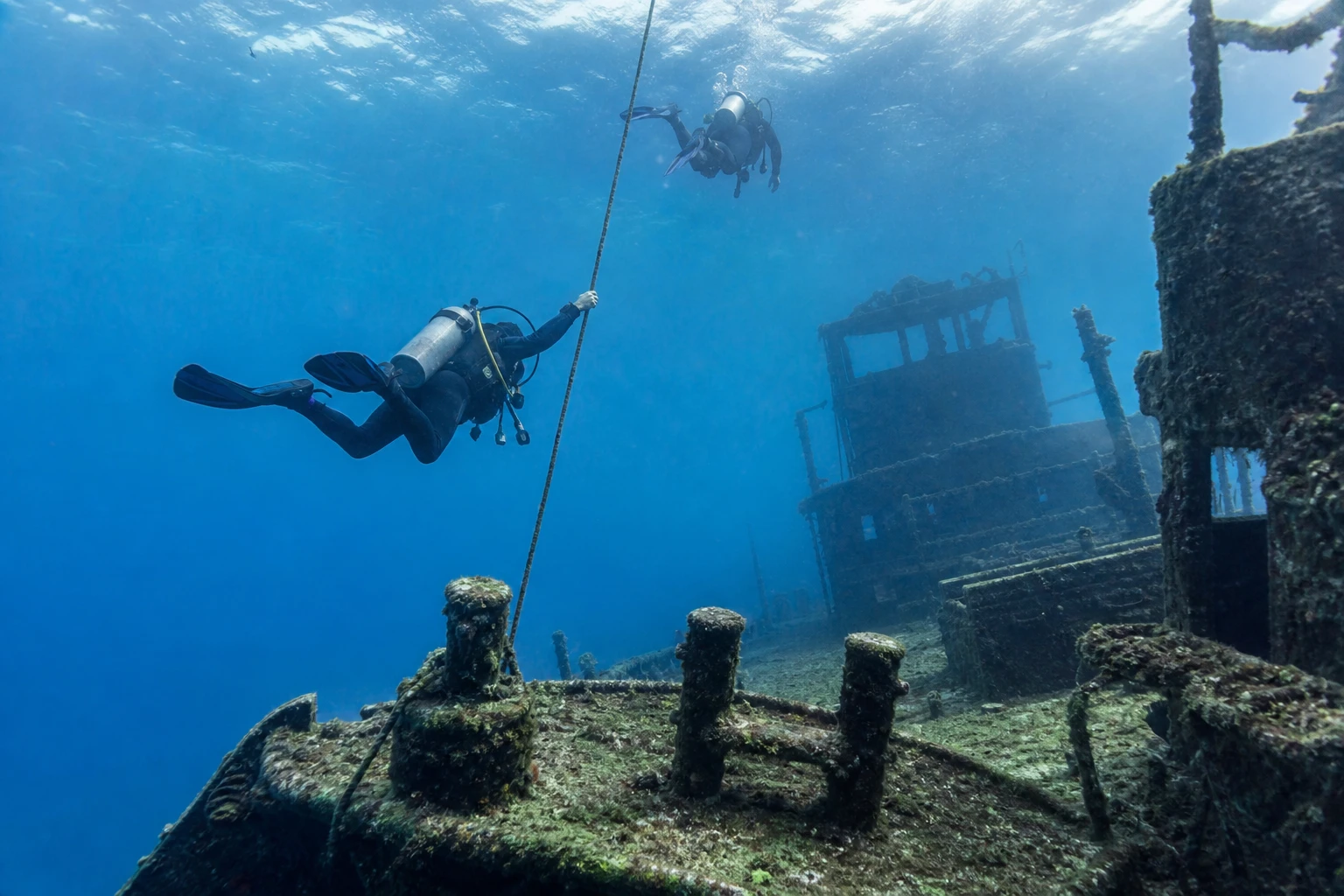
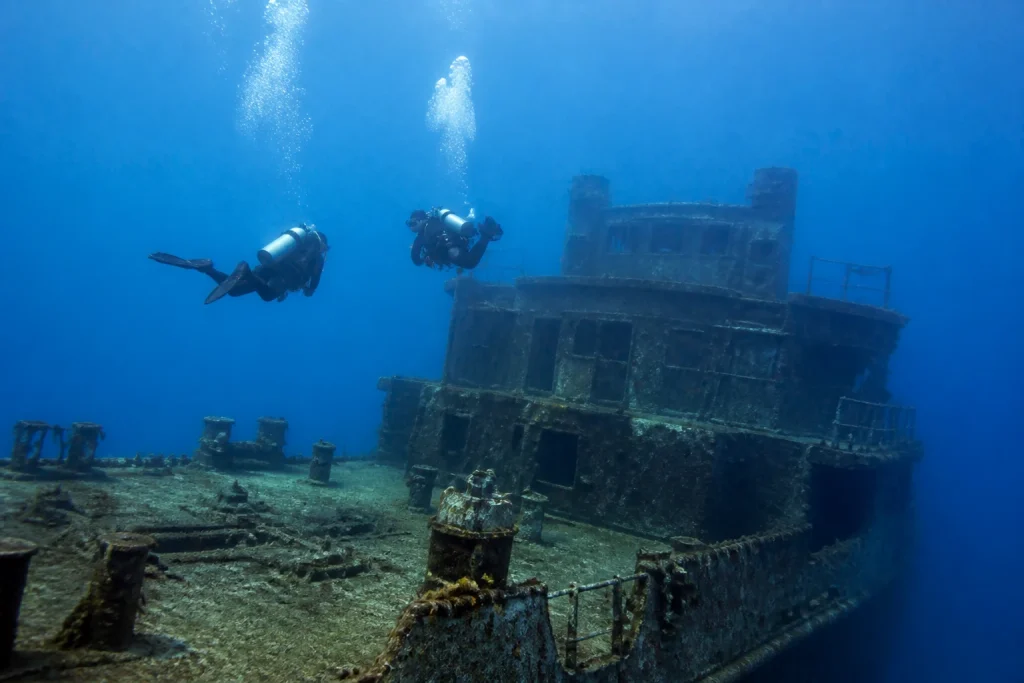
The Vandenberg is the higher-commitment option. Its deck is listed around 95 to 100 feet, while the sand reaches approximately 145 feet. That depth profile separates it sharply from a casual shallow-reef excursion. The operator requires Advanced certification and a recent deep dive, so having the certification without recent depth experience does not by itself satisfy the published requirement.
Who the Vandenberg trip suits
Choose this trip if the wreck is the main reason for your dive day and you are already comfortable with deeper recreational diving. Its appeal is the scale of a large artificial reef combined with a dedicated two-tank itinerary. The extra eligibility requirement also makes it a poor choice for rebuilding confidence after a long break, even when an Advanced card is already in your wallet.
Before paying, confirm what the operator accepts as a recent deep dive and review the planned maximum depth with the crew. Also ask whether a guide or dive computer carries an additional charge. Those details affect both eligibility and the final cost, and they should be settled before the morning of departure.
Why the Cayman Salvager is the more moderate wreck choice
The Cayman Salvager has the shallower published profile of the two options. Its deck is listed around 90 to 95 feet, with the sand at approximately 100 feet. The outing also includes a reef component, which gives the itinerary more variety than a wreck-only plan. It remains a deep, Advanced-level trip rather than an introduction to wreck diving.
This is the better-published alternative for an Advanced diver who wants a wreck but does not need the greater scale or depth of the Vandenberg. The difference at deck level is modest, so the choice should not be reduced to a few feet on a chart. Recent experience, current, the planned route, and personal comfort still matter.
Ask which reef is planned for the second component and remember that marine conditions can influence the final itinerary. Travelers who are not yet Advanced-certified should use Key West Scuba Diving for Beginners to compare appropriate instruction and entry-level experiences instead.
Still comparing Key West Wreck Diving Tours: Best Options?
Ask for tour ideas, hotel suggestions, or a simple trip plan that combines both.
Trip Helper
Certification and recent experience matter more than the wreck name
Both wreck offerings require Advanced certification. The Vandenberg adds a recent-deep-dive requirement, while the published Cayman Salvager details do not state that additional rule. Florida Keys Wreck Trek guidance also advises divers to be current and to contact participating shops for information specific to each wreck.
- Confirm that your certification meets the selected trip’s requirement.
- For the Vandenberg, ask how recent the qualifying deep dive must be and what record is accepted.
- Share any long break from diving when discussing suitability with the operator.
- Review the planned depth, expected current, and descent procedure during the briefing.
- Choose a reef trip or refresher if your recent experience does not match the wreck profile.
The word “wreck” does not describe one standard level of difficulty. NOAA notes that Florida Keys shipwreck dives range from easy, shallow sites to wrecks deeper than 100 feet where swift currents can occur. The Vandenberg and Cayman Salvager trips sit on the Advanced side of that spectrum, based on their published depth and certification requirements.
Departure times, check-in, and transportation
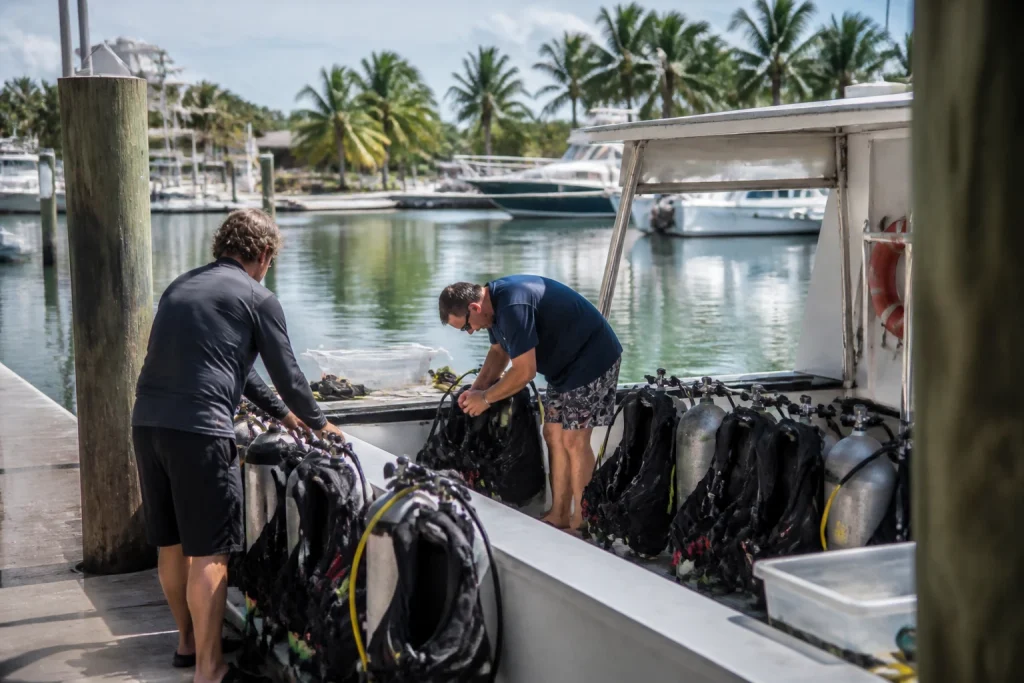
Dive Key West and Captain Hook’s lists the check-in and departure point at 1708 N. Roosevelt Boulevard in Key West. Free parking is available on site. The operator also identifies the location as reachable using the Duval Loop and city bus lines, which gives travelers without a rental car an alternative to driving.
| Planning detail | Published information |
|---|---|
| Check-in | One hour before departure |
| Trip duration | Approximately four hours |
| Cayman Salvager departures | Listed at 9:00 a.m. and 2:00 p.m. |
| Vandenberg departure | Listed at 9:00 a.m., although separate booking guidance says times vary |
| Parking | Free on-site parking |
| Public transportation | Duval Loop and city bus access identified by the operator |
Treat either tour as a half-day commitment, then leave a buffer before any restaurant reservation, flight, ferry, or evening event. Check-in, equipment setup, the boat ride, two dives, and changing marine conditions can make a tight schedule stressful. Use the actual departure selected during booking rather than building plans around a general trip listing.
The guide to Getting Around Key West Without a Car can help with the wider trip, but the dive confirmation should remain the final word on arrival time and location. If using a bus, plan enough margin to arrive before the one-hour check-in deadline.
What Key West wreck diving tours cost
Use the live booking total rather than a quoted headline rate. Published prices on the same operator page are inconsistent, with the comparison table and later overview showing different starting points. Taxes and optional equipment or service charges can also change the total. This makes a fixed editorial price less useful than checking the complete amount for your date and equipment needs.
The listed base inclusions are air, tanks, weights, and a weight belt. Confirm the cost of anything beyond those basics before purchase, especially personal-equipment rentals, a dive computer, or guide service. Travelers bringing most of their own equipment will have a different checkout total from divers who need a larger rental package.
- Check the final price for the exact wreck and departure selected.
- Confirm whether tax is included in the displayed total.
- Add any regulator, buoyancy compensator, wetsuit, mask, fin, or computer rental you need.
- Ask whether guide service is included or charged separately.
- Review the weather cancellation and rescheduling terms before payment.
Weather, current, and cancellation planning
Conditions around a wreck are not static. Florida Keys shipwreck sites include dives deeper than 100 feet where swift currents can occur. Visibility, seas, current, and charter status should therefore be checked close to departure rather than assumed from the season or a forecast viewed several days earlier.
The operator says it monitors weather and radar and can cancel a trip when conditions are unsafe. Its stated policy provides for rescheduling or a refund after an operator cancellation. Review the terms attached to your booking, since traveler-initiated cancellations and weather cancellations are not necessarily handled in the same way.
Keep the wreck day flexible if possible. Avoid placing the tour in the final available slot of a short vacation when the wreck is a major priority. A spare day gives you room to accept a rescheduled departure if the operator cancels for safety.
What to bring for a wreck charter
Pack for a working dive boat rather than a beach day. Keep personal items compact and protect anything that should remain dry. Have your certification information and relevant dive history ready, particularly when booking the Vandenberg’s recent-deep-dive requirement. Label personal equipment in a way that will not be confused with rental gear.
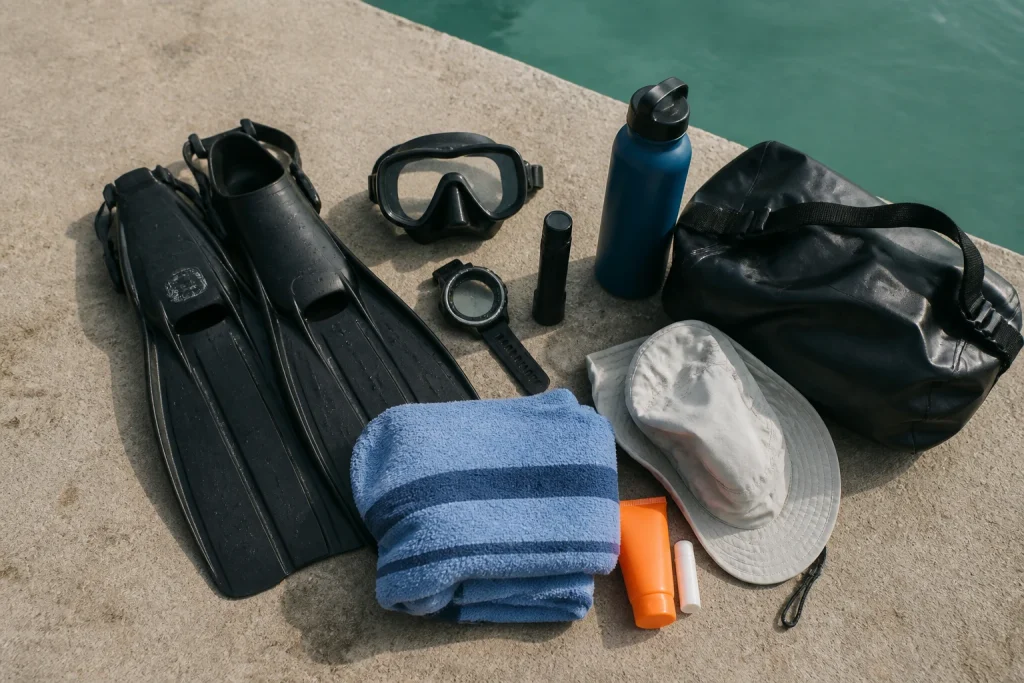
- Certification details and any requested record of recent dives
- Personal scuba equipment not included in the selected rental package
- A dive computer, or confirmation that one is available to rent
- Swimwear, a towel, sun protection, and a dry layer for the return
- Water and any personal items permitted by the operator
- A small dry bag for your phone, wallet, and other essentials
The broader Key West Packing List offers useful ideas for the rest of the vacation. For the boat itself, rely on the operator’s confirmation for storage limits, allowed items, and required equipment. Bringing extra bags onto a dive boat usually creates more clutter than comfort.
Accessibility and individual support needs
Transportation access to the shop is documented, but the trip details do not specify wheelchair-accessible boats, lift equipment, transfer assistance, accessible toilets, or individualized equipment handling. Travelers with mobility, sensory, medical, or equipment-handling needs should discuss the entire boarding and dive process with the operator before booking.
- Ask about the step or ladder used to board the vessel and exit the water.
- Confirm the availability of seating and a protected place for mobility equipment.
- Discuss assistance with tanks and other heavy equipment.
- Ask about toilet access and the space available for transfers.
- Explain any communication support needed during briefings and emergencies.
The Key West Accessibility Guide can help with hotels, transportation, and mobility planning elsewhere in the city. Boat access must still be discussed directly because an accessible route to the dive shop does not establish that the vessel or water-entry system will meet the same needs.
When another dive operator or a private charter makes sense
Lost Reef Adventures advertises daily dive trips, instruction, and private charters in Key West. Its published material does not provide the same wreck-specific comparison details for itinerary, depth, certification, price, or accessibility. Divers interested in that operator should confirm the exact wreck, second dive, eligibility rules, trip length, and total cost before comparing it with the two Captain Hook’s offerings.
A private charter can be worth discussing when a qualified group wants more control over scheduling or needs individualized support, but do not assume it changes certification standards, sea conditions, or safe depth limits. The operator should match the itinerary to the group’s experience and the day’s conditions.
Travelers still deciding between wreck, reef, instruction, and private options can compare the broader Best Scuba Diving Tours in Key West. Keep comparisons like for like. A general two-tank reef outing serves a different diver and should not be judged only by whether it costs less than a deep wreck trip.
How to choose and book the right wreck tour
- Start with certification. Both published wreck choices require Advanced certification.
- Check recent experience. The Vandenberg specifically requires a recent deep dive.
- Compare depth. The Vandenberg reaches a much deeper listed sand depth than the Cayman Salvager.
- Choose the format. Pick the Vandenberg for a dedicated two-tank wreck plan or Cayman Salvager for a wreck and reef combination.
- Confirm the final details. Review departure time, check-in, equipment, guide or computer charges, cancellation terms, and accessibility needs.
- Recheck marine conditions and operating status shortly before departure.
For a current, experienced Advanced diver seeking Key West’s signature large artificial reef, the USS Vandenberg is the strongest choice. The Cayman Salvager is the better fit for an Advanced diver who wants a shallower listed wreck profile and a reef component. The main limitation is simple: neither is a beginner tour. Select the wreck that matches your recent experience, then confirm the live schedule, checkout total, and conditions before the boat leaves.
Frequently asked questions
Can beginners join a Key West wreck diving tour?
No, the two clearly published wreck-specific trips covered here are not beginner tours. Both the USS Vandenberg and Cayman Salvager offerings require Advanced certification, and the Vandenberg also requires a recent deep dive.
How deep is the USS Vandenberg dive?
The Vandenberg’s deck is listed at roughly 95 to 100 feet, while the sand is around 145 feet. The actual dive plan should be reviewed with the crew and matched to your training and recent experience.
How deep is the Cayman Salvager?
The Cayman Salvager’s deck is listed around 90 to 95 feet, with the sand at approximately 100 feet. It is the shallower published choice, but it still requires Advanced certification.
How long do Key West wreck diving tours take?
The published trips last approximately four hours, with check-in required one hour before departure. Set aside a half day and leave extra room in your schedule for changing marine conditions.
What equipment is included in the wreck-trip price?
The listed base inclusions are air, tanks, weights, and a weight belt. Confirm taxes, personal-equipment rentals, dive computer availability, and any guide charges when reviewing the final booking total.
Which Key West wreck dive is best?
The Vandenberg is best for current Advanced divers prioritizing a large artificial reef and a deeper profile. The Cayman Salvager is better for Advanced divers who prefer a shallower listed profile and a reef component.
Where do the Captain Hook’s wreck tours depart?
The listed check-in and departure point is 1708 N. Roosevelt Boulevard in Key West. Free parking is available, and the operator identifies the location as accessible by the Duval Loop and city bus lines.
What happens if weather cancels the trip?
The operator says unsafe trips can be canceled and handled through rescheduling or a refund under its stated policy. Review the terms for your reservation and check the trip’s operating status close to departure.
Are the wreck-diving boats wheelchair accessible?
Boat accessibility is not specified in the published trip details. Contact the operator before booking to discuss boarding, transfers, water entry, toilet access, equipment handling, and any other individual support needs.
Hotel bases to compare after this tour
Once you have the tour shortlist, compare a few stays that can make the trip logistics easier.
Hyatt Vacation Club at Beach House, Key West
Stay in a classic Key West–style, tropical getaway set up as residential-style retreats with manicured gardens and beachside comfort. A connecting on-property dock makes it easy to rent a kayak and head out for Gulf of Mexico water adventures. Plan a vacation that feels more like having your own place by the water.
Check rates
The Reach Key West, Curio Collection by Hilton
A beachfront Hilton Curio Collection resort in Old Town Key West with a private beach, pool, spa access, and easy access to Duval Street and Southernmost Point.
Check rates