Dry Tortugas Day Trip Itinerary
Trace the perfect Dry Tortugas day trip itinerary, from sunrise departure to Fort Jefferson views, and discover the one mistake that can ruin it.
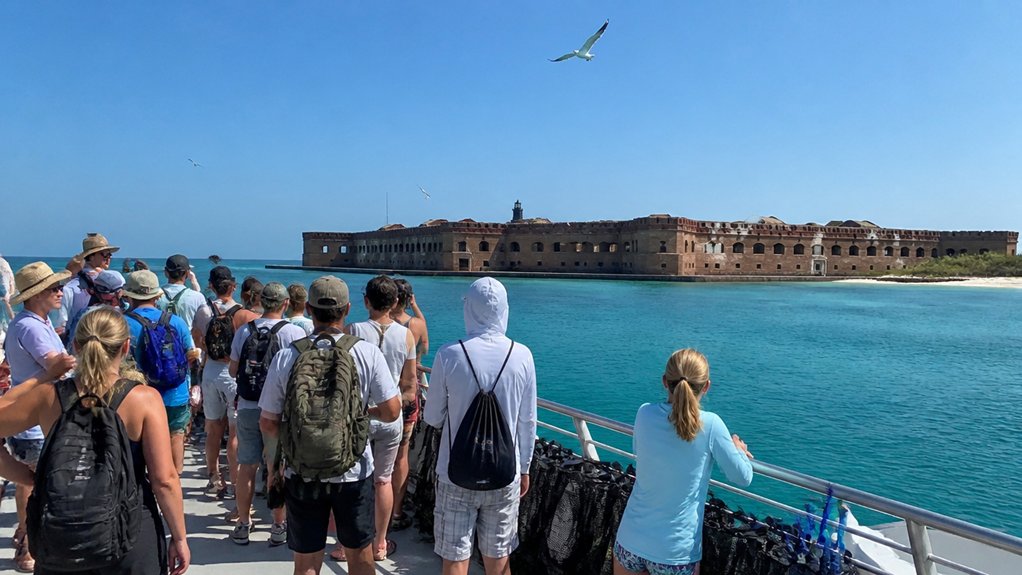
You’ll start before sunrise in Key West, then cross bright blue water to Garden Key, where Fort Jefferson rises from the sea like a brick mirage. By midmorning, you can snorkel the moat, hear terns overhead, and climb to the fort roof for wide Gulf views. The trick is knowing when to go, what to book, and how to use your few island hours without wasting them.
Key Takeaways
- Book ferry or seaplane well ahead; ferry allows about 4–4.5 hours ashore, while seaplanes save travel time but offer less island time.
- Arrive early for check-in, parking, and boarding; ferry departs from Key West Ferry Terminal, seaplane from Key West International Airport.
- On arrival at Garden Key, snorkel first at the moat wall or South Swim Beach for calmer water and better visibility.
- Midday, eat lunch and join the free Fort Jefferson tour to see the fort’s history, rooftop views, and key sites.
- Spend remaining time on beach walks, birdwatching, or relaxing, then return before final boarding, usually before 3:00 p.m.
Is a Dry Tortugas Day Trip Worth It?
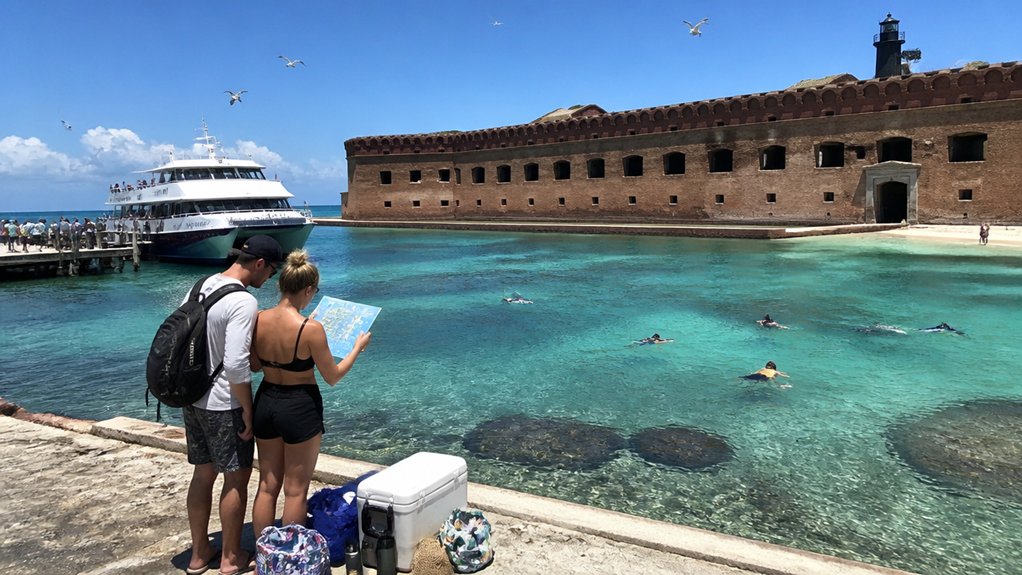
Yes, a Dry Tortugas day trip is worth it if you’re excited by the idea of pairing real history with clear blue water in one memorable outing. On a Dry Tortugas Day Trip, you step onto Garden Key and get a few vivid hours to explore Fort Jefferson, then slip into warm water for snorkeling along coral patches and the fort moat. You’ll notice brick walls glowing in the sun, frigatebirds circling overhead, and water so turquoise it almost looks edited. The day feels remote in the best way. Located nearly 70 miles west of Key West, the park spans mostly open water and is reached only by boat or seaplane. You do need a plan, because shore time goes quickly. Snorkel first if that’s your priority, then tour the fort and save beach time. If you crave hours, a seaplane or overnight stay can tempt you.
Choose Ferry or Seaplane
You’ve got two very different ways to reach Dry Tortugas, and your choice shapes the whole day from the first wake-up alarm to your last look at the water. The ferry gives you a longer ride and better value, while the seaplane gets you there fast with reef views from above and more time on the sand. Since both can sell out quickly, you’ll want to weigh cost, travel time, and availability before you book. Both options depart from Key West, so getting to Dry Tortugas starts with choosing which experience fits your schedule and budget best.
Ferry Vs Seaplane
Choosing between the ferry and the seaplane really comes down to what kind of day you want in Dry Tortugas. If you like a lively boat ride with creature comforts, the ferry on Yankee Freedom III fits well. You can settle into air-conditioned cabins, grab breakfast, and chat with other travelers on the way back. It feels social, easy, and a little old-school.
If you want a quieter, more cinematic arrival, book Key West Seaplane Adventures. The seaplane gives you sweeping views of reefs, wrecks, and maybe even turtles below. You land right by the beach, which feels pretty magical. The ferry vs seaplane choice is really about comfort, speed, scenery, and how much time you want on the island. The trade-off is planning ahead, since seats disappear fast. Whichever you choose, reserve early, expect parking at Key West, and watch cancellation lists for lucky last-minute openings.
Cost And Travel Time
While both options get you to the same bright stretch of sand and brick at Garden Key, the ferry wins on price and the seaplane wins on time. For Dry Tortugas, the Yankee Freedom usually costs about $200, and that covers your park fee, snorkeling gear, breakfast, and a boxed lunch. You’ll leave Key West around 8:00 a.m., cruise for about 2.5 hours each way, and get roughly 4 to 4.5 hours ashore.
A seaplane from Key West Airport cuts the trip to about 40 to 45 minutes each way, so the water and fort appear fast beneath your window. Half-day flights run about $370 to $400 with 2.5 to 3 hours on the island. Full-day trips cost roughly $600 to $800, plus a $15 park fee. Since the park is a remote island destination about 70 miles west of Key West, Garden Key is the main arrival point for both ferry and seaplane visitors.
Nearby hotels to compare
Compare other stays around Old Town Key West so you can weigh location, room style, and overall trip fit.

Hyatt Vacation Club at Beach House, Key West
Stay in a classic Key West–style, tropical getaway set up as residential-style retreats with manicured gardens and beachside comfort. A connecting on-property dock makes it easy to rent a kayak and head out for Gulf of Mexico water adventures. Plan a vacation that feels more like having your own place by the water.
Check ratesBooking And Availability
Often, the real decision comes down to what’s still available, because both the Yankee Freedom ferry and the Key West seaplane can sell out fast.
You should book well in advance either way. The Yankee Freedom usually costs about $200 round-trip and covers the park fee, breakfast, lunch, and snorkel gear. Its ferry check-in runs around 7:00 to 7:30 a.m., so arrive early and plan for parking at the terminal. The Key West seaplane checks you in about 30 minutes before departure from the airport, but seats are few, about ten, and vanish quickly. Choose half-day or full-day based on your budget and shore time. If trips are sold out, check cancellation lists daily. Seaplane passengers should bring $15 cash for the park fee. The park sits about 70 miles west of Key West, which makes Dry Tortugas National Park access limited and advance reservations especially important.
What a Dry Tortugas Day Trip Costs
Budget for Dry Tortugas with your ride in mind, because the boat and seaplane sit in very different price ranges. A Ferry day trip from Key West usually costs about $200, and that often includes the park entrance fee, breakfast, lunch, and snorkeling gear. A Seaplane costs more, with half day fares around $371 and full day seats roughly $644 to $800, plus the $15 park entrance fee. Many visitors spend much of their limited day exploring Fort Jefferson, so it helps to factor in enough time to walk the grounds after you arrive.
- Ferry: about $200 with meals and gear included.
- Seaplane: faster views, higher fares, separate park entrance fee.
- parking at the ferry terminal can run about $40 for the day.
- Extras like drinks, snacks, sunscreen, souvenirs, or Dramamine add up fast.
If you camp overnight, separate permits and fees may carry extra costs beyond your ride too.
Book Your Dry Tortugas Tickets Early
Because Dry Tortugas is one of those trips that feels almost unreal once you see the water, you should book your ferry or seaplane ticket as early as you can.
The Yankee Freedom ferry often sells out, especially in high season, and the seaplane fills even faster because only about ten seats go up at a time. Reserve online and compare half-day versus full-day flight options before they vanish. If a date looks sold out, check back daily for cancellations. Plan for an early morning check-in and don’t cut it close. Ferry tickets usually include the park entrance fee, while seaplane passengers should bring $15 cash unless they have a Park Pass. If you’re driving, reserve parking early too or budget for terminal parking. Keep in mind that there is no car access to Dry Tortugas, so all visitors must arrive by boat or seaplane.
Where to Check In From Key West
You’ll check in for the Yankee Freedom at the Key West Ferry Terminal in the Historic Seaport at 100 Grinnell Street, where the morning feels salty and busy and day-trippers start lining up early. If you’re taking the seaplane, you’ll head to Key West International Airport and usually check in about 30 minutes before takeoff, though early departures often call for you to be there by 7:30 AM. Get there with time to spare so you can handle parking, have your confirmation and park fee ready, sign waivers, and board without that classic vacation sprint. If you’re mapping out the morning, a quick look at How to Get to Key West can help you plan your route to the terminal or airport with less stress.

Ferry Terminal Location
At the Key West Ferry Terminal in the Historic Seaport, 100 Grinnell Street, you’ll check in for the Yankee Freedom before heading out to Dry Tortugas National Park. Arrive by 7:00 AM so visiting Dry Tortugas starts smoothly. You’ll want a little buffer for ticketing, bathrooms, and the usual Key West morning shuffle off Key West Road.
- Bring your printed or digital ticket.
- Expect boarding around 7:30 AM.
- Plan for an 8:00 AM departure.
- Use nearby parking or grab a taxi.
The Key West Ferry Terminal sits in a lively corner of Key West, with docks, gull calls, and coffee nearby. Parking can run about $40 a day at the downtown garage, so rideshare may save money and patience before the harbor wakes up fully. This departure point is one of the easiest Key West day trips to plan when you want a simple escape beyond downtown.
Seaplane Departure Point
For the seaplane option, head to Key West International Airport and plan to check in about 30 minutes before takeoff. This seaplane departure point feels invigoratingly simple. You won’t face TSA screening, so check-in moves fast. Parking is limited, though, so a ride-share or short-term spot makes life easier. At check in you’ll get a quick safety briefing, pick up snorkeling gear, and receive a cooler for full-day trips. If you don’t carry a National Park Pass, bring cash for the $15 entrance fee. Then you’ll board promptly for the roughly 40-minute flight each way, with headset commentary and helpful seating advice for the return. Key West International Airport, often referred to by its EYW airport code, is the departure point for these seaplane trips from Key West. Confirm exact procedures with your operator when booking, since seasons and crews can vary now and then for details.
Arrival Time Tips
Because Dry Tortugas day trips start early, your morning goes much smoother if you know exactly where to check in from Key West. For the ferry, you’ll check in at the Key West Ferry Terminal by 7:00 a.m., board around 7:30, and leave at 8:00.
- If unfamiliar, arrive 15 to 30 minutes earlier so you’re not hunting signs while the harbor wakes up.
- Seaplane travelers usually check in 30 minutes before takeoff at Key West International Airport and should follow operator instructions.
- Build in parking time. The garage near the terminal runs about $40 daily, and airport spots can be tight.
- Bring mobile or printed tickets, watch weather updates, and confirm your operator’s window since waivers may come after check-in or before boarding starts.
If you’re extending your visit beyond a day trip, Dry Tortugas camping requires advance planning and can affect how early you want to arrive in Key West.
A Realistic Dry Tortugas Day Trip Timeline
While Dry Tortugas feels wildly remote, a day trip runs on a pretty tight clock, so an early start pays off. Check in at the Key West Ferry Terminal by 7:00 am, board at 7:30, and sail at 8:00 for Dry Tortugas National Park. You’ll reach Garden Key around 10:15 or 10:30. If you arrive wearing your suit, you can jump in fast and use the included snorkeling gear while the water stays calm and clear. Like Key Largo reefs, the park rewards early snorkelers with clear water and vivid marine life. Around midday, pause for lunch and catch the recommended Fort Jefferson history talk if timing lines up. Then use the early afternoon to roam beaches, scan for birds, and soak up the salt, sun, and brickwork. Final boarding starts before 3:00 pm, with Key West visible by 5:30.
Tour Fort Jefferson First
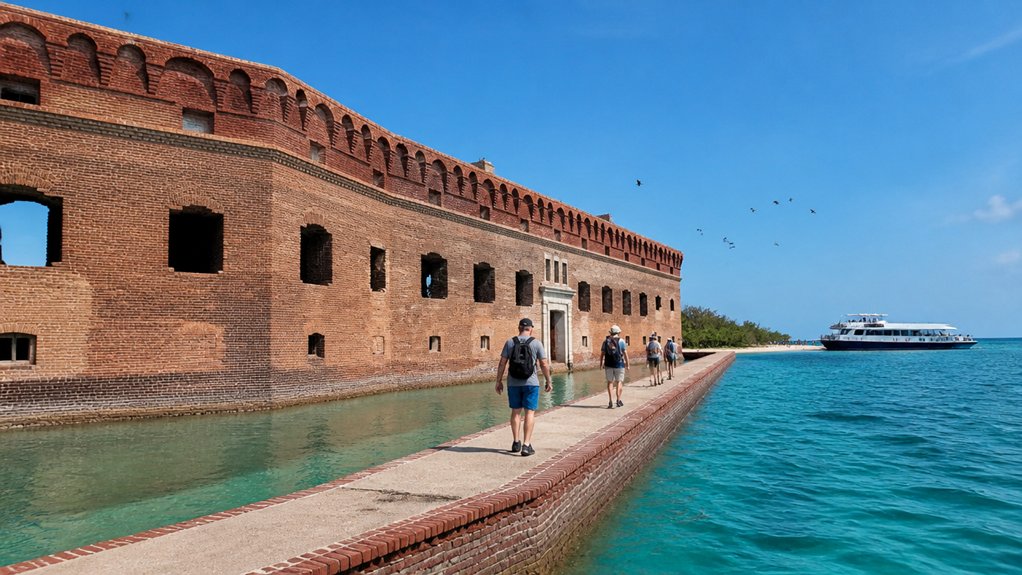
Once you step onto Garden Key, head straight to Fort Jefferson and catch the guided tour that usually starts in the 11:00 to 12:40 window. Arrive by 10:15 or 10:30 so you won’t miss it. This Guided tour is usually free and lasts 45 to 90 minutes. You’ll climb from the Fort’s first level to the rooftop, hear about construction, soldiers, and Dr. Mudd, and pause in shade with wide ocean views. Wear sturdy sneakers and light clothes because brick paths are uneven. Touring first saves cooler hours for you and leaves time for snorkeling or the beach later. Bring water, a camera, and reef-safe sunscreen. If you enjoy historic coastal sites, Fort Zachary Taylor offers another classic Key West fort experience with beach and park access.
- Arrive on Garden Key early for the best shot at joining.
- Expect breezes, sun glare, and surprisingly rough old brick underfoot.
- Listen for stories about soldiers, builders, and a famous prisoner.
- Use the boat restroom first since island facilities may close later.
Best Places to Snorkel at Dry Tortugas
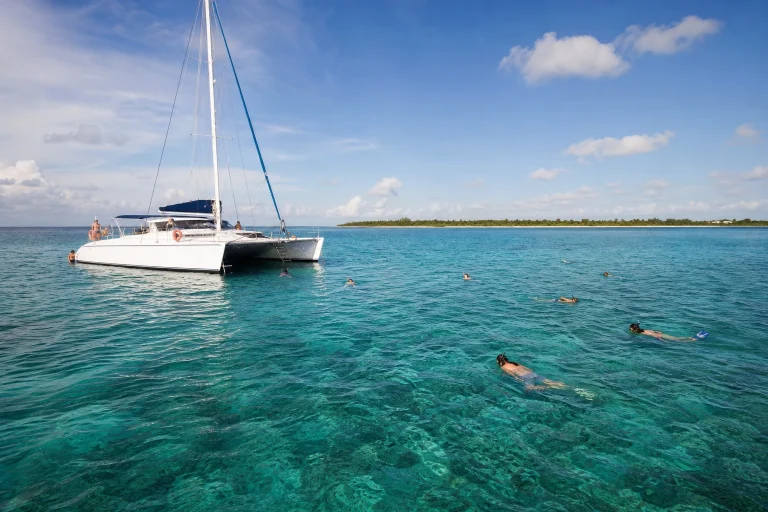
Mask on, fins ready, and the best snorkeling at Dry Tortugas starts right off Garden Key. You’ll find the easiest entries in the moat beside Fort Jefferson and at South Swim Beach, where shallow water and clear visibility let you spot fish fast. Snorkeling at Dry feels almost immediate here. A short swim from shore, coral heads and reef fragments hold blue tangs, sergeant majors, and sometimes a ray slipping past the coral reefs. Check both North and South Swim Beach when you arrive, since wind can change conditions, though the south side often looks clearer along the quarter-mile moat. Go early after landing for fewer people and cleaner water. The moat wall near Fort Jefferson can also attract schools of tropical fish, making it one of the most reliable snorkeling spots for beginners. Use well-fitting gear, wear reef-safe sunscreen, and never snorkel alone or touch coral.
How to Spend Your Beach Time
Start your beach time early with a snorkel around the moat, then claim a shady spot on South Swim Beach where the water stays calm and the turquoise views make doing nothing feel productive. You’ll want water shoes for the shell-strewn sand, a small pack for your gear and snacks, and a towel, hat, and reef-safe sunscreen if lounging or a quick nap is on your agenda. Since shade can be limited at popular beaches, planning ahead for parking and shade helps you settle in comfortably for the day. When you’re ready to move again, you can rinse off, grab lunch, and stroll the shoreline for fish and seabirds while giving coral and nesting areas the space they deserve.
Relaxing By The Shore
For the calmest beach time, head straight to South Swim Beach when you arrive, where the water near the moat is usually clearer and the mood feels wonderfully unhurried. Claim a patch of sand early, then settle in with reef-safe sunscreen, a wide-brim hat, water, and your towel before the heat starts bossing everyone around.
Nearby hotels to compare
Compare other stays around Old Town Key West so you can weigh location, room style, and overall trip fit.
Hyatt Vacation Club at Beach House, Key West
Stay in a classic Key West–style, tropical getaway set up as residential-style retreats with manicured gardens and beachside comfort. A connecting on-property dock makes it easy to rent a kayak and head out for Gulf of Mexico water adventures. Plan a vacation that feels more like having your own place by the water.
Check rates- Pack light and keep essentials close
- Face the turquoise water
- Watch seaplanes and maybe dolphins
- Rinse off after snorkeling
If you want a change of scene, stroll beside the moat, spot fish and birdlife, then return to your towel for a nap while the surf whispers and the island clock seems to lose interest. Unlike some Key West public beaches, this swim spot feels especially remote and peaceful. Use the ferry’s warm showers before the boat leaves. Garden Key’s facilities close fast later.
Best Beach Activities
Snorkeling sets the pace here, so slip into the water within 30 to 60 minutes of landing if you want the clearest views of the coral heads near the moat before the crowd thickens. Then claim South Swim Beach for easy swimming, shade, and quick resets between loops. If you love pairing island beaches with nearby Keys escapes, Bahia Honda State Park is another standout for a beach-focused day trip.
| Spot | Do | Why |
|---|---|---|
| South Swim Beach | Lounge | Shade |
| Moat edge | snorkeling | Fish |
| Shell line | Walk | Shells |
| Rinse point | Lunch | Fort Jefferson |
Wear water shoes on the shell-strewn sand and watch for tiny marine life, but don’t touch coral. Pack reef-safe sunscreen, a hat, towel, and lots of water. Buddy up for snorkeling, then return for lunch, a rinse, or a beach read before Fort Jefferson. If luck swings your way, you might spot sea turtles offshore nearby.
What to Pack for Dry Tortugas
Pack like you’re heading into bright open water with very little shade, because Dry Tortugas is all sun, salt, and stone once you step off the boat. Bring sun gear first, then think about comfort for the fort and water. You’ll want a reusable water bottle, reef-safe sunscreen, a hat, and sunglasses. Wear sturdy shoes for Fort Jefferson. Toss beach sandals in your bag for later. If you’re joining one of the best snorkeling tours, packing your own mask and snorkel can make the day easier and more comfortable.
- Compact daypack with towel, swimsuit, and cover-up
- Walking shoes or sneakers for brick ramps and stairs
- Personal snorkeling gear and a small dry bag
- Lunch, cooler, and $15 cash if you’re flying by seaplane
If you plan on snorkeling right away, arrive in your swimsuit. Add insect repellent, a light jacket, and any medications. Salt spray has a way of finding everything.
Rules on Bags, Pets, and Snorkeling
Once you step onto Garden Key, the ferry’s storage rules become real fast. You can’t leave bags on the Ferry, so pack a small daypack and carry everything ashore, then back again. That includes towels, water, camera gear, and the extra layer you swore you wouldn’t need.
Also, pets aren’t allowed anywhere in Dry Tortugas National Park, so line up a sitter before your day trip. For snorkeling, stick to the marked swim beaches and approved moat or reef areas, and don’t go alone. You’ll sign a waiver on board if you borrow gear, though your own mask often fits better and fogs less. Listen for ranger updates, watch posted closures, and keep your hands off coral. The fish don’t need handshakes today either.
Use a mooring buoy where available instead of anchoring, since anchors can damage coral and seagrass.
When to Camp Instead of Day Trip
If a few hours on Garden Key sounds more like a teaser than a trip, camping is the better call. You’ll trade the ferry’s 4 to 4.5 hours ashore for sunset light, dark-sky stargazing, and long snorkel sessions around the moat wall.
Camping turns Garden Key from a quick teaser into the real experience, with sunset skies, stargazing, and unhurried snorkel time.
- Reserve a backcountry camping permit early.
- Arrive at camper check-in and roam Fort Jefferson freely.
- Pack water, food, shelter, sunscreen, and bug spray because there’s no freshwater.
- Aim for winter, but expect heat, bright sun, and little shade.
You can check in around 6:00 a.m. and stay overnight on Garden Key, which means quiet ramparts, seabird chatter, and less clock-watching. Bring sturdy shoes and a wide-brim hat. Primitive facilities keep things simple and the stars do the evening entertainment for free there. Before your trip, monitor hurricane alerts and weather conditions, since storms can affect travel and safety even far from a direct landfall.
Frequently Asked Questions
Are There Restrooms and Drinking Water Available on Garden Key?
Yes, you’ll find restroom locations on Garden Key, but once the ferry docks, you must use onboard facilities. You won’t get water refill stations there; bring water. Ask operators about accessibility features and baby changing.
Can You Use a National Parks Pass for Entry?
Yes, you can use National Parks Passes for Visitor Entry, but Restrictions and Exceptions apply: Annual Pass Acceptance covers park Fees only. Boat Operator Policies control transportation costs, and seaplane Redemption may offer Exemptions there.
Is There Cell Service or Wi-Fi at Dry Tortugas?
No, you won’t find cell service or Wi‑Fi at Dry Tortugas. Bring offline maps, because signal boosters won’t help ashore. If you need satellite connectivity for safety, carry an emergency beacon and download essentials beforehand.
What Wildlife Might You See During the Trip?
Like Darwin with a snorkel, you’ll spot Sea turtles, Reef fish, and Seabird colonies, while dolphins and rays surface nearby. In season, you’ll also glimpse Migratory shorebirds and vast tern flocks wheeling over protected keys.
Are There Shaded Areas or Picnic Spots on the Island?
Yes, you’ll find limited shade and picnic options: Shaded picnic spots sit near Fort Jefferson, while Hammock groves and Tree canopies stay sparse. You won’t see Covered pavilions, so bring a blanket instead for shade.
Conclusion
A Dry Tortugas day trip asks for an early start, but you get a rare kind of Florida: clear shallows, brick ramparts, frigatebirds overhead, and the low slap of waves on sand. Choose your ferry or seaplane, pack smart, and book well ahead. As the saying goes, the early bird catches the worm, and here it catches calm water and quiet beaches. If one day feels too short, that’s your clue to come back and camp next time.
More nearby hotels to compare
Compare other stays around Old Town Key West so you can weigh location, room style, and overall trip fit.
Hyatt Vacation Club at Beach House, Key West
Stay in a classic Key West–style, tropical getaway set up as residential-style retreats with manicured gardens and beachside comfort. A connecting on-property dock makes it easy to rent a kayak and head out for Gulf of Mexico water adventures. Plan a vacation that feels more like having your own place by the water.
Check rates