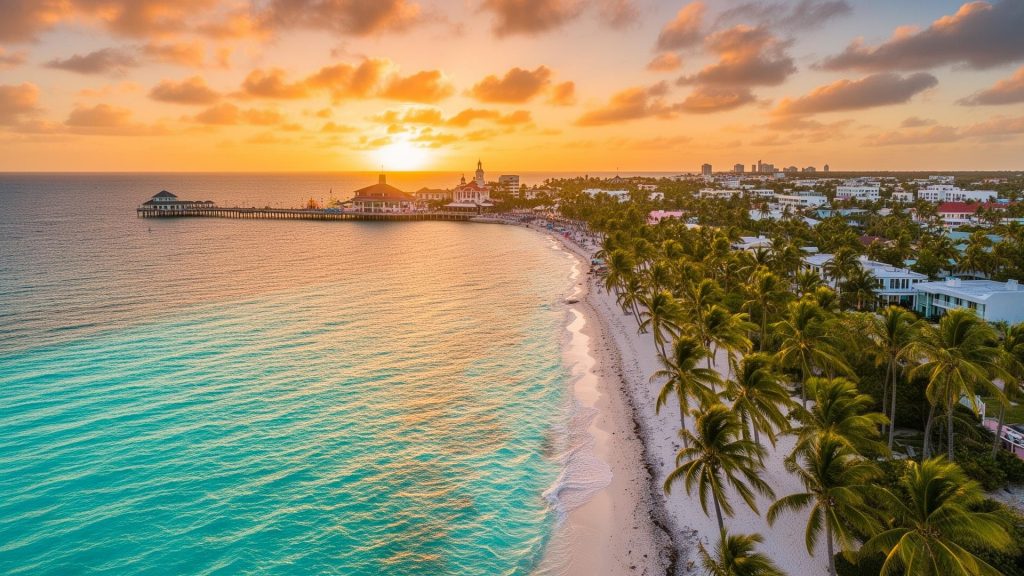

Key West Lobster Season Guide (Florida Spiny Lobster)
Get the edge on Key West lobster season—dates, limits, and must-know Florida spiny lobster rules before one small mistake costs your catch.
If you’re eyeing Key West lobster season, timing and rules matter as much as a sharp gauge and good fins. You’ll slip into clear summer water, scan coral ledges, and hear boat traffic humming beyond the dive flag while you size up a legal Florida spiny lobster underwater. Mini-season and regular season don’t play by the same limits, and neither do the Keys and Biscayne. Get one detail wrong, and your catch stays in the sea.
The right fishing trip depends on the water you want to fish.
A calm flats morning feels nothing like an offshore run. Compare charter types before picking a time, boat and guide.
See fishing charter options →Key Takeaways
- In Key West, the 2026 mini-season is July 29–30, and regular season runs 12:01 a.m. August 6, 2026 through March 31, 2027.
- Each harvester needs a Florida recreational saltwater fishing license and spiny lobster permit unless a specific exemption applies.
- Monroe County’s recreational bag limit is six lobsters per person daily during mini-season and regular season, with limited July 30 possession exceptions elsewhere.
- Lobsters must measure over a 3-inch carapace, checked underwater with a rigid gauge before lifting, twisting, or separating the tail.
- Harvest is prohibited in Everglades and Dry Tortugas national parks, sanctuary no-take zones, and other local protected areas around the Keys.
When Is Key West Lobster Season?
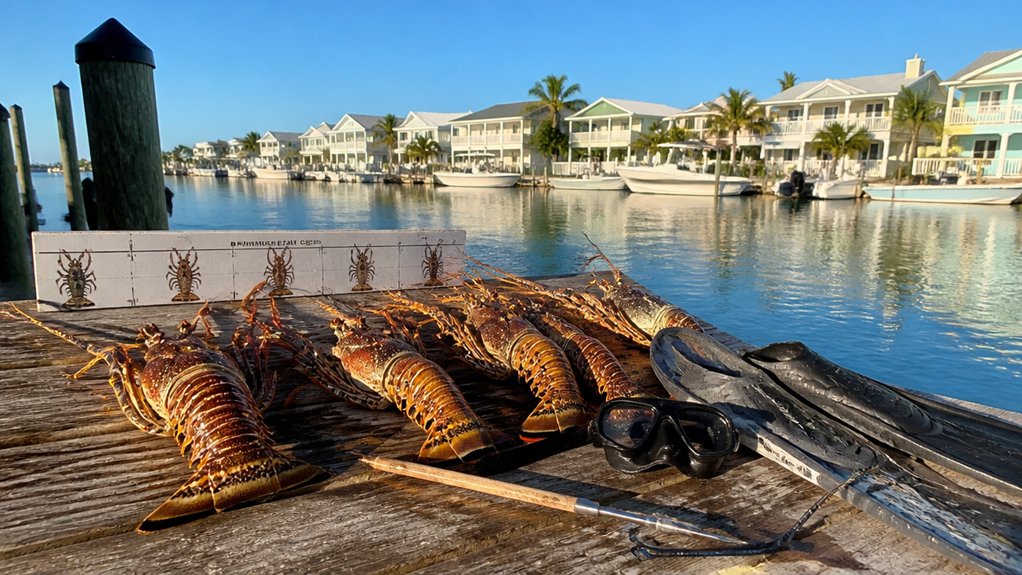
If you’re planning a lobster trip to Key West, the main Florida spiny lobster season runs from 12:01 a.m. on August 6 through midnight on March 31. That’s your long window for chasing bugs in warm blue water that glints and over coral ledges. You’ll also hear about mini season, the two day recreational opener in late July that kicks off the buzz.
In Key West and the rest of Monroe County, you can keep six lobsters per person per day during mini season and the regular season. Night diving isn’t allowed in Monroe County during mini season, so plan daylight hunts. Watch protected zones too. Some parks, sanctuary no take areas, and reef protection areas stay closed to harvest all year. During both seasons, the minimum size limit is a carapace longer than 3 inches, and it must be measured in the water.
What Are the 2026–2027 Season Dates?
So when can you actually get in the water and start hunting? For 2026, your first crack at Florida spiny lobster comes during the two-day recreational mini-season on Wednesday, July 29, and Thursday, July 30. That short window always lands on the last consecutive Wednesday and Thursday of July, so the calendar lines up neatly.
After that, you must wait a few more days. The regular season opens at 12:01 a.m. on Thursday, August 6, 2026, and runs through midnight on March 31, 2027. If you’re diving around Key West or elsewhere in Monroe County, those dates apply, though some local closures and special rules can shape where you go. Key West waters fall within the Florida Keys Sanctuary, which protects 4,539 square miles and includes zones and regulations that can affect access and activity. Think clear water, patch reefs, and a ticking clock. Plan carefully before you splash.
What Permits Do You Need?
Before you gear up and drop in, make sure your paperwork is squared away. In Florida, you’ll usually need a recreational saltwater fishing license to harvest spiny lobster, unless you’re covered by a specific exemption. You also need a Florida spiny lobster permit. Without both, your reef adventure can stop at the dock.
Bring a measuring device in the water so you can confirm the carapace is over three inches. Keep every lobster whole with the tail attached during transport and possession. If you’re exploring protected waters around the Keys, Everglades, Dry Tortugas, or sanctuary zones, check local rules first. In Florida Keys National Marine Sanctuary, the Restoration Blueprint is the first major update to local regulations since 1997, so rule changes in protected waters are especially important to review. Those areas can add special permits, tighter rules, or outright no-take bans. No one wants a souvenir photo from the citation desk downtown today.
What Is the Daily Bag Limit?
With your licenses and lobster permit squared away, the next number to know is your bag limit, because Florida counts every bug you bring up. During mini season, you can keep 6 spiny lobsters per person here, while most other Florida waters allow 12. In regular season, recreational daily limits drop to 6 statewide. On the water, possession matches that day’s limit. Off the water, July 29 stays at one daily limit, and July 30 allows double. Only properly licensed harvesters count toward a limit, so your boat buddy can’t “hold” extras for you. In the Florida Keys National Marine Sanctuary, feeding marine life is also prohibited from any vessel and while diving.
| Season | Where | Limit |
|---|---|---|
| Mini | Monroe/Biscayne | 6 |
| Mini | Rest of Florida | 12 |
| Regular | Statewide | 6 |
| Check | Local rules | Confirm |
Always confirm current regulations before you dive, measure tails, and hear chatter nearby.
How Do Keys and Biscayne Limits Differ?
If you’re lobstering in the Keys or Biscayne during the two-day sport season, you’re capped at 6 per person each day, while much of the rest of Florida lets you keep 12. You’ll also want to watch possession rules, because what you can hold on the water matches the daily limit, and on July 30 you may carry double off the water only where that’s allowed. In Monroe County and Biscayne, the rules stay tight and clear, so you can spend less time second-guessing your count and more time scanning the shallows for antennae flicking over the rocks. Before heading out, complete a float plan so someone ashore knows when and where to look if you don’t return as expected.
Daily Bag Limit Differences
Although the mini-season can feel like a free-for-all at dawn, the bag limits change sharply once you cross into the Keys or Biscayne National Park. During the July 29-30, 2026, mini-season, your daily bag limit in Monroe County and Biscayne is 6, not 12. Head elsewhere in Florida, and you may take 12 per person that day. Once regular season opens on Aug. 6, the statewide recreational limit drops to 6 per person everywhere through March 31. You can’t add a nonharvesting friend to stretch your count. Only licensed people who actively harvest get their own limit. That means every bug in your cooler needs a real harvester behind it, not wishful math at the dock tonight or tomorrow morning before breakfast and coffee. Before diving, it is also smart to check red tide status updates, since Florida tracks harmful algal blooms and related fish kill impacts statewide.
Sport Season Possession Limits
Picture the dock at sunset, coolers thumping and salt drying on your arms, because this is where possession limits start to matter. During the two-day sport season, your on-the-water limit always matches that day’s bag limits for spiny lobster. In Monroe County and Biscayne National Park, that’s 6 per person. Elsewhere in Florida, it’s 12.
Choose the fishing style first, then the charter.
Key West has serious variety, from tarpon and bonefish to reef species and deep-sea runs. Start by comparing the kind of day each charter offers.
Browse fishing charters →Once you’re back on land, the math shifts. On July 29, 2026, your off-the-water limit stays the same as the daily limit. On July 30, you can hold up to double off the water, so 12 in Monroe County and Biscayne, or 24 elsewhere. Keep one thing straight: only licensed or exempt people who are actively harvesting count toward your total. Your sleepy cousin at the dock doesn’t either.
If a storm threatens during your trip, sign up for Alert!Monroe and know your evacuation zone before heading out on the water.
Monroe And Biscayne Rules
Bag limits may grab the headlines, but Monroe County and Biscayne National Park part ways in the fine print. During mini season, you can keep six per person in both places, not Florida’s twelve elsewhere.
| Rule | Monroe County | Biscayne National Park |
|---|---|---|
| Mini bag | 6 daily | 6 daily |
| Size and gear | Over 3-inch carapace, measured in water, with gauge | Same |
You also need to watch possession timing. On July 29, off the water matches the daily limit. On July 30, it may double, so check local enforcement. If you’re pairing lobster plans with a trip from Key West, Dry Tortugas access is something to sort out separately. In Monroe County, night diving is off-limits during sport season. Think dark water, ticking rules, and no excuses. Regular season stays simpler: six per person in the Keys, and your on-the-water possession limit stays the same each day.
What Is the Legal Lobster Size?
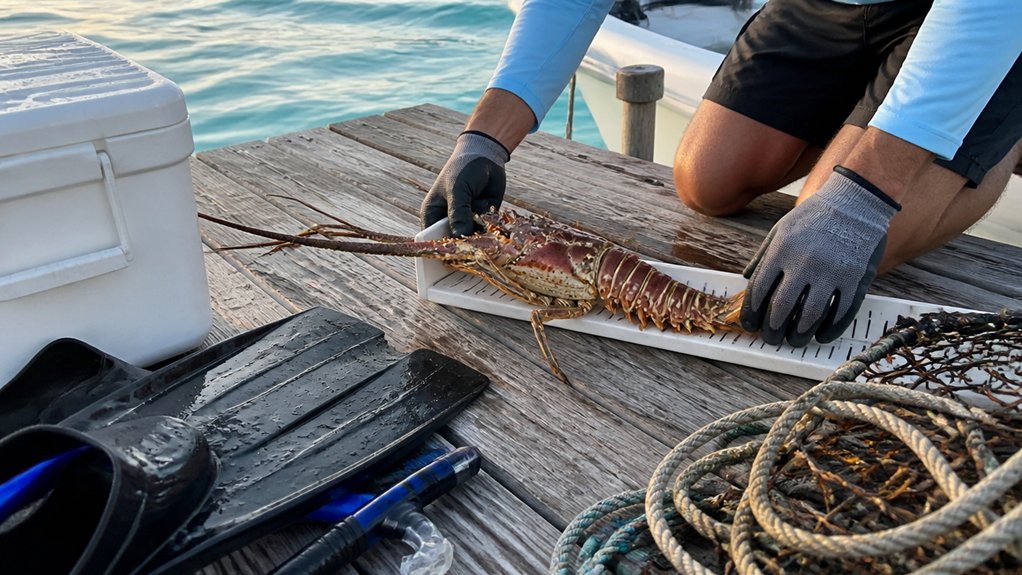
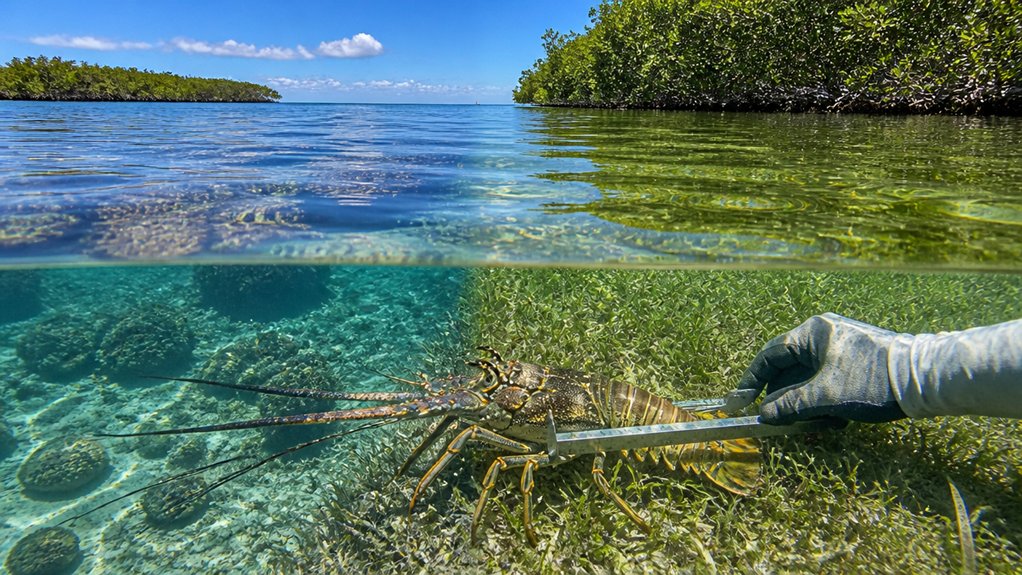
Before you keep any lobster, you need to make sure the carapace measures more than 3 inches. You’ll measure it in the water from the rear of the eye socket to the back edge of the carapace, so keep a measuring device with you at all times. If it’s short, it goes back, because keeping an undersized lobster isn’t allowed anywhere these rules apply. Also, follow local fishing rules and make sure you have a Florida license if required.
Minimum Carapace Measurement
Check the carapace first, because Florida’s legal lobster size is strict: the shell must measure greater than 3 inches from the rear of the eye socket to the back edge of the carapace. That minimum carapace measurement is your bright line in the Keys and across Florida waters. If the carapace length lands at 3 inches or less, you can’t keep that lobster. Officers enforce that rule consistently in Monroe County, Biscayne National Park, and statewide. A rigid, marked gauge helps you confirm size fast and avoid wishful thinking. Think of it as your tiny truth teller. Spiny lobster shells can look bulky, sandy, and deceptively legal after a lively chase. Don’t guess. Measure every lobster carefully, because undersized means trouble with wildlife officers. If you’re booking one of the many Key West fishing charters, ask whether the crew provides a legal gauge so every lobster gets checked the right way.
Measuring In Water
Slide your gauge into place while the lobster is still underwater, because Florida only lets you keep a spiny lobster if the carapace measures greater than 3 inches from the rear of the eye socket to the back edge of the shell.
You need to measure straight along the top, across the hard back only, not the antennae or tail. That carapace length must clearly exceed 3 inches. If it doesn’t, let it kick away in sand. Officers can check your catch on the water and later, so don’t guess. In the shallows, the rule feels exact. Pause, line it up, and be sure before you lift a lobster. The legal call happens below the surface, where the reef is except for your bubbles. Responsible boaters also follow Florida boating laws before heading out to ensure safe and legal time on the water.
Required Measuring Device
A simple lobster gauge is one of the most important pieces of gear you’ll carry in the water. In Florida, a legal spiny lobster must have a carapace longer than 3 inches, measured from the rear of the eye socket to the rear edge of the shell. You must keep a measuring device with you and use it underwater on every bug you catch.
That rule matters as much as your lobster permit. Lay the carapace flat on the gauge before you lift the lobster out or twist off the tail. If it doesn’t exceed 3.0 inches, let it walk back into the rocks. Possessing undersized lobster is illegal, and no gauge means you can’t prove size. That’s one way to earn a citation instead of dinner. If you’re checking access conditions before heading out, FL511’s current traffic data can help you choose the best route to the Keys.
How Do You Measure Lobster Correctly?
Getting this right starts underwater, where each spiny lobster has to be measured by its carapace, not the tail. Your measuring device should stay in hand, because legal carapace length is greater than 3.0 inches, measured submerged to prevent shrinkage.
- Place the lobster flat on a rigid board or approved caliper.
- Measure from the rear edge of the eye socket to the end of the mid-dorsal carapace.
- Keep the shell straight, not curved or squeezed, so your reading stays true.
- Check every lobster yourself, then confirm sizes onboard before landing.
For Key West safety, stay aware of your surroundings and follow local guidance while measuring and handling lobster on the water. That quick routine becomes second nature with a splash, a glance, and maybe one sandy fumble. Skip guesses, tail-only checks, or borrowed counts. They can cost you. Officers enforce limits on water and shore.
Where Is Lobster Harvest Closed?
Before you head out, you need to know that some waters are always off-limits for lobster, including Everglades National Park, Dry Tortugas National Park, and no-take zones in the Florida Keys National Marine Sanctuary. Dry Tortugas is accessible only by boat or seaplane, so planning ahead matters if you’re trying to avoid closed harvest waters out there. You’ll also run into seasonal closure zones, like John Pennekamp Coral Reef State Park, where lobster take stays closed during both sport and regular seasons. Keep an eye on your map, because places like Biscayne Bay, Card Sound, Layton, and even certain artificial habitats can turn a clear blue day into a quick no-go.
Year-Round Closed Areas
While the Keys offer plenty of legal lobster spots, some waters stay off-limits all year and you’ll want to know them cold. These year‑round closed areas protect reefs, research sites, and fragile habitat across the Florida Keys National Marine region.
- Skip Everglades National Park and Dry Tortugas National Park. Lobster harvest is always banned there.
- Avoid sanctuary no-take zones, including SPAs, Ecological Reserves, and yellow-buoy Research Only Areas.
- Biscayne Bay/Card Sound Spiny Lobster Sanctuary and five Biscayne coral protection areas stay closed.
- Add San Pedro Preserve, Layton, and designated artificial habitat. Check the Marine Sanctuary Explorer app or call 305‑852‑7717.
A quick map check beats an awkward talk at the dock and keeps your cooler, conscience, and vacation plans nicely intact for everyone involved. If your trip also includes Dry Tortugas sightseeing, plan enough time for Fort Jefferson since it’s one of the area’s main highlights.
Seasonal Closure Zones
Although much of the Keys opens up when the season starts, a few well-known spots still stay closed and can catch out visitors who assume every reef is fair game.
You can’t take Florida Keys Lobster in Everglades or Dry Tortugas National Parks, and yellow-buoy sanctuary no-take zones stay off limits too.
Water conditions can also matter for a trip, since routine monitoring checks for enterococci levels that may signal possible fecal pollution.
| Area | Status | What to know |
|---|---|---|
| SPAs and Ecological Reserves | Closed | Yellow buoys mark boundaries |
| Biscayne and Pennekamp | Closed | Includes Coral Reef Protection Areas |
Year-round closures also cover Everglades, Dry Tortugas, San Pedro Underwater Archeological Preserve, the City of Layton, and designated Artificial Habitat spots in state waters. Before you drop in there, check the map twice. Clear water can look inviting, but a hidden closure line can ruin a dreamy morning fast.
What Special Rules Apply in Monroe County?
If you’re chasing bugs in the Keys, Monroe County plays by its own tighter set of rules. During mini lobster season, you’ll need to stay sharp and measure twice.
- Monroe County’s 2026 sport season runs July 29 to 30, and you may keep 6 spiny lobsters per person each day.
- You can’t night dive for lobster here during mini-season or regular season, so plan daylight drops and early boat rides.
- Keep a measuring device with you, measure in the water, and only keep lobsters with carapaces over 3 inches.
- No-take areas stay closed year-round. Also, don’t harvest within 300 feet of homes or businesses. On the water, possession stays at 6. Off the water, it’s 6 on July 29 and 12 on July 30.
- If a hurricane threatens your trip, remember that mandatory evacuation procedures in Monroe County can change quickly for stronger storms, and no shelters are open in the Florida Keys for Categories 3 through 5.
What Gear Can You Use for Lobster?
Once you’ve got Monroe County’s tighter rules straight, the next question is what you can actually bring on the hunt. You must carry a measuring device and use it every time. Measure the lobster’s carapace in the water, and keep only bugs greater than 3 inches.
Recreational harvesters can use hand held tickle sticks, dip nets, and buoyant nets to coax a lobster from a ledge and scoop it cleanly. You can’t use anything that punctures, penetrates, or crushes the shell or flesh. Leave traps at home too. Recreational trapping isn’t allowed, and you can’t use gear that holds multiple lobsters. Bring your dive flag, stay close to it, and make sure everyone harvesting has the proper license before the boat even leaves shore. As with Key West flats fishing, conditions on the water can shape how effectively and safely you use your gear.
When Is Night Diving Illegal?
Because lobster rules shift after dark, the safest way to think about Monroe County is simple: night diving is off limits during the two-day mini season on July 29 and 30, 2026, and it stays illegal through the regular season too.
In Monroe County, lobster diving after dark is off limits during mini season and remains illegal in the regular season.
That’s a bright-line rule worth remembering before you dive.
- In Monroe County, night diving means one hour after sunset until one hour before sunrise.
- In Florida Keys waters, you also can’t snorkel or dive within 300 feet of residential or commercial shorelines, canals, or marinas.
- You must stay within 300 feet of your dive flag, or 100 feet in a channel, and keep that flag up.
- Outside Monroe County, regular-season rules are looser, but protected parks and no-take zones ban lobster harvest year-round.
Travelers using wheelchairs or scooters should also review mobility-friendly travel logistics in Key West before planning any shore access or marina-based outings.
What Makes a Lobster Illegal to Keep?
Legal lobster starts with a quick check in the water, and a few bright-line rules can save you a ticket at the dock.
| Check | Illegal if… |
|---|---|
| Size and eggs | Carapace isn’t over 3 inches, or you’re possessing an egg-bearing spiny lobster. |
| Condition and count | Tails are separated in state waters, or your bag limit is over six in Monroe County/Biscayne, or twelve elsewhere. |
As hurricane season approaches, begin pre-season preparations now and make sure you have multiple ways of receiving forecasts and alerts before heading out.
You also can’t take lobster from traps, mess with traps, or use gear that punctures or crushes the shell or flesh. Measure before you grab. Land them whole. Count twice. A short lobster, a berried female, or a cooler with extras can turn a sunny boat ride into expensive paperwork. Offshore, possession limits only relax on mini-season day two where allowed.
What Are the Dive Flag Rules?
You’ll need to raise your diver-down flag any time someone’s in the water, then take it down once everyone’s back on board or the boat gets underway. You also need to keep your swimmers close, within 300 feet of the flag, or 100 feet if you’re in a channel where traffic squeezes tight. And if you’re running a boat near another flag, slow to idle within 300 feet, because nothing ruins a Key West morning faster than a prop and a bad decision.
When To Display
Always put up a dive flag any time someone slips into the water to snorkel or dive, even if they’re just skimming the surface over the flats. Raise it before anyone enters and lower it once everyone’s back aboard or your boat gets underway. In Monroe County, that habit matters even more, especially during sport season restrictions. Use this quick checklist:
- Before masks go on, fly the dive flag.
- While anyone’s in the water, keep it visible.
- If you’re moving again, take it down.
- Don’t deploy it near residential or commercial shorelines, canals, or marinas during lobster season.
It also tells nearby boaters to slow to idle speed, which keeps propwash low and surprises to a minimum when chop starts slapping the hull.
Diver Distance Limits
Because the water around Key West can turn busy fast, your dive flag only protects you if you stay close to it. Stay within 300 feet of the vessel’s flag, or within 100 feet if the flag sits in a marked channel. Drift farther, and you’re outside the protected zone.
| Where you are | Your limit |
|---|---|
| Open water | 300 feet |
| Marked channel | 100 feet |
| Sport season nights | No diving |
| Shorelines, canals, marinas | No snorkeling or diving within 300 feet |
In the Keys, that shoreline rule applies during mini season and regular season. In Monroe County sport season, night diving is off-limits from one hour after sunset to one hour before sunrise. Think of your dive flag like a chaperone. Wander off, and the sea stops making introductions.
Boater Buffer Zone
- Keep your body close to the flag so boaters can track where you are.
- Expect nearby vessels to slow to idle speed within 300 feet of a boat showing that flag.
- Put the flag up when you splash in, then take it down once everyone’s back aboard or underway.
- In Monroe County, night diving is off limits during sport and regular seasons, so this rule matters only in daylight.
Think of the buffer zone as your visible force field.
Where Can You Legally Catch Lobster?
Around Key West, you can legally catch lobster in open waters outside the closed zones, but the map matters as much as your tickle stick. In Monroe County, that means open water beyond park and sanctuary closures in the Keys National Marine Sanctuary.
| Open to You | Off Limits |
|---|---|
| Open Monroe County waters | Everglades National Park |
| Outside marked sanctuary closures | Dry Tortugas National Park |
| Away from shorelines | John Pennekamp and Biscayne sanctuaries |
You can’t take lobster in Sanctuary Preservation Areas, Ecological Reserves, Special-use Research Only Areas, or Biscayne coral protection areas. Local rules also ban night diving, and you must stay 300 feet from residential or commercial shorelines while snorkeling or diving. Check markers twice, because pretty blue water doesn’t always mean it’s open today.
What’s Your Pre-Trip Legal Checklist?
Before you leave the dock, run a quick legal check the same way you’d check your mask strap and fuel level.
- Confirm lobster season dates. Mini season is July 29 to 30, 2026. Regular season runs from 12:01 a.m. Aug. 6, 2026 to midnight March 31, 2027.
- Make sure everyone aboard has a valid recreational saltwater fishing license and a lobster permit.
- Pack a gauge and use it in the water. Keep only spiny lobster with a carapace longer than 3 inches.
- Know your limits and closures. Monroe County and Biscayne National Park allow six per person daily. The rest of Florida allows 12. Skip Everglades, Dry Tortugas, no-take zones, and Monroe night dives during sport season. Measure twice if you feel lucky today.
Frequently Asked Questions
What’s the Best Time of Day to Find Spiny Lobster?
Your best time is dusk through the first few hours after sunset, when you’ll catch spiny lobster during dusk feeding and nighttime foraging. You can also score just before sunrise, while some still stay active.
How Do Weather and Tides Affect Lobster Hunting Success?
Like a chess match, you’ll hunt better when calm wind patterns, moderate current strength, and incoming tides boost lobster movement. You’ll struggle after rain, rough seas, or storms, when visibility drops and lobsters hunker down.
Can Visitors Rent Lobster Gear in Key West?
Yes, you can rent lobster gear in Key West from dive shops and charters; call ahead about gear availability and sizes. You’ll still need licenses, permits, gauges, and flags, and you must follow rental regulations.
What Should Beginners Know Before Their First Lobster Trip?
Like Jake on his first trip, you’ll succeed if you get safety briefings, follow local regulations, practice marine etiquette, carry proper licensing, always measure lobsters in-water, respect bag limits, and avoid closed areas and egg-bearers.
How Should You Clean and Store Lobster After Harvesting?
You should keep lobsters alive, cool, and shaded, avoiding direct ice storage. After landing, chill them, learn how to gut tails, rinse clean, then refrigerate whole at 34–40°F for 24–48 hours or freeze cooked meat.
Conclusion
With your license, permit, gauge, and dive flag ready, you’re set to chase Florida spiny lobster the right way. Check the 2026 mini-season and regular season dates, know the Keys limits, and measure every catch underwater. The reefs can look like a sunlit maze, but the rules keep your trip simple. Respect sanctuary zones, watch weather alerts, and keep lobsters whole. Then you can head back to Key West tired, salty, and grinning at the dock.